
Why Intestinal Worms Are So Common in Cats
Intestinal parasites are among the most prevalent health problems in cats worldwide, affecting both indoor and outdoor animals. Many cats carry worms without showing any obvious signs of illness, which is why routine deworming and veterinary screening remain important even for cats that appear entirely healthy. Understanding the different types of worms, how cats acquire them, and what to watch for can help you protect your cat more effectively.
Roundworms: The Most Common Offenders

Toxocara cati is the primary roundworm species affecting cats. These are large, spaghetti-like worms that can reach up to 10 centimetres in length and live in the small intestine, where they feed on partially digested food. A single cat can harbour dozens of roundworms simultaneously.
Kittens are particularly vulnerable because roundworm larvae can be transmitted through a queen's milk. This means kittens can be infected from the very first week of life, before they have even begun eating solid food. Older cats typically acquire roundworms by ingesting infective eggs from contaminated soil or by eating infected prey animals such as mice and birds.
Signs of Roundworm Infection
- Pot-bellied appearance, particularly in kittens
- Vomiting, sometimes producing visible worms
- Diarrhoea or mucousy stools
- Poor coat condition and failure to thrive in young animals
- Coughing — larvae migrate through the lungs during part of their life cycle
- Many adult cats show no signs despite carrying an infection
Diagnosis and Treatment
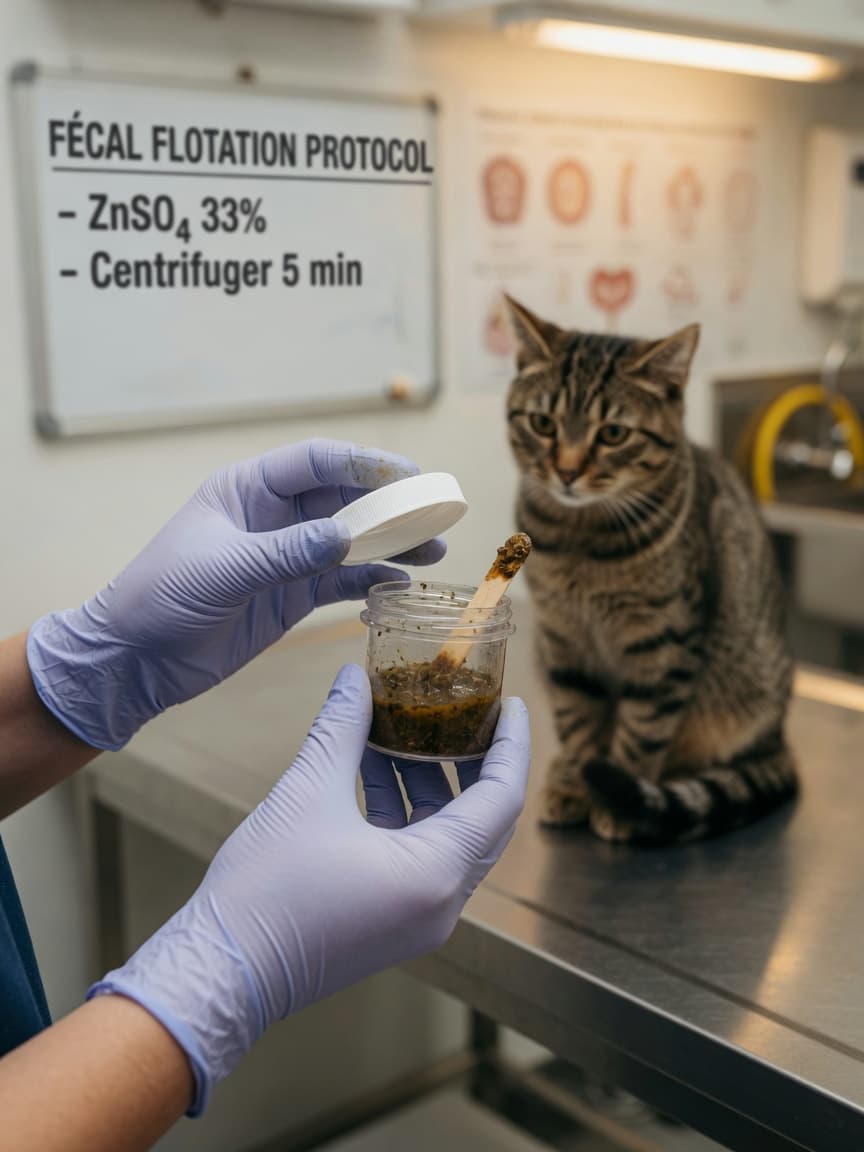
Roundworms are diagnosed through faecal flotation, a laboratory technique that identifies eggs in stool samples. Treatment is straightforward — pyrantel pamoate, fenbendazole, and milbemycin are all effective. Kittens should be treated at two to three weeks of age and every two weeks until around eight weeks old, then monthly until six months of age.
Tapeworms: Two Routes of Infection
Two main tapeworm species affect cats. Dipylidium caninum, sometimes called the flea tapeworm, is transmitted when a cat swallows an infected flea during grooming — which is why flea control and tapeworm prevention are closely linked. Taenia taeniaeformis is acquired by hunting and eating infected rodents.
Tapeworms can grow to impressive lengths — some species reach 60 centimetres or more — but they live anchored in the intestine by a scolex (head structure) and shed segments called proglottids from their tail end. These segments, which resemble small grains of rice or sesame seeds, are often the first thing owners notice, typically around the cat's anus or in their bedding.
Signs of Tapeworm Infection
- Proglottid segments visible around the anus, in the fur, or in faeces
- Scooting or excessive grooming of the hindquarters due to irritation
- Mild digestive upset in heavy infestations
- Weight loss over time, though many cats show minimal symptoms
Diagnosis and Treatment
Tapeworm eggs are not consistently shed in faeces, making standard flotation tests unreliable. Diagnosis is often made visually, either by an owner spotting proglottids or a vet identifying them during an examination. Praziquantel is the treatment of choice and is highly effective against both Dipylidium and Taenia species. Crucially, treating for tapeworm without also addressing a concurrent flea infestation will result in rapid reinfection.
Hookworms: Small but Harmful
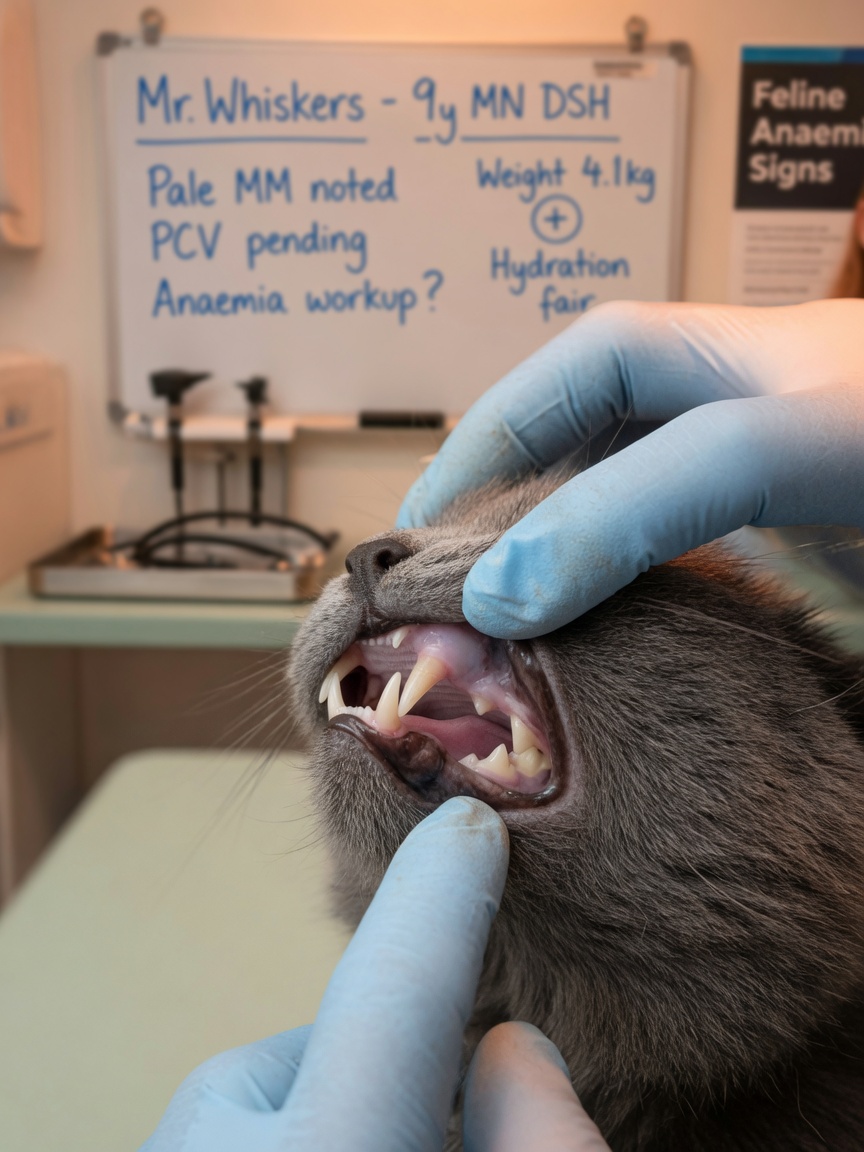
Hookworms — primarily Ancylostoma tubaeforme in cats — are far smaller than roundworms, typically just a few millimetres in length, but they are considerably more damaging in proportion to their size. They attach to the intestinal wall using hook-like mouthparts and feed on blood. Even a moderate hookworm burden can cause significant blood loss, particularly in young or immunocompromised animals.
Cats acquire hookworms through ingestion of larvae from contaminated environments or, more unusually, through skin penetration — larvae can burrow through the skin and migrate to the gut. Kittens can also be infected via the queen's milk.
Signs of Hookworm Infection
- Dark, tarry, or bloody stools
- Anaemia — pale gums, weakness, and lethargy
- Weight loss and poor body condition
- Skin irritation at sites of larval penetration, usually on the paws
- In severe cases, life-threatening anaemia in kittens
Diagnosis and Treatment
Hookworm eggs are identified through faecal flotation. Because these eggs are small and may be shed intermittently, multiple samples improve diagnostic accuracy. Treatment with pyrantel pamoate, fenbendazole, or milbemycin is effective. Severely anaemic animals may require supportive care including iron supplementation or, in extreme cases, blood transfusion.
How to Reduce Your Cat's Parasite Risk
No prevention strategy eliminates risk entirely, but several measures substantially reduce it.
- Keep cats indoors or limit unsupervised outdoor access to reduce hunting and environmental exposure
- Maintain rigorous flea control year-round — essential for preventing Dipylidium tapeworm infection
- Clean litter trays daily, as this limits the opportunity for eggs to embryonate and become infective
- Avoid feeding raw meat or whole prey unless sourced from reliable, tested suppliers
- Follow your vet's recommended deworming schedule — typically every one to three months depending on lifestyle and risk
- Schedule annual or bi-annual faecal examinations, particularly for cats that hunt or spend time outdoors
A Note on Zoonotic Risk
Both roundworms and hookworms carry zoonotic potential — they can infect humans, particularly children who play in soil or sandpits that may be contaminated with cat faeces. Toxocara larvae can migrate through human tissues and in rare cases affect the eyes or other organs. This is another compelling reason to keep your cat's parasite burden under control, wash hands thoroughly after handling litter, and discourage children from playing in areas used as latrines by outdoor cats.
Working with Your Vet
There is no single deworming product that covers all intestinal worm species equally well. Praziquantel handles tapeworms; pyrantel or fenbendazole addresses roundworms and hookworms; milbemycin covers a broader spectrum. Combination products exist, but selecting the right protocol depends on your cat's individual risk factors. Your vet is the best resource for designing a parasite control plan that is appropriate, effective, and sustainable for your cat's lifestyle.