
The Introduction That Defines Years of Cohabitation
How a dog and cat first meet often determines the quality of their relationship for the rest of their lives together. A chaotic first encounter — even one that does not result in injury — can establish a pattern of fear and avoidance that becomes entrenched within days. The good news is that with a structured approach, the vast majority of dogs and cats can learn to share a home peacefully. The process takes patience, but the investment is modest compared to managing a years-long conflict.
Before the Dog Arrives: Prepare the Cat's Environment
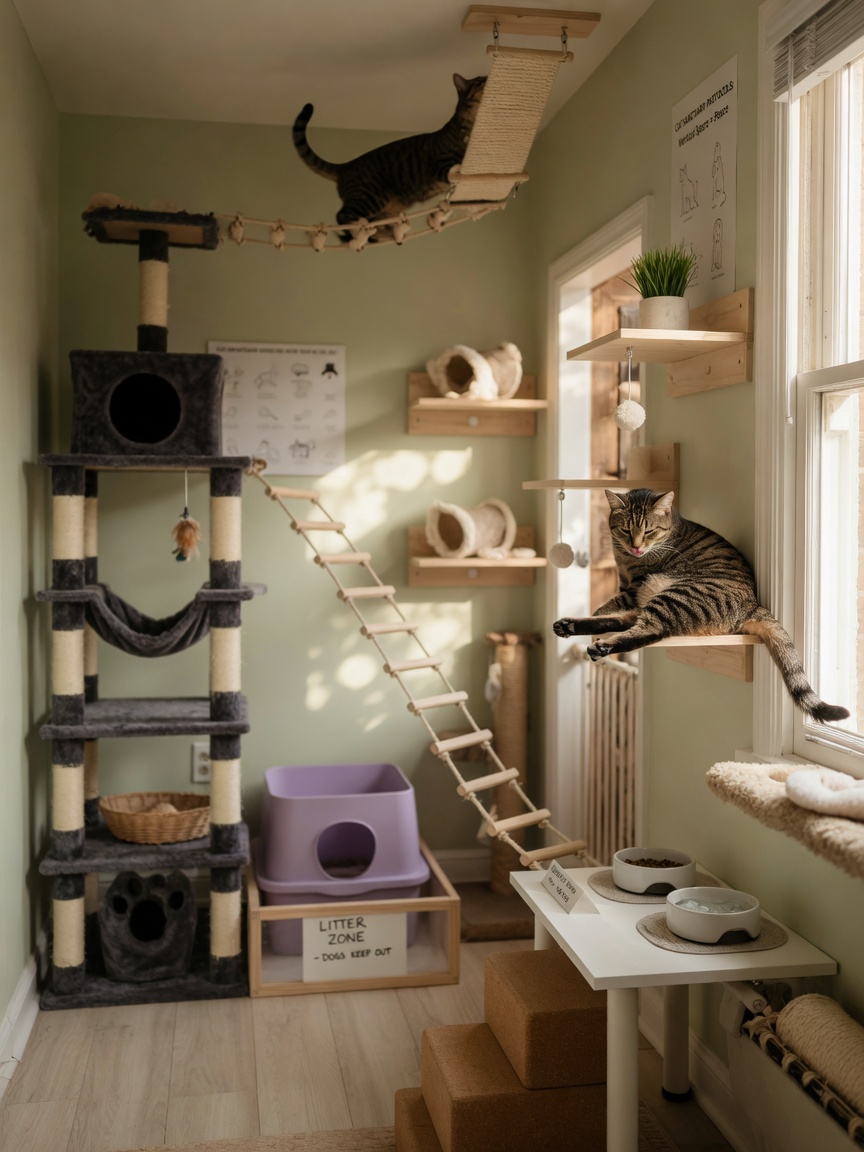
The resident cat must have the home prepared in its favour before the dog sets foot inside. This is non-negotiable. A cat that cannot escape, observe from height, or access its resources safely will experience the new dog's arrival as an invasion with no recourse.
- Identify at least two elevated spaces the dog cannot reach — cat trees, shelving, or a dedicated room with a cat flap the dog cannot pass through
- Ensure the litter tray is in a location the dog cannot access and the cat can reach without passing through the dog's likely zones
- Move feeding and water stations to elevated surfaces
- Establish a base room for the cat that will serve as its sanctuary during the initial introduction period
These measures give the cat genuine control over the situation, which is the single most important factor in reducing fear-based reactions.
Phase One: Scent Before Sight
Spend a minimum of three to five days — longer if either animal shows significant anxiety — on scent exchange before any visual contact occurs.
How to Exchange Scent
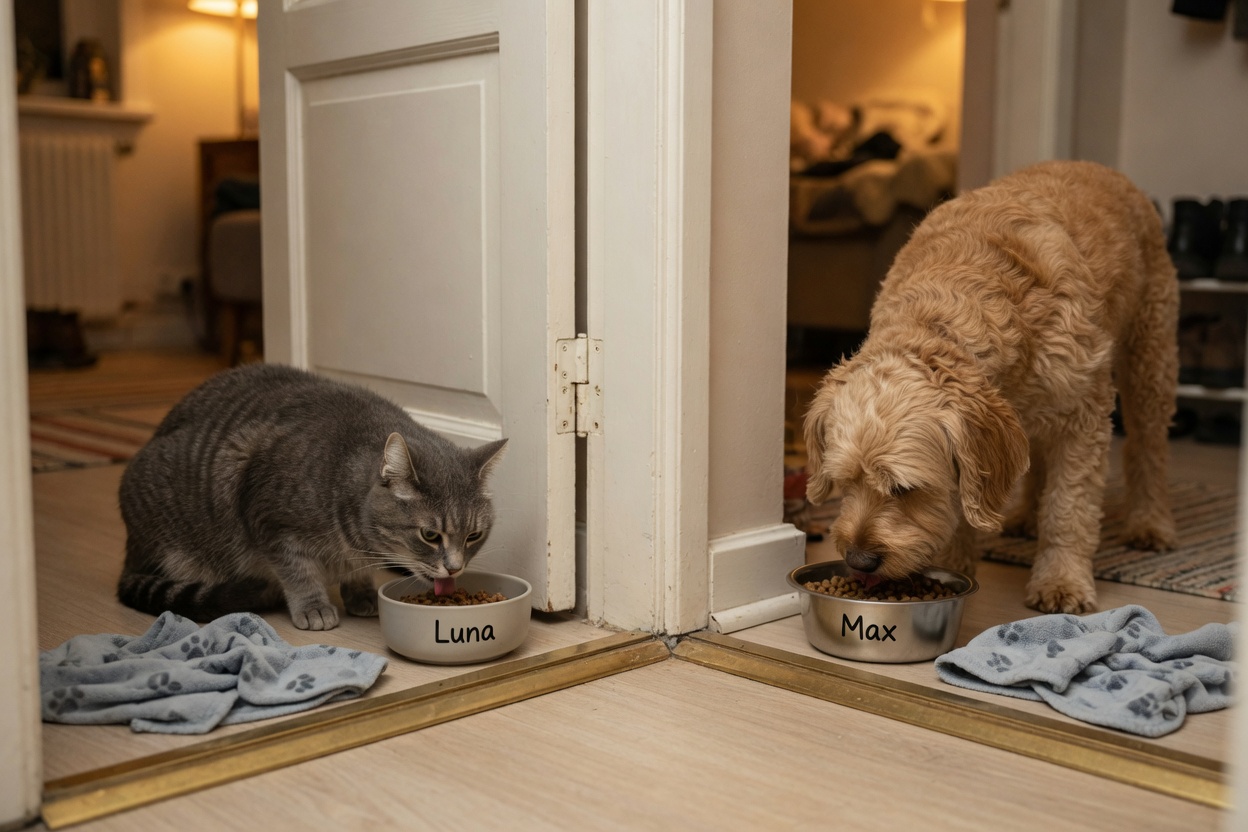
- Rub a soft cloth on the dog's face and body, then place it in the cat's sanctuary room without forcing the cat to approach it
- Rub a separate cloth on the cat and allow the dog to sniff it in a neutral area
- Feed both animals near the closed door that separates them — first at a distance, gradually moving bowls closer over successive meals
The goal of feeding near the door is to build a positive association: good things happen when the other animal's scent is present. Move the bowls closer only when both animals eat calmly at the current distance.
Phase Two: Visual Contact Without Physical Access
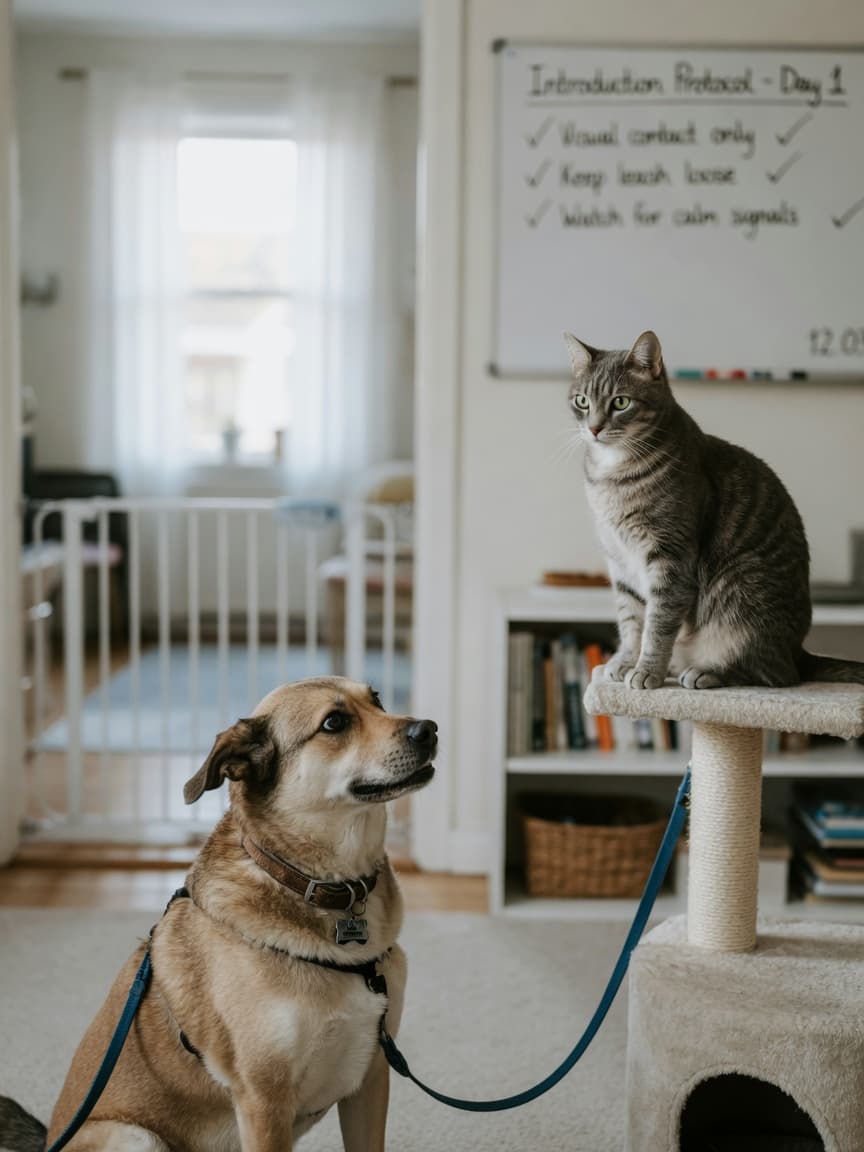
Once both animals are eating calmly near the separating door and showing no sustained stress responses to scent, introduce visual contact through a baby gate or a door held open by a few centimetres.
Key Rules for This Phase
- Keep the dog on a lead during all visual contact sessions
- Sessions should begin at two to three minutes and extend gradually based on calm behaviour from both animals
- Reward the dog with calm praise and food for disengaging from the cat and looking at you instead
- Allow the cat to leave at any point — never restrain or position the cat during these sessions
- End each session before either animal becomes agitated
Watch the dog's body language closely. Fixation — a hard stare, stiff posture, very still body — is a warning sign that requires the session to end and the introduction pace to slow. A dog in prey drive during these encounters requires specialist input from a qualified behaviourist before proceeding further.
Phase Three: Shared Space With Supervision
Only progress to this phase when both animals are routinely calm during visual contact sessions. Allow the dog into the shared space on a long lead, with the cat free to move and retreat as it chooses.
- Never force the cat to remain in the room
- Reward the dog consistently for calm, disengaged behaviour — lying down, looking away, investigating other things
- Do not allow the dog to chase, even in apparent play, during this phase
- Keep initial sessions short and end them positively
Over multiple sessions, most dogs habituate to the cat's presence and lose the intensity of their initial interest. Most cats, once they have had positive or neutral interactions at their own pace, will begin to relax visibly — grooming in the dog's presence, approaching closer, or simply ignoring the dog entirely.
Phase Four: Supervised Off-Lead Access
When the dog is reliably calm on a loose lead in the cat's presence and the cat is no longer retreating upon the dog entering the room, the lead can begin to come off under close supervision. The cat must still have clear access to elevated spaces and its sanctuary at all times.
Continue to feed the cat in a dog-free zone permanently. Many cats, regardless of how well the introduction goes, prefer to eat without canine observation, and this is a simple accommodation that reduces ongoing tension.
How Long Does It Take and When to Get Help
A straightforward introduction between a cat-appropriate dog and a confident cat can reach comfortable coexistence within two to four weeks. An anxious cat, a high-prey-drive dog, or a rushed early introduction can extend this to three months or more.
Seek guidance from a veterinary behaviourist if the dog remains fixated on the cat after several weeks of structured introductions, if the cat stops eating or using the litter tray, or if any chasing occurs that causes the cat genuine fear. Do not attempt to manage high-level prey drive in a dog through this protocol alone — it requires specialist behavioural assessment.
Key Takeaways
- Prepare the cat's environment with elevated safe zones and accessible resources before the dog arrives
- Begin with scent exchange and positive feeding associations — never skip this phase
- Visual contact comes before shared space, always with the dog on a lead
- The cat must always have the option to leave — never restrain it during introductions
- Fixation or prey-drive behaviour in the dog requires specialist input before progressing
- Permanent feeding separation and elevated cat-only zones are worthwhile long-term accommodations