
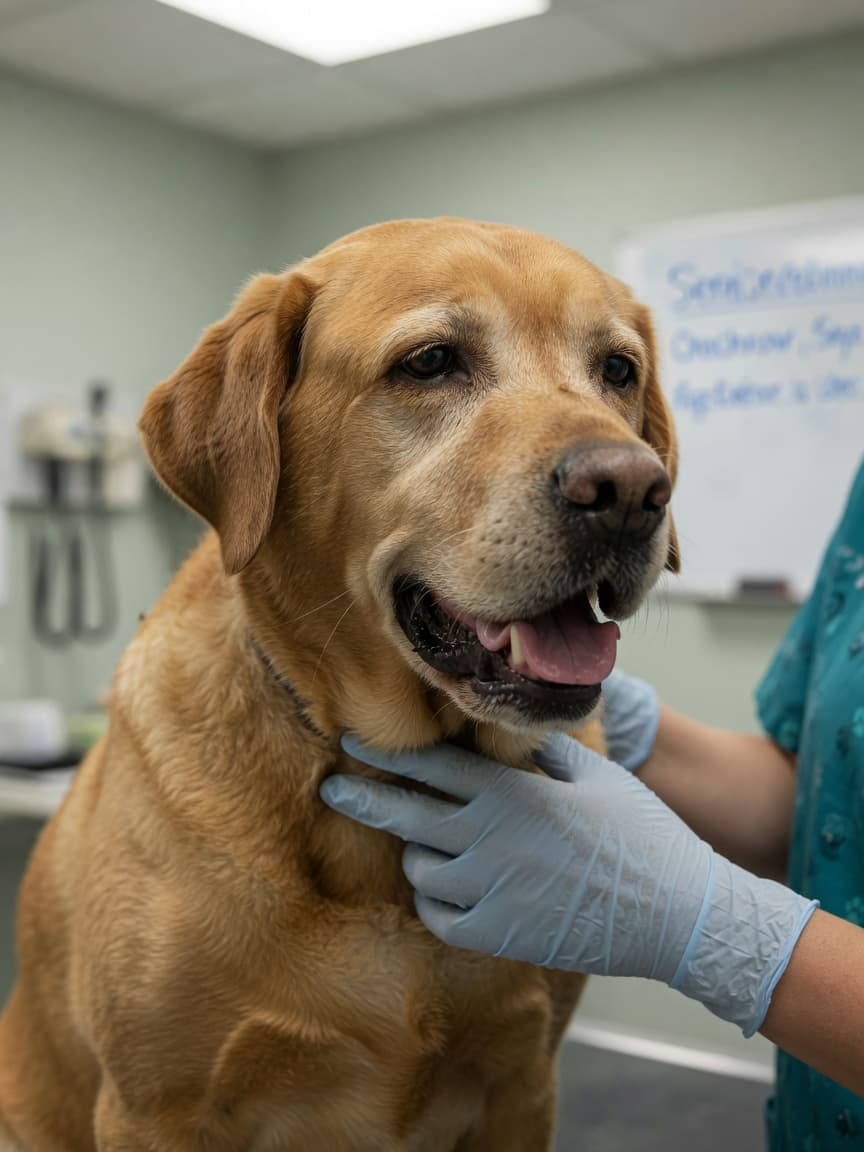
Laryngeal Paralysis in Dogs
Laryngeal paralysis is a progressive condition in which the muscles controlling the opening of the larynx — the voice box — fail to work properly. What begins as occasional noisy breathing can gradually deteriorate into a serious, life-limiting condition if left unmanaged. It is one of the more common causes of respiratory distress in older large-breed dogs, and understanding it fully helps owners make timely, informed decisions about their dog's care.
What Does the Larynx Do?
The larynx sits at the top of the trachea (windpipe) and performs several vital functions. It is the structure responsible for producing sound — hence it being called the voice box. More importantly for breathing, it contains two cartilage flaps called the arytenoids, which are pulled open by muscles when a dog inhales and held partially closed to protect the airway during swallowing.
In a healthy dog, these arytenoid cartilages spring open wide with each breath, allowing a large volume of air to flood into the lungs. In a dog with laryngeal paralysis, the nerves supplying the muscles that pull these cartilages open are damaged or degenerated. The cartilages fall inward, partially or completely blocking the airway and turning every breath into a significant effort.
What Causes Laryngeal Paralysis?
Acquired Idiopathic Laryngeal Paralysis
The vast majority of cases in dogs are acquired — meaning they develop during the dog's lifetime rather than being present from birth. Of these, the most common form is idiopathic laryngeal paralysis, meaning the cause cannot be identified. This form overwhelmingly affects middle-aged to older large and giant breed dogs, with Labrador Retrievers being by far the most commonly affected breed. Irish Setters, Golden Retrievers, Saint Bernards, and Newfoundlands are also overrepresented.
Current evidence suggests that idiopathic laryngeal paralysis is often part of a broader neurological condition called geriatric onset laryngeal paralysis polyneuropathy (GOLPP), in which a slow, progressive degeneration of multiple peripheral nerves occurs throughout the body. Many affected dogs are also found to have subtle weakness in the hindlimbs and changes to their oesophageal function when examined carefully.
Other Acquired Causes
In some cases, laryngeal paralysis results from an identifiable underlying problem:
- Trauma to the neck — road traffic accidents, dog bites, or surgical complications
- Tumours in the chest or neck that compress or invade the nerves supplying the larynx
- Hypothyroidism (underactive thyroid gland) — though the link is debated, thyroid disease is often investigated in affected dogs
- Lead poisoning and certain other toxin exposures
- Myasthenia gravis — a neuromuscular disorder affecting nerve-to-muscle signalling
Congenital Laryngeal Paralysis
A small number of dogs are born with laryngeal paralysis. This form tends to affect certain breeds including Bouvier des Flandres, Bull Terriers, and Dalmatians, and in some cases is inherited. Congenital paralysis typically becomes apparent in young puppies and progresses rapidly.
Symptoms to Watch For
The onset of symptoms in the acquired form is usually gradual. Owners often look back and realise signs were present long before they became alarming.
- Noisy breathing — a harsh, roaring or rasping sound (called stridor) when the dog inhales, which is the most characteristic sign
- Voice change — the bark may become hoarse, quieter, or take on an unusual quality
- Exercise intolerance — the dog tires quickly, may stop and refuse to continue walks, or recovers slowly after mild activity
- Coughing or gagging, particularly when eating or drinking
- Breathing difficulty in warm or humid weather — heat is a serious risk factor as dogs with laryngeal paralysis cannot pant effectively to cool down
- Distress and panic during breathing crises, often triggered by excitement, exertion, or high temperatures
- Bluish or grey gums during a crisis, indicating critical oxygen deprivation
Diagnosis
Laryngoscopy Under Light Sedation
Definitive diagnosis is made by observing the larynx directly, using a laryngoscope (a lighted instrument passed into the mouth and throat) while the dog is under very light sedation. The level of sedation must be carefully calibrated — too deep, and the larynx may appear to move normally due to anaesthetic effects; too light, and the dog will not tolerate the procedure.
In a healthy dog, the arytenoid cartilages are seen to abduct (move outward) actively with each breath. In a paralysed dog, they remain still or may even be drawn inward during inhalation. Partial paralysis — where movement is present but reduced — is also common and is sufficient to cause significant clinical signs.
Your vet will also conduct a full clinical examination, thyroid function testing, chest X-rays to check for aspiration pneumonia and assess the lungs, and possibly advanced imaging if a tumour or other structural cause is suspected.
Treatment: The LATE Procedure
The most effective treatment for laryngeal paralysis is surgery known as laryngeal arytenoid lateralisation, commonly called the tie-back procedure (LATE — Laryngeal Arytenoid Tie-back and Enlargement). Under general anaesthesia, the surgeon places a permanent suture that holds one arytenoid cartilage permanently open to one side. This significantly widens the airway and dramatically improves a dog's ability to breathe.
The tie-back is performed on one side only to preserve some of the larynx's protective function during swallowing, reducing (but not eliminating) the risk of aspiration pneumonia. Most dogs experience a remarkable and rapid improvement in breathing following surgery. The characteristic roaring noise frequently resolves almost completely, and exercise tolerance can improve significantly.
Tie-back surgery is not without risk. Aspiration pneumonia is the most significant post-operative complication, occurring in a meaningful proportion of cases. This is caused by the permanently open larynx no longer guarding the airway as effectively during swallowing. Owners of operated dogs are advised to feed from raised bowls, offer food in small pieces rather than large chunks, and to feed only when the dog is calm and not distracted.
Managing the Condition Before and After Surgery
Before surgery, the priority is preventing crises. Keep your dog cool at all times — never leave them in a warm car or exercise them in hot weather. Keep walks short, calm, and ideally timed for cool parts of the day. A harness should always be used in place of a collar, as any pressure on the neck can worsen airway obstruction. Excitement should be minimised, as it drives faster, more effortful breathing.
After surgery, restricted activity for the first four to six weeks allows the surgical site to heal and gives the dog time to adapt to the new anatomy of their larynx. Coughing and mild voice changes can persist for weeks. Feeding practices — raised bowls, moist food, small meals — should be followed for the rest of the dog's life.
Emergency Signs
Laryngeal paralysis can tip into a crisis rapidly, especially in warm weather or during a stressful event. Seek emergency veterinary care immediately if your dog:
- Is showing extreme respiratory effort or panic despite being at rest
- Has gums that appear blue, grey, or white
- Collapses or is unable to stand
- Shows signs of heatstroke — excessive panting, drooling, confusion, collapse
While waiting for emergency care, move your dog to the coolest location available, apply cool (not cold) water to the paw pads and groin area, and transport in an air-conditioned vehicle. Do not attempt to force water into the dog's mouth. Speed of treatment is critical in a laryngeal paralysis crisis.