
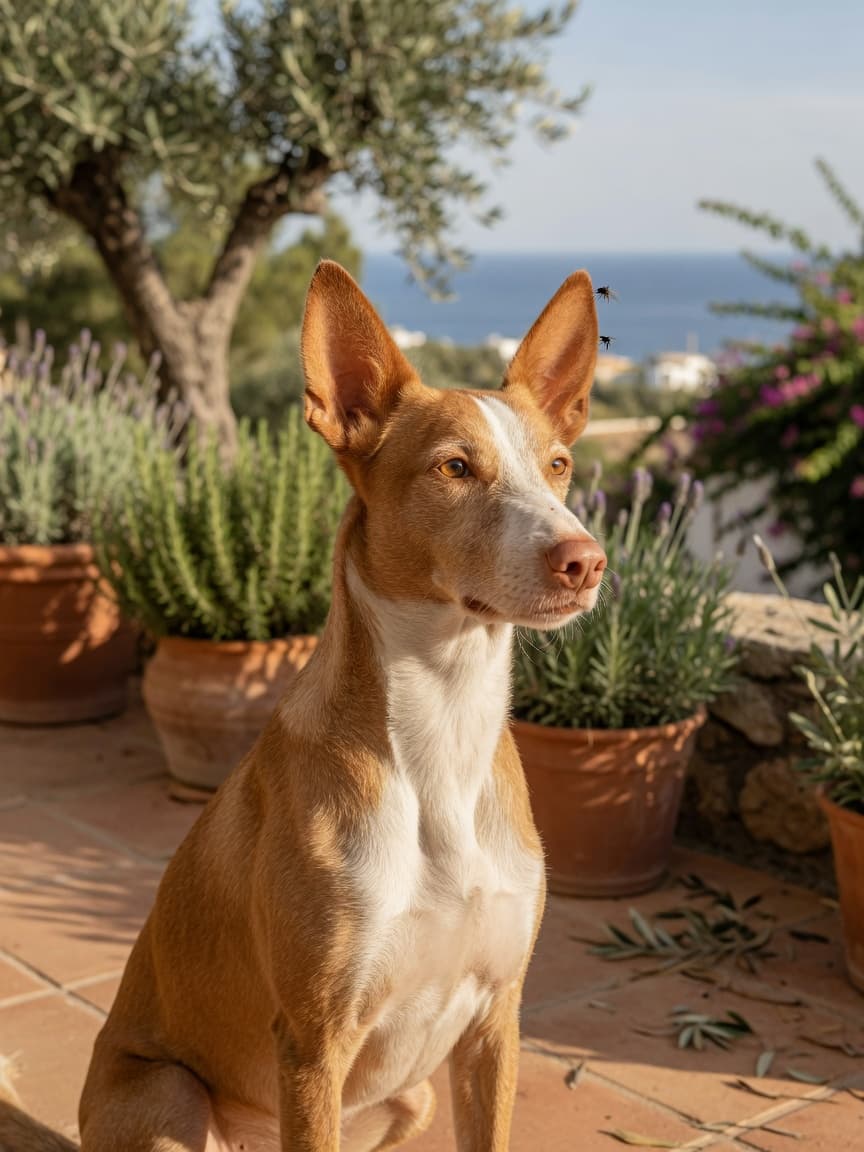
The Holiday Souvenir No Dog Should Bring Home
Each year, dogs travel with their owners to southern Europe — Spain, Portugal, France, Italy, Greece — and return carrying a parasite that will live in their bodies for the rest of their lives. Leishmaniasis, caused by the protozoan Leishmania infantum, is endemic across the Mediterranean basin and is spreading northward as temperatures rise. In the UK, it does not occur naturally, but imported cases are diagnosed regularly, and every one of them requires lifelong veterinary management.
How Leishmania Is Transmitted
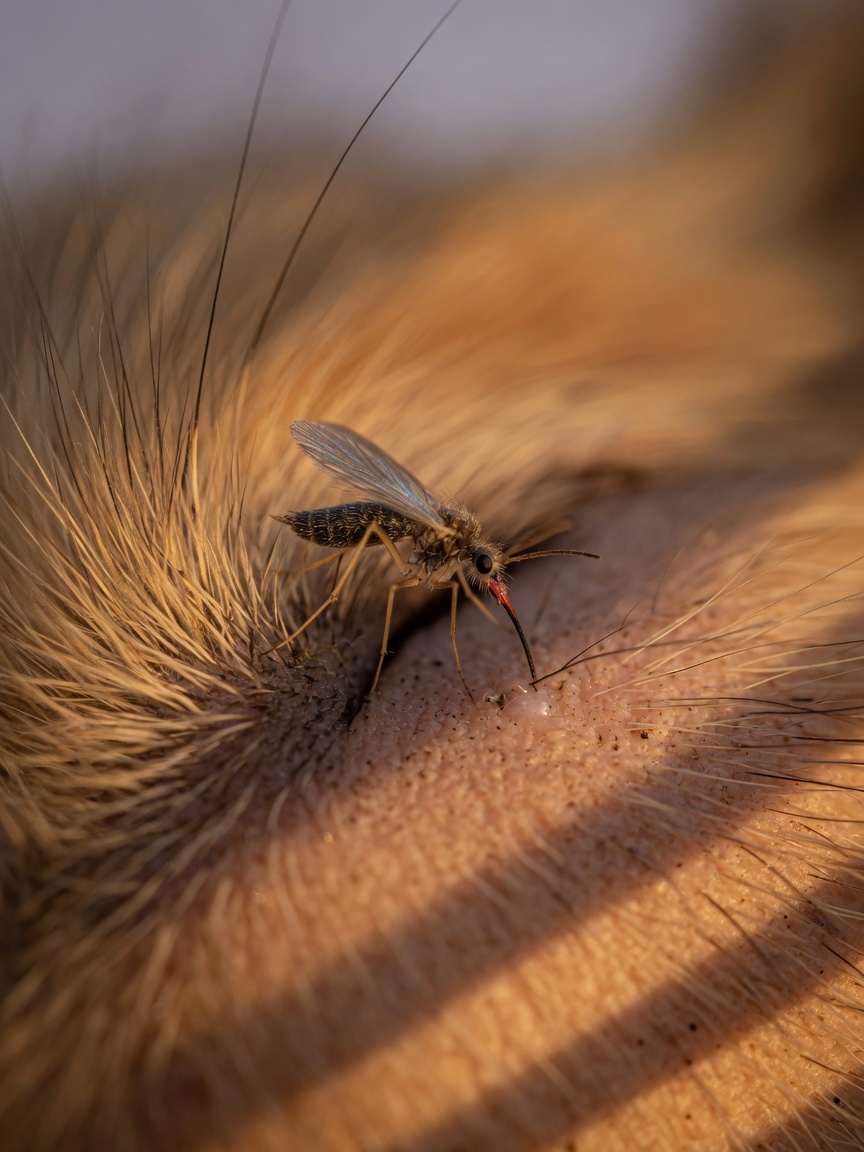
Leishmania infantum is transmitted through the bites of infected sandflies, specifically Phlebotomus species active in Mediterranean countries. These insects are tiny — smaller than a mosquito — and largely silent, making them difficult to detect. They are most active at dawn and dusk from late spring through early autumn, and they can penetrate standard insect screens.
The parasite is injected into the dog's skin during feeding and then spreads through the lymphatic system to internal organs — the spleen, liver, bone marrow, and lymph nodes. Unlike many infections, Leishmania cannot be eliminated from the body; it can only be suppressed.
Direct dog-to-dog transmission does not occur under normal circumstances, but blood transfusions, shared needles, and, rarely, vertical transmission from mother to puppy have been documented.
Clinical Signs: A Disease of Many Faces
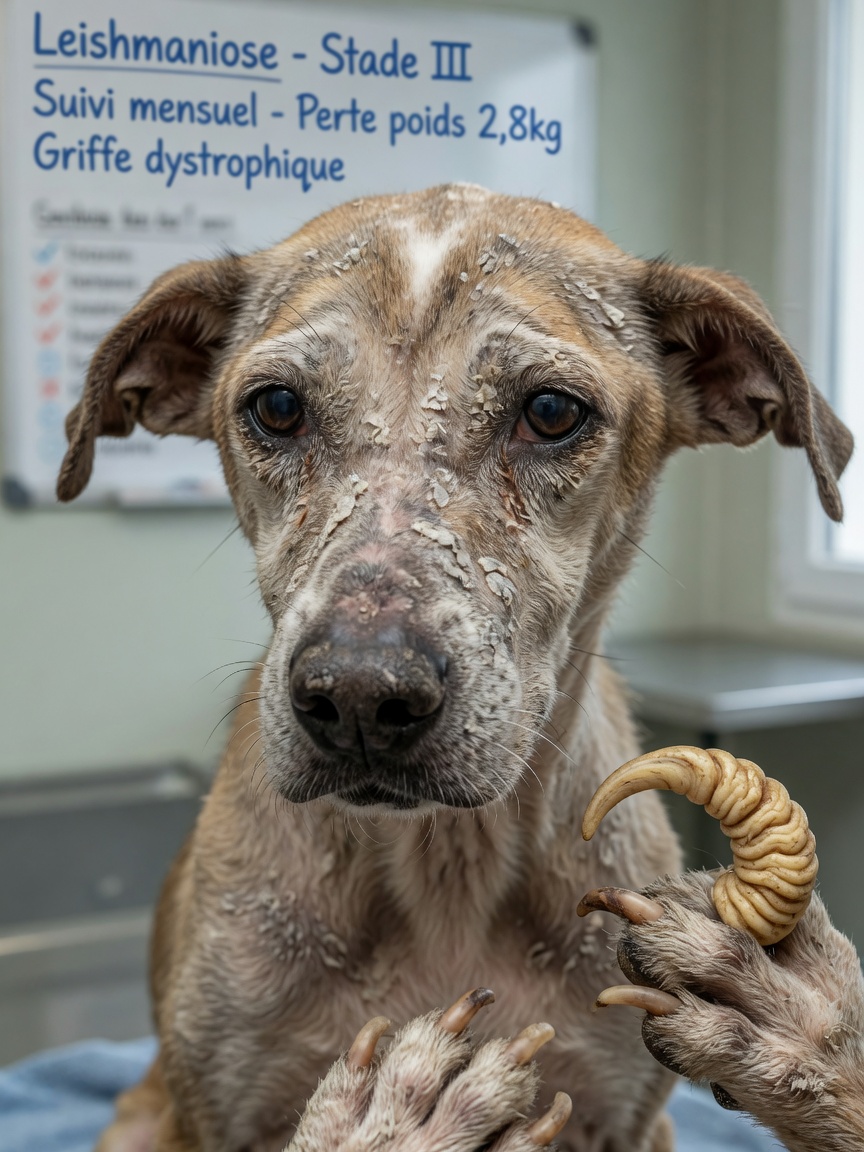
Leishmaniasis is notoriously variable in presentation. Some dogs are exposed and remain asymptomatic carriers for years. Others develop progressive, multi-system disease. The incubation period ranges from months to years, which makes connecting symptoms to foreign travel genuinely challenging.
Skin Signs
- Dry, flaky skin and dandruff-like scaling, particularly around the face and ears
- Skin ulcers, especially over bony prominences such as the nose and ear tips
- Abnormal nail growth — excessively long, brittle, or distorted claws
- Hair loss, particularly around the eyes and muzzle
Systemic Signs
- Weight loss despite a reasonable appetite
- Enlarged lymph nodes and spleen
- Nosebleeds or other abnormal bleeding
- Muscle wasting
- Increased thirst and urination, indicating kidney involvement
- Eye inflammation (uveitis)
Kidney disease is the most common cause of death in dogs with leishmaniasis. The parasite triggers immune complex deposition in the kidneys, leading to progressive renal failure.
Diagnosis
Diagnosis involves a combination of clinical history, serology, and direct parasite detection. Antibody tests can detect exposure but do not always confirm active disease. Quantitative serology (measuring antibody levels) is more useful for assessing disease severity and monitoring treatment response. PCR testing of blood, bone marrow, or lymph node aspirates is the most sensitive diagnostic method and can detect infection in seronegative animals.
A full staging workup — including blood biochemistry, urinalysis, and urine protein-to-creatinine ratio — is essential to assess the degree of organ involvement and guide treatment decisions.
Treatment and Lifelong Management
Treatment does not cure leishmaniasis; it controls the parasite burden and manages clinical signs. The standard treatment protocol typically combines allopurinol (a long-term oral medication) with meglumine antimoniate or miltefosine for an initial intensive phase. Response to treatment varies between individuals.
Dogs that respond well may achieve clinical remission — appearing healthy with suppressed parasite levels — but relapse is common if treatment is stopped. Most dogs require allopurinol indefinitely. Regular monitoring, including blood tests, urine analysis, and serology every three to six months, is essential to catch early signs of relapse or drug side effects.
Dogs with significant kidney disease at diagnosis carry a poorer prognosis. Your vet or a veterinary internal medicine specialist should guide staging and treatment planning.
Prevention for Travelling Dogs
If you are travelling to endemic regions with your dog, prevention is far preferable to treatment. Consult your vet well before departure.
- A vaccine (Letifend) is licensed in the UK for dogs over six months with no prior exposure — it significantly reduces the risk of developing disease after exposure
- Insect repellent products specifically formulated for dogs — including collars and spot-ons with permethrin or deltamethrin — reduce sandfly biting
- Keep dogs indoors during peak sandfly activity hours (dusk to dawn) when in endemic areas
- Fine-mesh insect netting over kennels and sleeping areas provides additional protection
- Have your dog tested on return, and again three to six months later, since early infection may be serologically silent
Leishmaniasis is a serious, lifelong condition, but with appropriate veterinary management, many dogs live comfortably for years after diagnosis. The critical factors are early detection and consistent, committed follow-up care. If your dog has ever travelled to a Mediterranean country and develops any of the signs described above, mention the travel history to your vet immediately.