
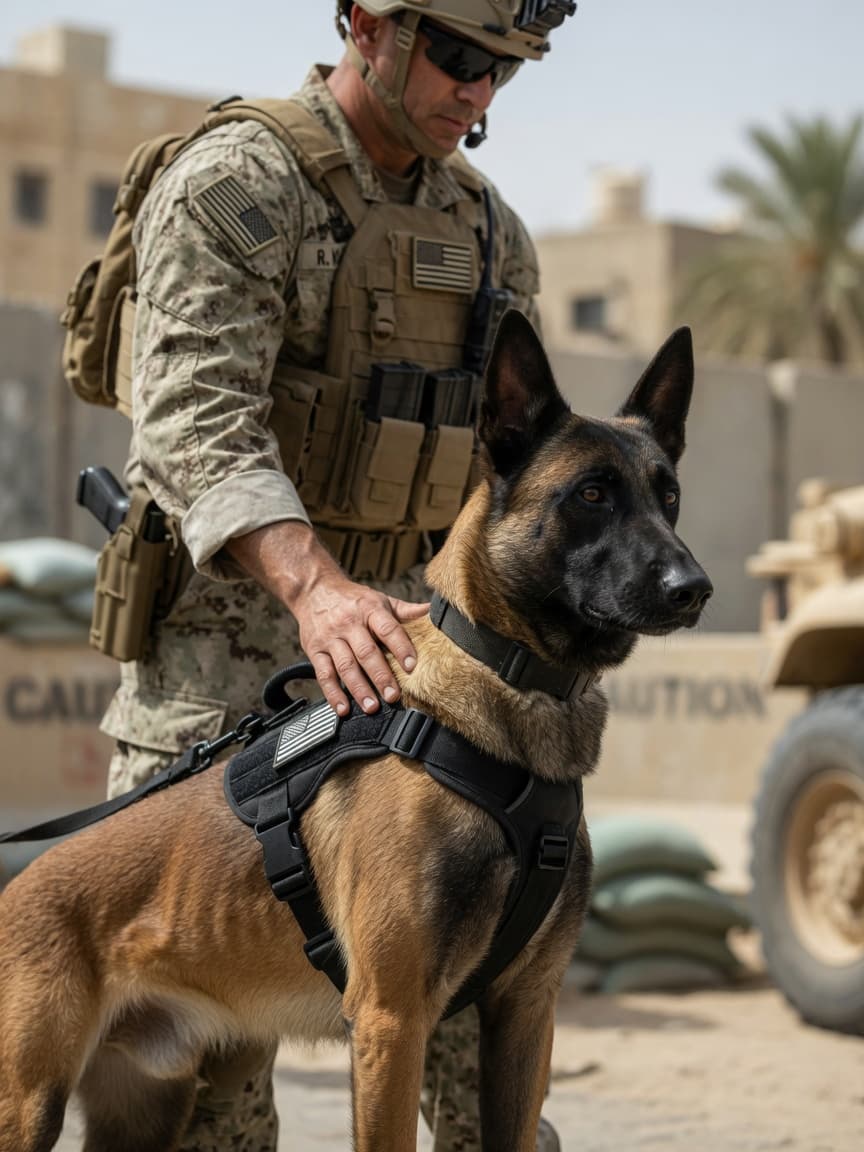
Military Working Dogs: How They're Trained & What They Do
Fast facts: The United States military alone deploys approximately 2,300 military working dogs (MWDs) across active duty globally. These highly trained animals carry the rank of Non-Commissioned Officer (NCO) — a symbolic status that also carries legal protections. Modern MWDs detect explosives, track enemy combatants, conduct search and rescue, perform patrol duties, and in some specialised roles, parachute or rappel into combat zones alongside special operations forces.
By Sarah Bennett, Certified Animal Nutritionist
When US Navy SEALs conducted the raid that killed Osama bin Laden in May 2011, one team member received almost as much media attention as any human operator: Cairo, a Belgian Malinois trained to clear rooms, detect explosives, and subdue combatants if needed. The Guardian reported extensively on Cairo's role, introducing many civilians to the fact that military working dogs operate at the sharpest edge of special operations. Cairo's story was not exceptional — it was representative of a global military working dog programme of extraordinary scope and sophistication.
Military working dogs have served alongside human soldiers for thousands of years. Ancient Egyptians, Greeks, and Romans all documented their use of war dogs. But the modern MWD — rigorously selected, intensively trained, medically supported, and operationally tracked — is a relatively recent development shaped by the demands of 20th and 21st century warfare.
Breeds Used as Military Working Dogs
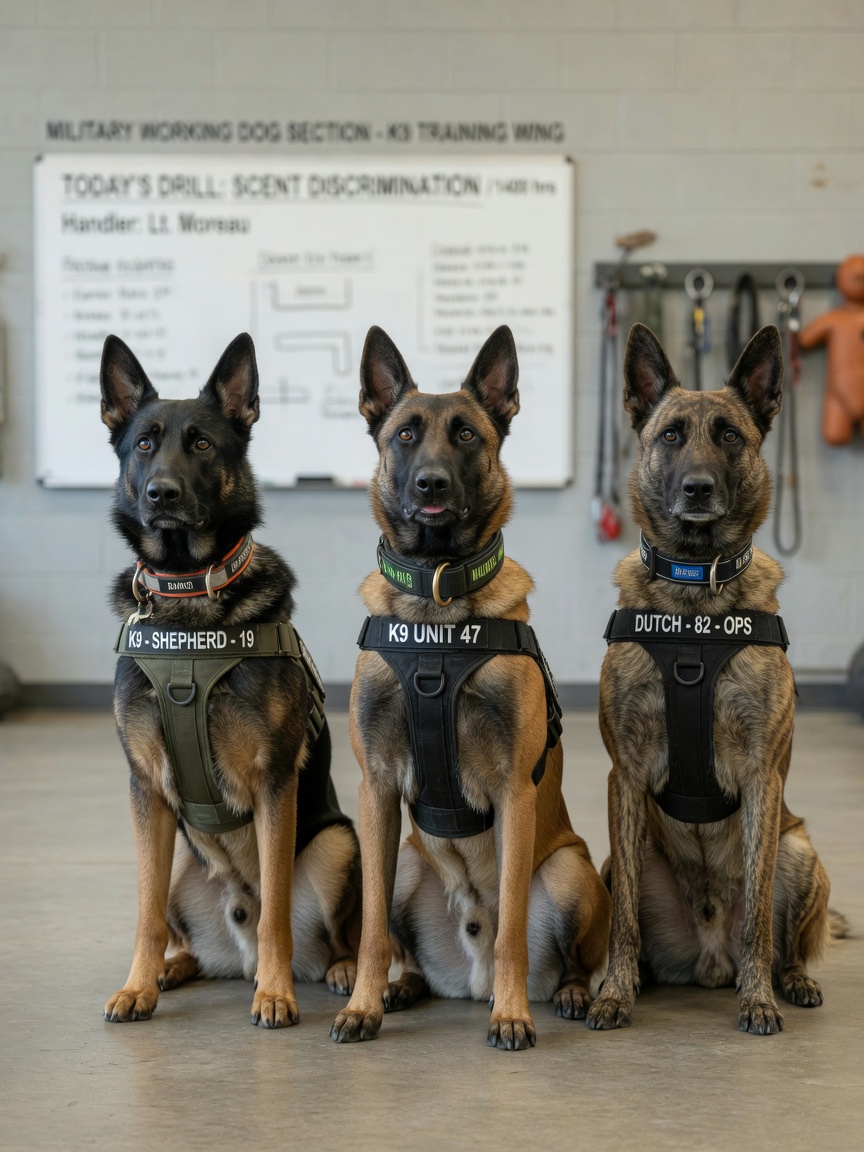
The Belgian Malinois has become the dominant breed in elite military units worldwide, particularly in US special operations forces and European military services. Leaner and more agile than the German Shepherd Kidney Disease in Dogs: Diet, Supplements & Quality of Life">Kidney Disease">Health Problems: The Complete Owner's Guide">German Shepherd Hip Dysplasia: Prevention, Signs & Treatment">German Shepherd Breed Guide">German Shepherd Health Problems: The Complete Owner's Guide">German Shepherd (which dominated military dog programmes throughout the 20th century), Malinois offer an exceptional combination of prey drive, trainability, physical endurance, and heat tolerance. They are also small enough to be carried by a handler during fast-rope insertions or parachute jumps.
German Shepherds remain widely used, particularly in patrol, search, and security roles where their size and physical presence are assets. Dutch Shepherds, Labrador Retrievers (particularly for detection work where temperament must be especially stable), and in some countries Rottweilers and Dobermans, round out the roster. The American Kennel Club has documented the breed history of military working dogs in the US, tracing the formal programme's origins to the Second World War "Dogs for Defense" initiative.
Selection: What Makes a Military Working Dog
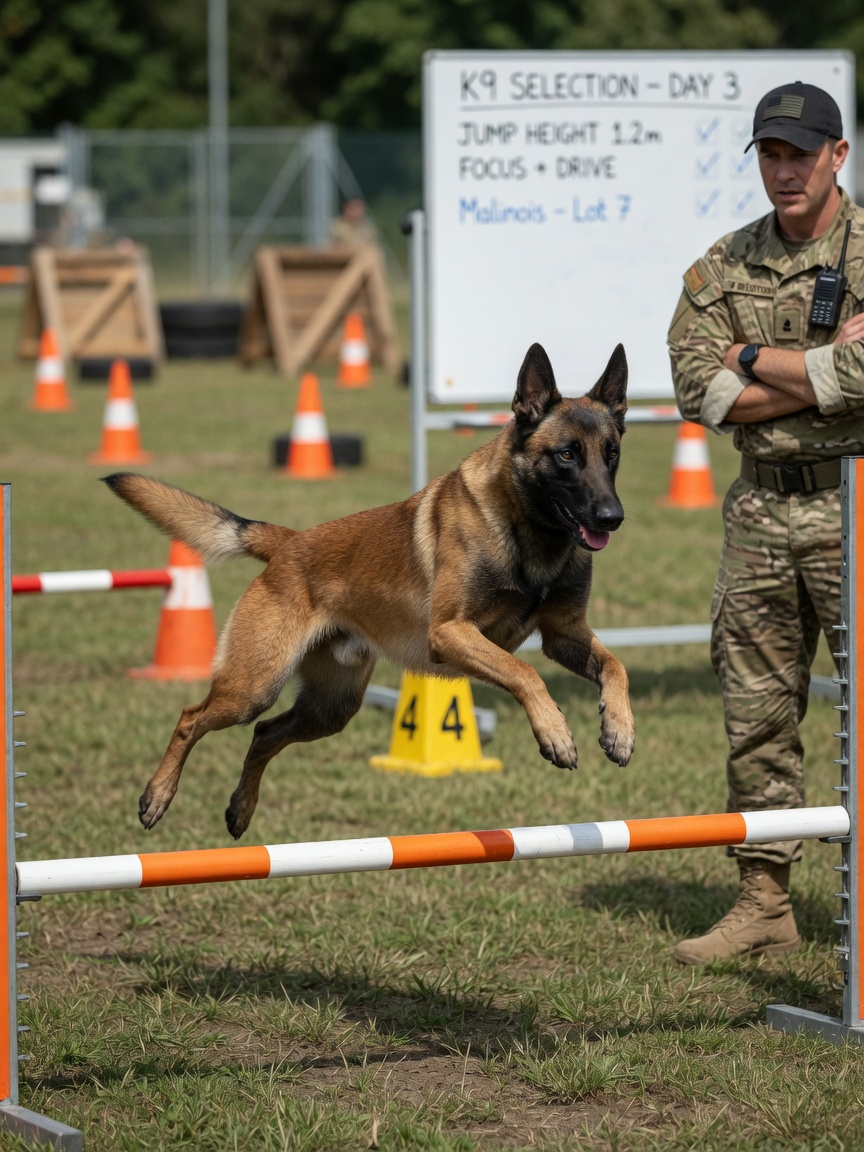
Not every dog with a strong nose and high drive is suitable for military work. Selection tests evaluate a candidate dog across multiple dimensions:
- Prey drive: The dog must be highly motivated to chase, tug, and possess — the foundation of all detection and apprehension training.
- Environmental stability: The dog must remain focused and non-reactive in loud, chaotic, unpredictable environments — explosions, crowds, vehicle noise, gunfire.
- Handler focus: The dog must maintain a strong working bond with its handler while remaining independently decisive when deployed off-leash.
- Physical soundness: Hip dysplasia, cardiac conditions, and structural problems are disqualifying — MWDs endure extreme physical demands in varied climates.
- Olfactory aptitude: Detection dogs are further screened for scent discrimination ability before placement in explosive or narcotics detection roles.
The US military sources many of its working dogs through a procurement programme that imports dogs — predominantly Belgian Malinois — from breeding programmes in the Netherlands, Belgium, Germany, and the Czech Republic. As National Geographic has reported, a single combat-ready military working dog may represent an investment exceeding $40,000 by the time training and certification are complete.
Training: From Puppy to Operational Asset
Military working dog training in the US is centralised at Lackland Air Force Base in San Antonio, Texas — the only accredited MWD training facility for the US armed forces. Newly acquired dogs spend up to 120 days in basic training before assignment to handlers. The curriculum covers:
- Obedience and control: Precise heel, sit, stay, down, and recall under distraction.
- Patrol work: Tracking, building searches, open area searches, and criminal apprehension (including controlled bite work).
- Explosive detection: Training dogs to detect a set of target odours associated with explosive compounds across diverse hiding scenarios — buried, elevated, in vehicles, on persons.
- Narcotics detection (for certain assignments): Identification of cocaine, heroin, methamphetamine, marijuana, and other controlled substances.
Handlers — known in the US military as Military Police or Special Operations personnel depending on the programme — typically spend 8 to 10 weeks in handler training before being partnered with a dog. The handler and dog then train together for a certification phase before operational deployment. The bond formed during this period is often described by handlers as the most significant relationship of their military career, as the BBC has reported in features on MWD partnerships.
Roles in Modern Conflict
Military working dogs serve in several distinct operational capacities in contemporary warfare:
- Explosive Detection (EDC): The role that has defined the MWD in Iraq and Afghanistan-era conflicts. Dogs can clear a route for a patrol in minutes that would take a human team hours using metal detectors — and they can detect low-metal-content IEDs that electronic systems miss.
- Combat tracking: Following the scent trail of a specific individual across varied terrain — invaluable in counter-insurgency operations.
- Building clearing: Dogs enter a structure ahead of human operators, identifying human presence or explosive devices before soldiers are exposed.
- Special operations support: MWDs with SEAL, Delta Force, and equivalent units wear specialised equipment including body armour, cameras, and communication systems allowing handlers to direct them remotely.
- Base security: Perimeter patrol and access control.
The PTSD Connection: Dogs Supporting Veterans
Military working dogs do not only serve during deployment — they also have a documented role in veteran recovery after it. Research by Yount et al. (PMID 23433087) examined the use of service dogs for veterans with PTSD, finding significant reductions in symptom severity and medication use among veterans paired with trained service dogs. Cobb et al. (PMID 25978614) extended this to examine the welfare and stress indicators of military working dogs themselves, finding that well-managed MWDs show stress biomarker profiles consistent with resilient, well-socialised animals — not the chronically stressed responses one might assume from their working environments.
The relationship runs in both directions: former MWDs often form therapeutic partnerships with veteran handlers post-service, and several non-profit organisations now specialise in pairing retired military dogs with veteran handlers specifically for the mutual benefits this creates. The adoption of retired MWDs by civilians and veterans alike has also become increasingly formalised following the passage of Robby's Law in the United States in 2000, which gave former handlers first priority to adopt their dogs.
Welfare, Retirement, and After Service
Military working dogs are exposed to extreme environments: desert heat, jungle humidity, high-altitude cold, and the neurological stress of sustained operational deployment. Responsible MWD programmes invest heavily in veterinary care, psychological monitoring, and structured rest periods. Retirement typically occurs between ages 8 and 11 depending on the dog's physical condition and role.
Post-service, MWDs may develop stress-related conditions analogous to PTSD in humans — hypervigilance, noise sensitivity, and social withdrawal. Rehabilitation programmes exist specifically to help retired MWDs decompress from operational life and transition to civilian homes.
Key Takeaways
- Military working dogs hold NCO status in many armed forces — a legal and symbolic recognition of their contribution and the protections they deserve.
- Belgian Malinois have largely replaced German Shepherds in elite units due to their agility, heat tolerance, and suitability for airborne insertion.
- A single trained MWD represents an investment of $40,000 or more and takes 12–18 months to reach operational readiness.
- In IED-heavy conflict environments, dogs reliably detect low-metal explosive devices that defeat electronic countermeasures.
- Research confirms service dogs significantly reduce PTSD symptoms in veterans, and retired MWDs are increasingly matched with veteran handlers for mutual benefit.
Looking for quality pet nutrition? Zooplus offers Europe's widest range of science-backed pet food and supplements, with free delivery on orders over €29. Shop now →
References
- Yount R, Olmert MD, Lee MR. Service dog training program for treatment of posttraumatic stress in service members. US Army Med Dep J. 2012. PMID 23433087
- Cobb ML, Iskandarani K, Chinchilli VM, Dreschel NA. A systematic review and meta-analysis of salivary cortisol measurement in domestic canines. Domest Anim Endocrinol. 2015. PMID 25978614