
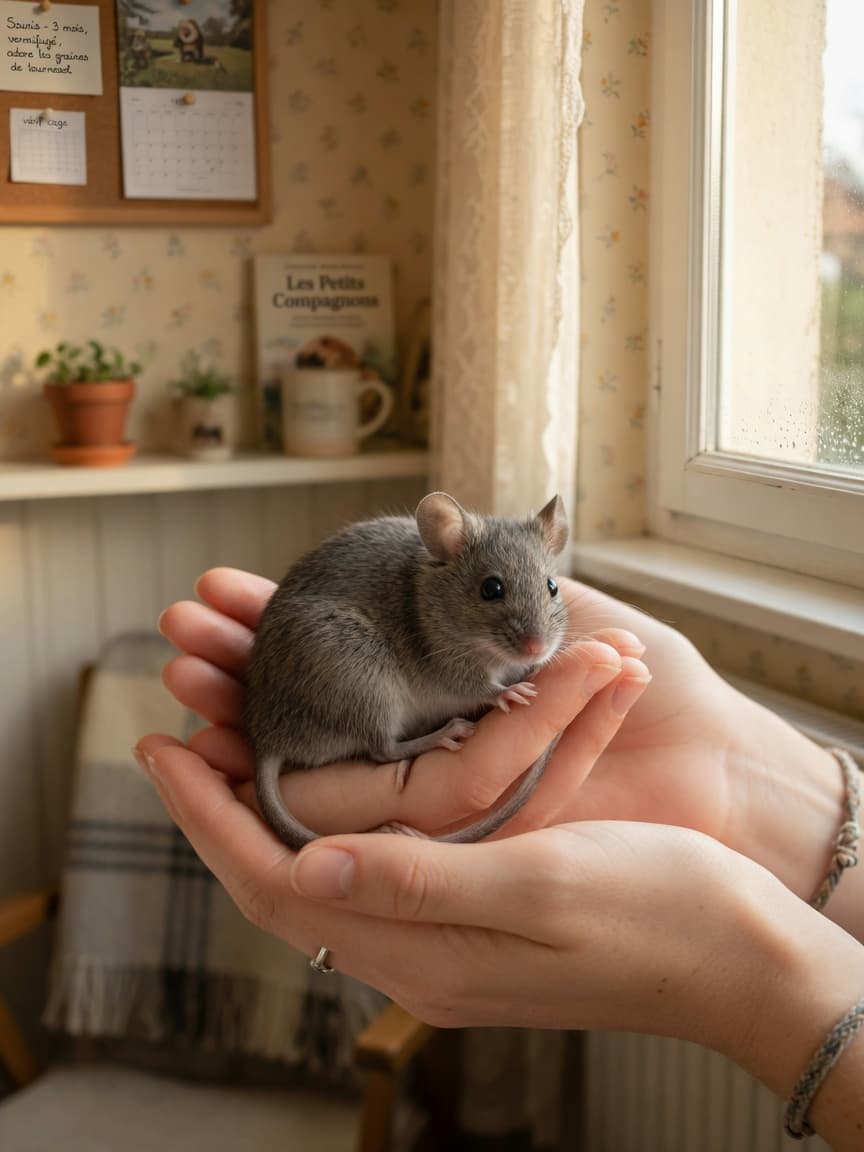
Introduction to Pet Mice in Europe
The domestic mouse (Mus musculus) is one of the most widely kept small pets across Europe. Despite their modest size, mice are intelligent, curious animals that can form genuine bonds with their owners when handled regularly from a young age. They are not listed under CITES, so there are no restrictions on keeping or trading them across EU member states. However, responsible ownership still requires a solid understanding of their biological and social needs.
Mice have a relatively short lifespan of one to three years, which means health issues can develop and progress quickly. Providing the correct environment from the outset is the single most important thing an owner can do to support a long and comfortable life.
Understanding the Social Nature of Mice
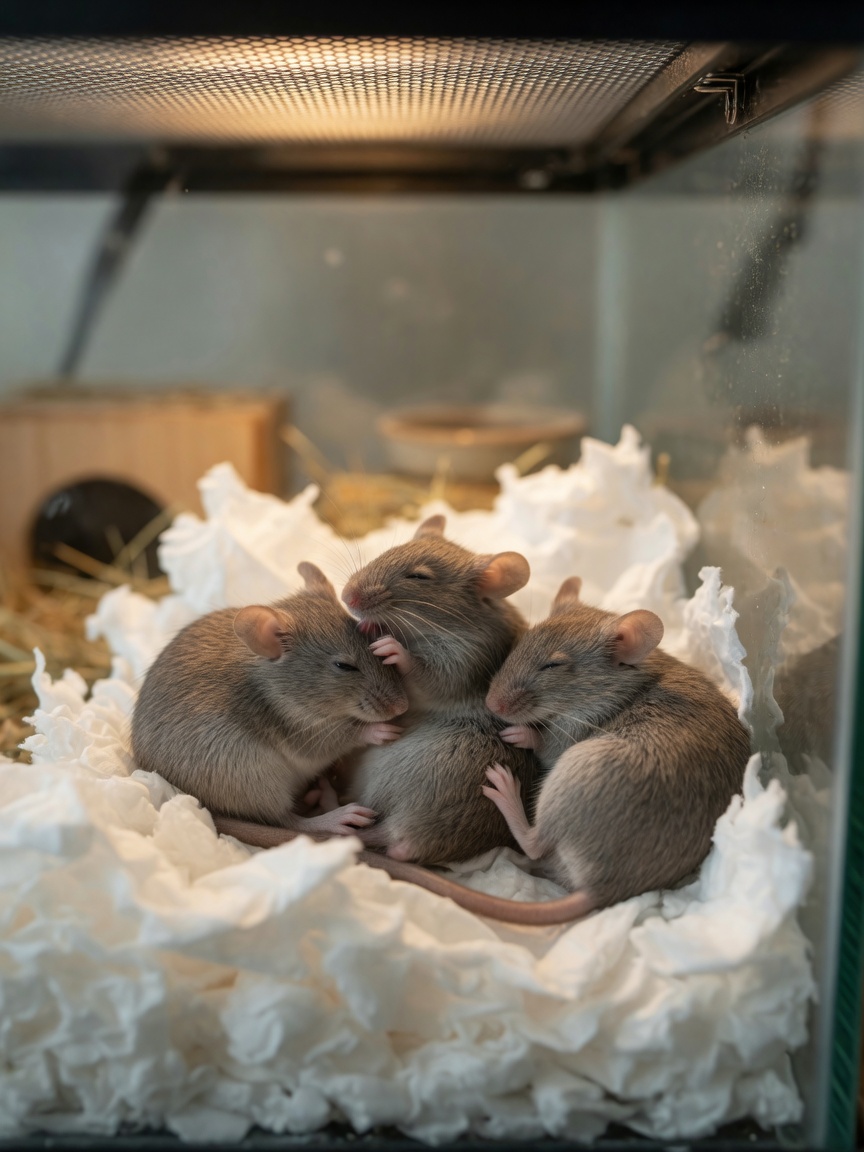
Female mice are highly social animals and should always be kept in groups of at least two, though trios or larger groups are preferable. Living alone causes chronic stress in female mice, which directly suppresses the immune system and shortens lifespan. When introducing new females, do so in a neutral space and monitor closely for the first few days.
Male mice present a more complex situation. Entire males often fight severely when housed together, particularly once they reach sexual maturity. Fighting can result in serious wounds and death. Males can sometimes be kept in bonded pairs if they have been raised together from a very young age and have never been separated, but even then conflicts may arise. Many experienced owners choose to keep males singly to avoid this risk entirely. Neutering is an option that can allow cohabitation, but this requires a vet experienced with exotic mammals.
Housing Standards for European Owners
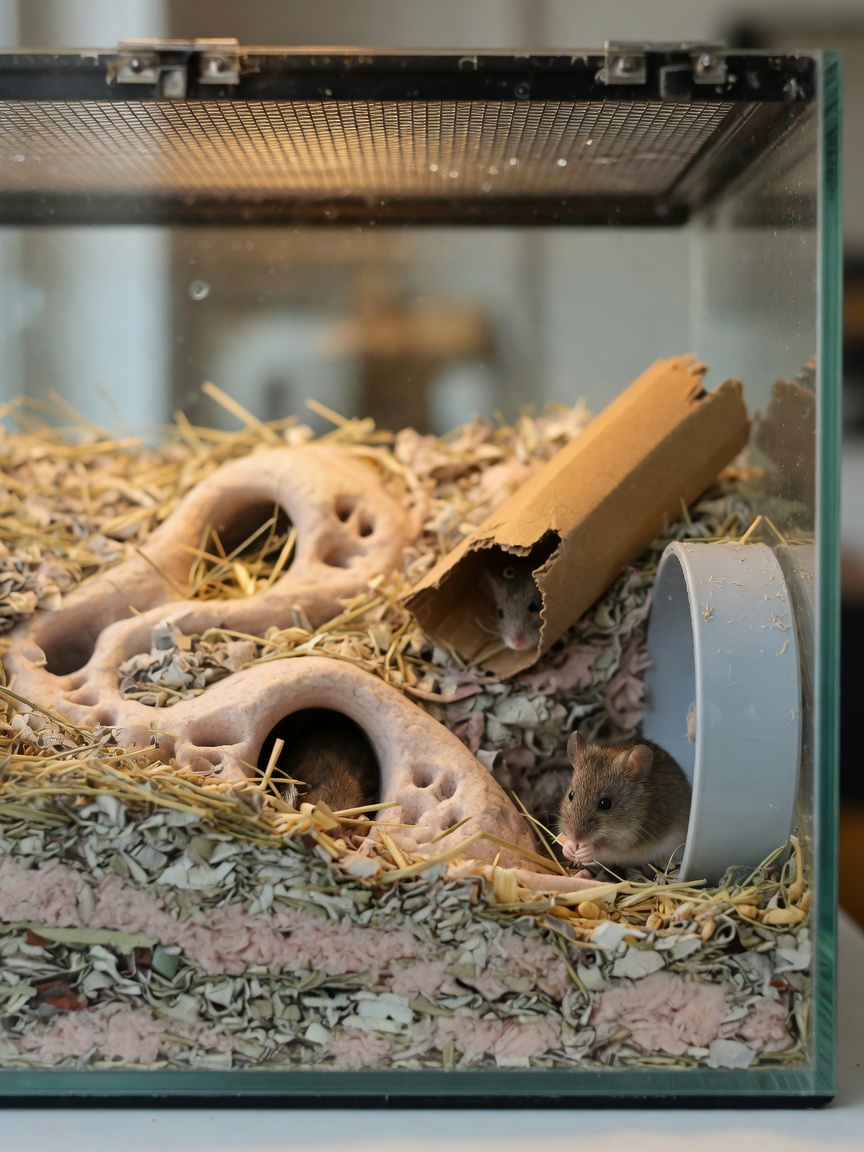
The German TVT (Tierärztliche Vereinigung für Tierschutz) welfare guidelines are widely regarded as the gold standard for small rodent housing in Europe. For mice, these specify a minimum floor space of 0.15 square metres per mouse, a minimum enclosure height of 30 centimetres, and a minimum bedding depth of 10 centimetres. These are minimums, and larger spaces are always better.
Glass tanks with a mesh lid are strongly recommended over wire cages for several reasons. Glass retains heat more effectively, which is important for mice since they are susceptible to draughts and rapid temperature changes. Glass also prevents bedding from being kicked out of the enclosure, allows for the deep substrate layer that mice require for digging and burrowing, and reduces dust reaching the owner's environment. A secure mesh lid allows ventilation while keeping the mice safely inside.
Wire cages can be used but require careful consideration. Bar spacing must be no more than 6mm to prevent escape or injury. Wire floors should never be used as these cause foot injuries known as bumblefoot.
Bedding and Nesting
Mice are burrowing animals by nature and must be provided with deep bedding that allows them to construct tunnels. Paper-based bedding is the most suitable choice, as it is dust-extracted, absorbent, and safe if ingested in small quantities. A depth of at least 10 centimetres is required, though 20 centimetres or more will be used enthusiastically.
Hay should be scattered throughout the enclosure for both foraging enrichment and nesting material. Mice build elaborate nests and this behaviour is important for their psychological wellbeing. Additional soft nesting material such as plain white tissue paper or unscented paper towel should always be available. Avoid cotton wool and synthetic fibres, which can wrap around limbs and cause serious injury.
Spot cleaning should be done every two to three days, with a full clean once every one to two weeks depending on group size. Avoid cleaning too frequently or too thoroughly, as removing all scent markers causes stress.
Diet and Nutrition
A high-quality commercial mouse mix forms the basis of the diet. This should contain a variety of seeds, grains, and dried herbs. Avoid mixes that are primarily sunflower seeds or peanuts, as these are high in fat and lead to obesity when offered in excess.
Small amounts of fresh vegetables can be offered several times a week. Suitable options include broccoli, cucumber, courgette, kale, and peas. Fresh food should be removed within a few hours to prevent spoilage. Fruit should only be offered very occasionally due to its sugar content.
Protein is an important component of the mouse diet, particularly for breeding females. A small amount of plain cooked chicken, mealworms, or hard-boiled egg offered once or twice a week is appropriate. Fresh water must always be available, provided via a sipper bottle that is cleaned regularly.
Enrichment and Mental Stimulation
Mice are active and exploratory animals that require significant enrichment to remain healthy. A running wheel is essential. The wheel must have a solid running surface with no gaps or rungs, which cause injury to feet and tails. The minimum recommended diameter is 14 centimetres, though larger is preferable. Silent spinner-style wheels are recommended to reduce noise, particularly for owners who keep their mice in a bedroom.
Additional enrichment should include wooden chews to support dental health, tunnels made from cork or cardboard, platforms and ramps to encourage climbing, and scatter feeding of part of the daily ration to encourage natural foraging behaviour. Rotating enrichment items regularly maintains novelty and prevents boredom.
Common Health Issues in Pet Mice
Respiratory infections are the most common health problem in pet mice. Signs include clicking or wheezing sounds when breathing, laboured breathing, discharge from the nose or eyes, and lethargy. Mycoplasma pulmonis is a primary cause and is almost ubiquitous in domestic mouse populations. Symptoms are often triggered by stress, poor ventilation, or exposure to ammonia from soiled bedding. Antibiotic treatment prescribed by an exotic mammal vet can manage symptoms, though the infection cannot be fully eliminated.
Mammary tumours are extremely common in female mice, particularly those over one year of age. These usually present as firm lumps under the skin on the chest or abdomen. Surgical removal is possible but requires a vet skilled in exotic mammal procedures, and anaesthesia carries higher risks in animals this small. Spaying reduces the risk significantly but is a more complex procedure.
Mites are another frequent concern and can cause intense itching, hair loss, and skin damage. Treatment is available from exotic vets. Obesity is increasingly common in pet mice fed diets high in fat and sugar, and leads to joint problems and reduced lifespan.
Handling and Socialisation
Mice that are handled gently and regularly from a young age become confident and friendly. Begin by allowing them to walk onto your hand voluntarily rather than grabbing them, which causes fear. Short, frequent sessions are more effective than infrequent long ones. Always handle mice close to a surface so that any falls are not from a dangerous height.
Finding Veterinary Care in Europe
Standard small animal vets often have limited experience with rodents. For any health concerns, seek out a vet with experience in exotic mammals. The European College of Zoological Medicine (ECZM) certifies specialist exotic vets across Europe, and their directory is a useful resource for finding qualified practitioners in your country. Early veterinary attention is essential given how quickly mice can deteriorate when unwell.