
Moving House with Cats: How to Minimise Stress During the Transition
Cats are, by nature, deeply territorial animals. Their sense of security is tied not to the people around them but to the space itself — the familiar smells, the established routes through rooms, the preferred spots for sleeping and watching the world go by. Moving house disrupts all of this at once, which is why relocation ranks among the most stressful events in a cat's life. With careful planning, you can reduce that stress considerably.
Understanding Why Cats Struggle with Moving
Unlike dogs, who are social animals and find security in the company of their human family, cats derive stability from their environment. Research into feline behaviour consistently shows that territorial disruption — the loss of a familiar home range — triggers a stress response that can manifest physically as well as behaviourally.
Common stress indicators in cats during a move include hiding, reduced appetite, changes in litter tray habits, over-grooming, and vocalisation. In some cats, particularly those with pre-existing anxiety, the stress of relocation can tip into more serious issues such as idiopathic cystitis, a painful inflammatory condition of the bladder that is directly linked to psychological stress in cats.
Before the Move: Preparation in the Old Home
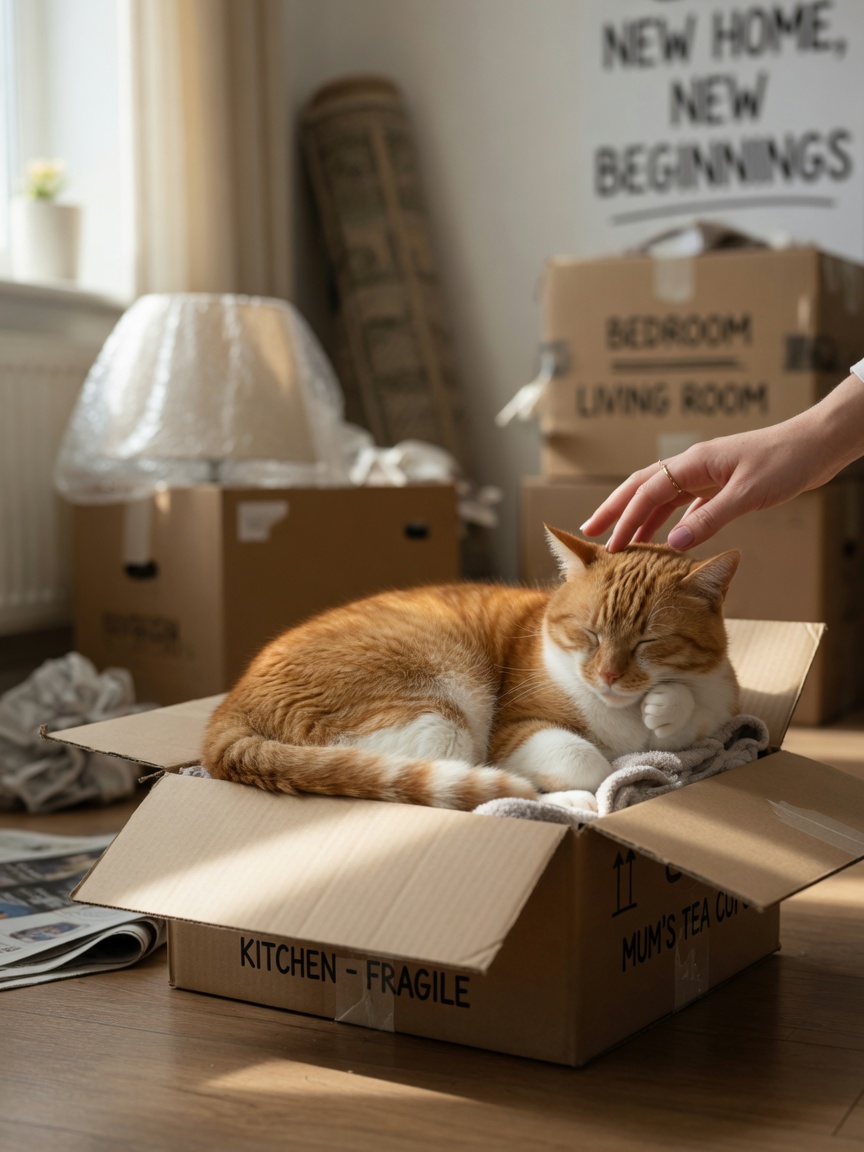
The weeks before a move are an opportunity to prepare your cat gradually rather than presenting the change all at once.
Introduce Moving Boxes Early
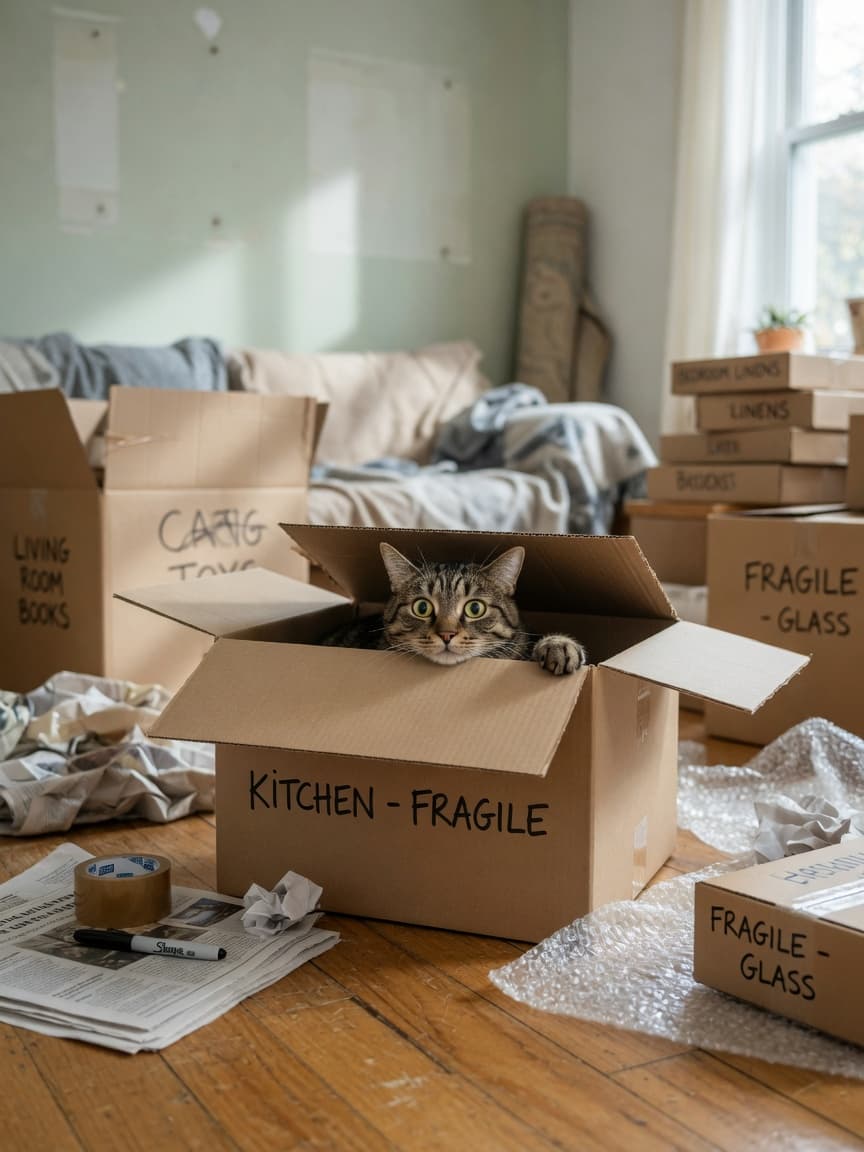
Boxes appearing in the home are an early source of disruption for cats. Bring them in several weeks before packing begins and leave them open and accessible. Many cats will investigate and eventually claim a box as a sleeping spot — a good sign that they are processing the change calmly rather than being overwhelmed by it on moving day.
Maintain Routine Rigorously
Feeding times, play sessions, and sleeping arrangements should remain as consistent as possible during the packing period. Cats are acutely sensitive to changes in routine and will pick up on the disruption even before the physical environment changes. Your predictability provides an anchor.
Use Pheromone Diffusers
Plug-in diffusers releasing synthetic feline facial pheromone can be used in the home for two to three weeks before the move. Clinical studies have demonstrated their effectiveness in reducing anxiety-related behaviours in cats during environmental change. Begin using them early, well before the packing process creates visible disruption.
On Moving Day
Moving day is inevitably chaotic, and for a cat, a house full of strangers carrying furniture in and out represents a genuine threat. The safest approach is to contain your cat in a single quiet room — ideally one that is packed last — with their bed, litter tray, water, and a recently worn piece of your clothing for scent comfort. Put a sign on the door to prevent removal men from accidentally opening it.
Transport your cat in a well-ventilated, secure carrier. Cover it partially with a light cloth to reduce visual stimulation during the journey without obstructing airflow entirely. Keep the car quiet — no loud music — and drive as smoothly as possible.
Settling In: The First Days and Weeks
Start with One Room
Rather than giving your cat access to the entire new property immediately, confine them to a single room for the first few days. Choose a room that will be set up quickly and consistently — a bedroom or living room works well. Include their bed, litter tray, scratching post, and familiar items. This approach allows them to establish a scent base in a manageable space before gradually expanding their territory.
Scent Swapping
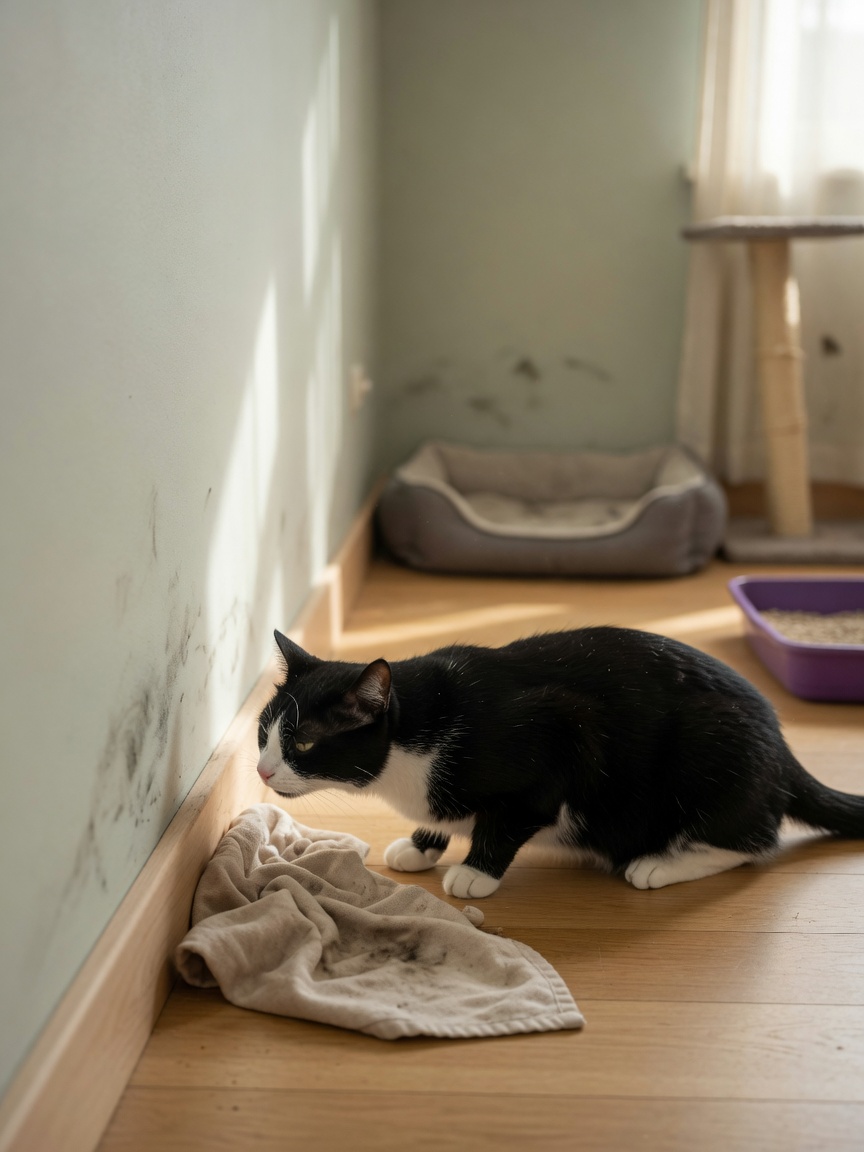
Before opening up the rest of the house, help your cat explore it through scent. Rub a soft cloth along your cat's cheeks — where they produce facial pheromones — and then wipe it along skirting boards and lower surfaces in other rooms. This distributes familiar scent and helps the new environment smell less alien.
Patience Over Speed
Allow your cat to dictate the pace of exploration. Some cats venture confidently into new rooms within a couple of days; others may take two weeks to feel comfortable moving beyond their initial room. Neither timeline is wrong. Forcing exploration by carrying a reluctant cat into new areas typically backfires by associating those spaces with the anxiety of being restrained.
Outdoor Access After a Move
Cats with outdoor access should be kept inside for a minimum of three to four weeks in the new home before being allowed out. This gives them sufficient time to establish the new property as their home base. A cat released too early may attempt to return to the old address, especially if the distance allows it, or may become lost in an unfamiliar neighbourhood.
When outdoor access is first introduced, go out with your cat if possible and keep the session short. Ensure they are microchipped with up-to-date contact details registered before the move — this is a legal requirement in many areas and a practical essential given the risk of disorientation in new surroundings.
When to Seek Veterinary Advice
If your cat stops eating for more than 48 hours, shows signs of pain during urination, or becomes completely withdrawn for more than a week, contact your vet. Short-term veterinary support — including prescription anxiolytics for particularly sensitive cats — is a legitimate and humane option when stress is severe. Most cats settle into a new home within four to six weeks, but some individuals benefit from additional support during the transition.