
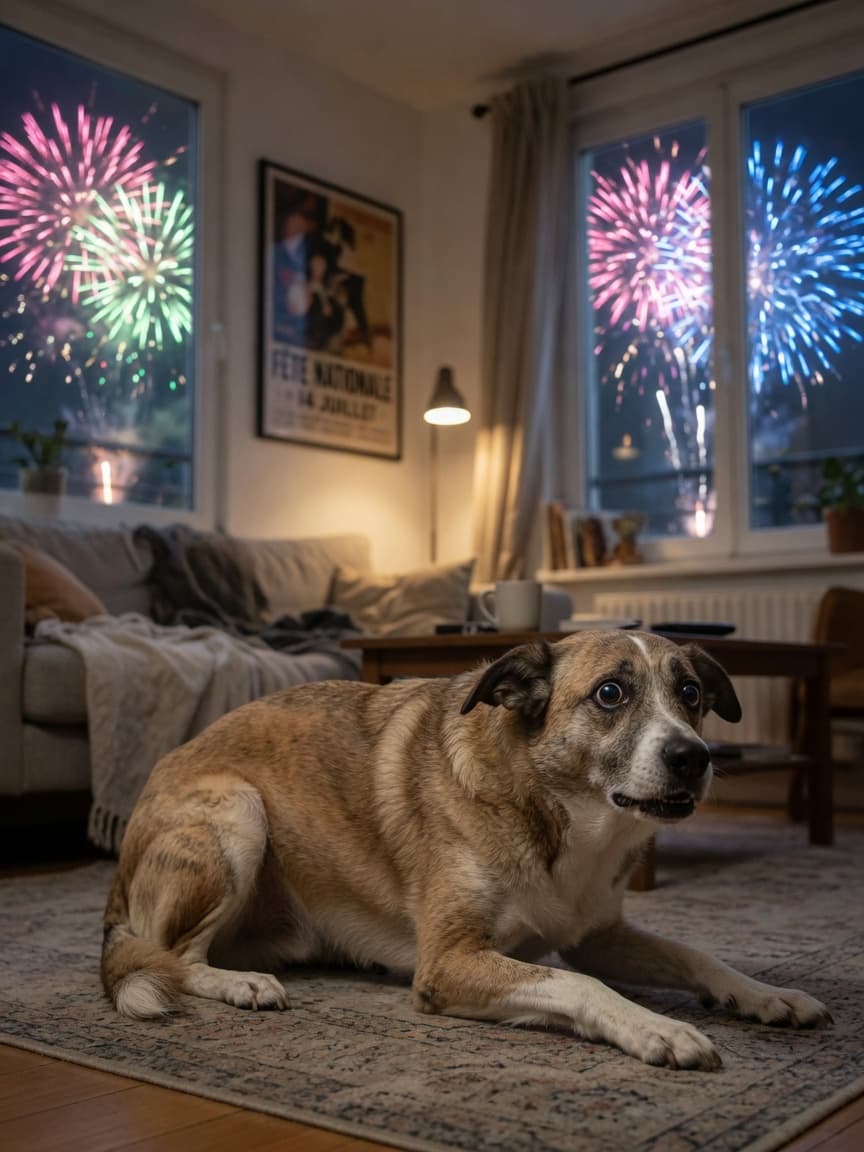
Millions of Dogs Dread the Fifth of November
In the UK, an estimated 45 percent of dogs show signs of fear in response to fireworks. Globally, thunderstorm phobia is one of the most frequently reported behaviour problems in dogs presenting to veterinary clinics. Unlike many behaviour problems that develop gradually, noise phobia can appear suddenly — even in previously unaffected adult dogs — and without intervention, it tends to worsen over time rather than resolve.
Why Noise Triggers Such Extreme Responses
Dogs hear a broader frequency range than humans, and they cannot be told that a noise is harmless. For a phobic dog, fireworks and thunderstorms represent unpredictable, unavoidable, high-intensity sensory events. The response is not wilful drama — it is a genuine panic state involving the same neurological pathways as human post-traumatic stress.
Thunderstorms Are Multisensory
Thunderstorm phobia is frequently more complex than fireworks phobia because storms involve multiple simultaneous stimuli: thunder, lightning flashes, changes in barometric pressure, electrostatic charge, wind, and rain. Dogs may begin to respond to early barometric changes well before a storm is audible to their owners. This explains why some dogs appear to "predict" storms with extraordinary accuracy.
Sensitisation Over Time
Without intervention, noise phobia typically worsens with each exposure through a process called sensitisation — the opposite of habituation. Each frightening event lowers the threshold for the next response. A dog that trembles quietly during its first fireworks experience may be found attempting to break through walls by its fifth.
Recognising the Signs
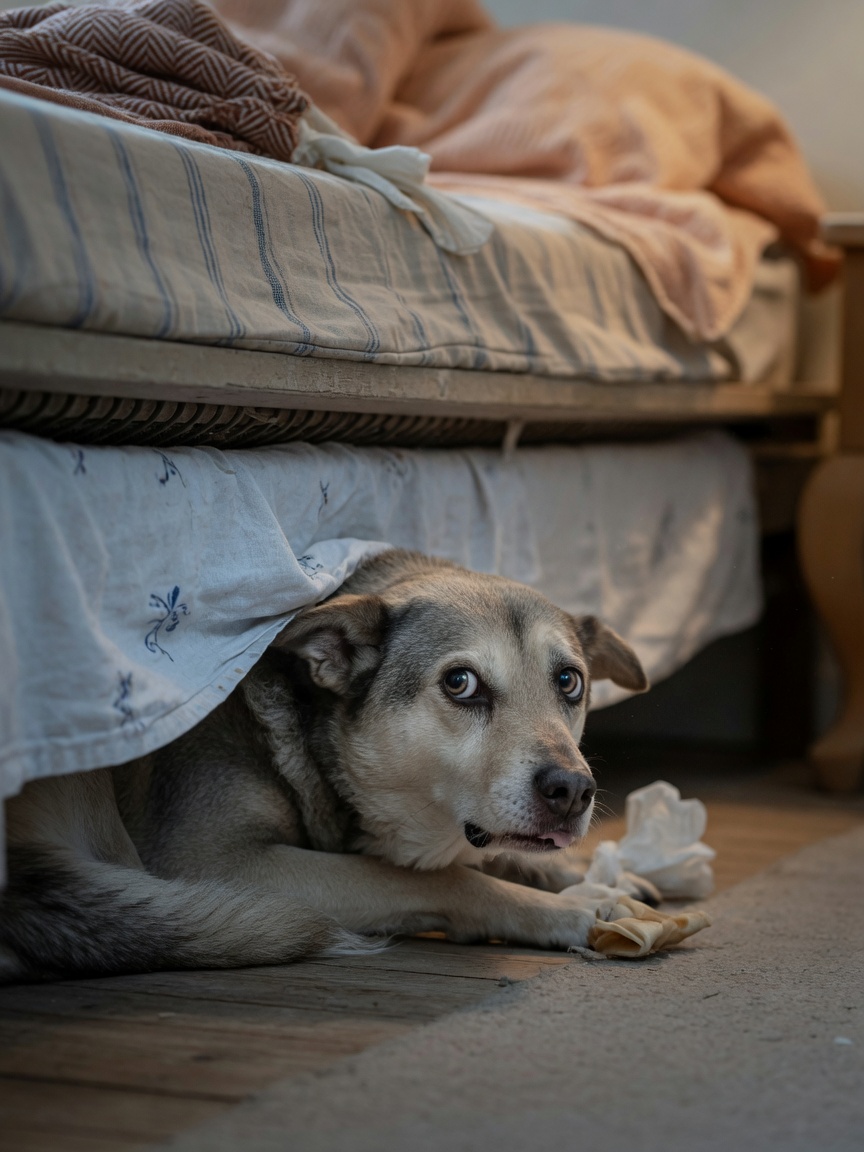
Noise phobia exists on a spectrum. Mild signs include panting, restlessness, and seeking owner proximity. Moderate signs include hiding, refusal to eat, and sustained trembling. Severe phobia involves frantic escape attempts, self-injury, destruction of property, urination, defecation, and in extreme cases, running away — dogs that bolt in a panic have been killed on roads having travelled significant distances from home.
It is worth noting that a dog that appears outwardly calm may still be experiencing significant physiological stress. Cortisol measurements in studies have confirmed elevated stress hormones in dogs showing minimal visible signs during noise events.
Evidence-Based Interventions
Desensitisation and Counter-Conditioning
The most robustly evidenced behavioural intervention involves systematic exposure to recorded versions of the feared noise at very low volume, paired with high-value rewards, and very gradual volume increase over weeks to months. Commercially available sound therapy programmes have been developed specifically for this purpose and have peer-reviewed evidence supporting their efficacy when used correctly.
The critical point is that this must be conducted outside of the season — a dog already sensitised and in a panic state cannot learn during exposure to the real event. Desensitisation requires the dog to be below its fear threshold throughout every session.
Safe Spaces
Providing a dog-chosen refuge — typically a covered crate, a space under a bed, or an internal room away from windows — is strongly supported by behavioural science. The dog should be allowed to access this space freely at all times, and it should never be used as a place of confinement for other purposes. Forcing a dog out of its refuge increases panic. Adding bedding that carries the owner's scent can provide additional comfort.
Management During Events
- Keep the dog indoors during fireworks events with doors, windows, and cat flaps secured
- Draw curtains to minimise visual stimuli from lightning and fireworks flashes
- Use white noise, television, or specific dog-calming music to partially mask sounds
- Remain present and calm — your dog is permitted to seek contact with you, and providing comfort does not worsen the phobia
- Ensure microchipping and collar ID are current before fireworks season, as even indoor dogs occasionally bolt
Pheromone Products
Synthetic calming pheromone products in diffuser, spray, and collar form have been tested in noise phobia studies. Results are inconsistent but suggest a modest reduction in anxiety in some dogs, particularly when diffusers are started at least 48 hours before an anticipated event. They are most useful as part of a broader management strategy rather than a standalone solution.
Pressure Wraps
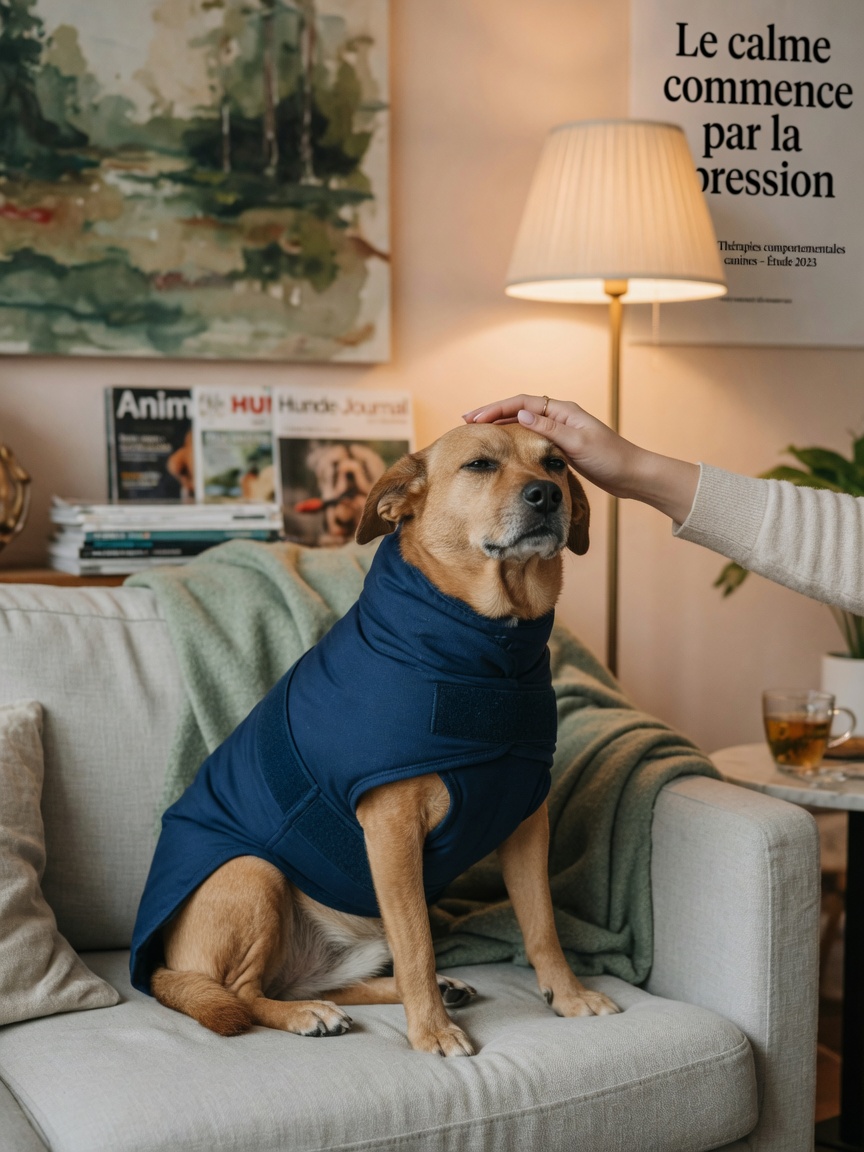
Anxiety wraps or pressure garments have a small evidence base suggesting benefit in some dogs during noise events. Evidence quality is limited, but the intervention carries no significant risk, and owner-reported outcomes are frequently positive. Fitting and familiarisation before the event are important.
Veterinary Medication
For moderate to severe phobia, veterinary prescription of fast-acting anxiolytic medication for use during noise events is strongly recommended. Sedatives alone are no longer considered best practice, as they reduce motor function without reducing fear — the dog may be unable to move but remains terrified. Current evidence supports medications that reduce anxiety, not simply sedate. Owners should discuss options well in advance of the fireworks season, as some preparations require advance planning.
Long-Term Management
Noise phobia is a chronic condition for most affected dogs. The goal of intervention is to reduce the severity of the response and prevent progression, while protecting quality of life. Annual review with a vet or behaviourist is worthwhile, particularly as the dog ages — noise sensitivity can increase with age, and cognitive changes in older dogs can exacerbate existing phobias.
Action Plan for Owners
- See your vet before the next fireworks season to discuss medication options — do not wait until the night itself
- Begin sound desensitisation training outside of the noise season, using accredited programmes
- Identify or create a dog-chosen safe space and make it freely available year-round
- Use pheromone diffusers and pressure wraps as adjuncts, not primary solutions
- Never punish fearful behaviour or attempt to force the dog to confront the noise
- Check microchip registration and collar ID before every fireworks period