
When a Rich Meal Turns Dangerous
Each year, thousands of dogs are rushed to veterinary clinics after holiday meals — not from toxic foods alone, but from a sudden attack of pancreatitis. This painful inflammation of the pancreas is one of the most common digestive emergencies in dogs, yet many owners remain unaware of how quickly it can escalate. Understanding what triggers it, how to spot it early, and how diet plays a central role in management could genuinely save your dog's life.
What Is the Pancreas Actually Doing?
The pancreas performs two essential jobs. As an endocrine organ, it regulates blood sugar through insulin and glucagon. As an exocrine organ, it produces digestive enzymes — lipase, amylase, and protease — that break down fats, carbohydrates, and proteins in the small intestine. In a healthy dog, these enzymes remain inactive until they reach the intestine. In pancreatitis, they activate prematurely inside the pancreas itself, causing the organ to begin digesting its own tissue. The result is intense inflammation, pain, and systemic damage if left untreated.
Common Causes and Risk Factors
Pancreatitis can be acute (sudden onset) or chronic (recurring, lower-grade inflammation). Several factors are consistently associated with both forms.
Dietary Triggers
High-fat meals are the most well-established trigger. A dog that raids the bin, receives fatty table scraps, or consumes a large portion of rich food — including fatty meats, cheese, or processed snacks — is at significant risk. Even a single high-fat episode can provoke a severe attack in a predisposed dog.
Breed and Weight
Miniature Schnauzers are notably prone to pancreatitis due to a hereditary tendency towards hyperlipidaemia (elevated blood fats). Yorkshire Terriers, Cocker Spaniels, and Cavalier King Charles Spaniels also appear more frequently in clinical studies. Overweight dogs carry substantially higher risk regardless of breed.
Other Contributing Factors
Certain medications — particularly corticosteroids, some diuretics, and specific antibiotics — are associated with pancreatitis. Hypothyroidism, diabetes mellitus, and blunt abdominal trauma are additional risk factors. In some cases, no clear cause is identified, which is referred to as idiopathic pancreatitis.
Recognising the Symptoms

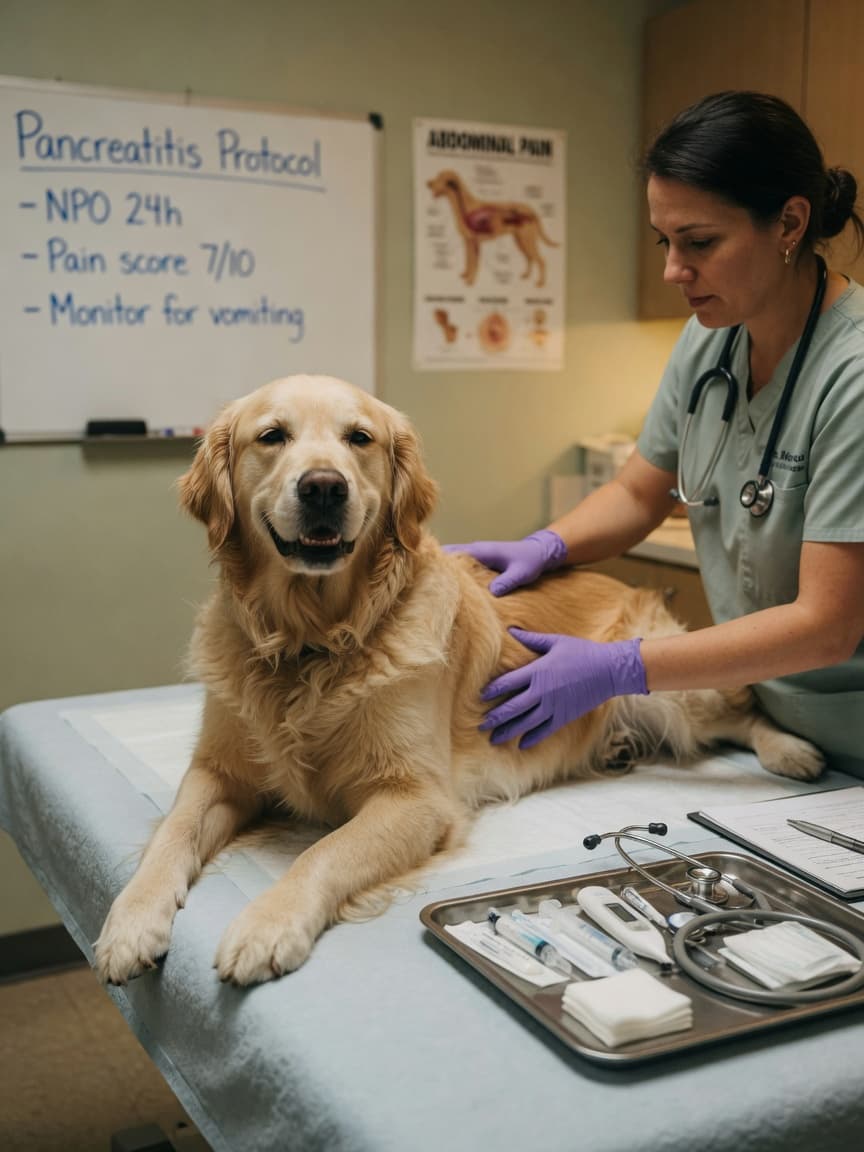
Acute pancreatitis can range from mild discomfort to a life-threatening emergency. The classic signs include sudden vomiting, which may be frequent and severe, accompanied by abdominal pain. Dogs may adopt a distinctive "prayer position" — front legs stretched forward, hindquarters raised — as they attempt to relieve pressure on the abdomen. Other symptoms include lethargy, loss of appetite, diarrhoea, fever, and in severe cases, dehydration and collapse. Chronic pancreatitis may present more subtly, with intermittent digestive upset, gradual weight loss, and reduced appetite over weeks or months.
If your dog shows signs of significant abdominal pain, repeated vomiting, or sudden lethargy, contact your vet without delay. Severe pancreatitis requires intravenous fluids, pain management, and hospitalisation.
Diagnosis and Veterinary Treatment
Your vet will typically combine clinical signs with blood tests — particularly a pancreatic lipase immunoreactivity (PLI) test, which is far more specific than routine amylase and lipase measurements. Abdominal ultrasound can visualise pancreatic swelling or fluid accumulation. In straightforward cases, diagnosis is relatively swift, but distinguishing pancreatitis from other causes of acute vomiting sometimes requires additional investigation.
Treatment focuses on supportive care. Intravenous fluid therapy corrects dehydration and maintains circulation. Anti-nausea medications and pain relief are administered promptly, as uncontrolled pain worsens the inflammatory cascade. Contrary to older guidance, current evidence supports introducing small amounts of easily digestible food early in recovery rather than prolonged fasting, provided vomiting is controlled.
Dietary Management: The Long Game
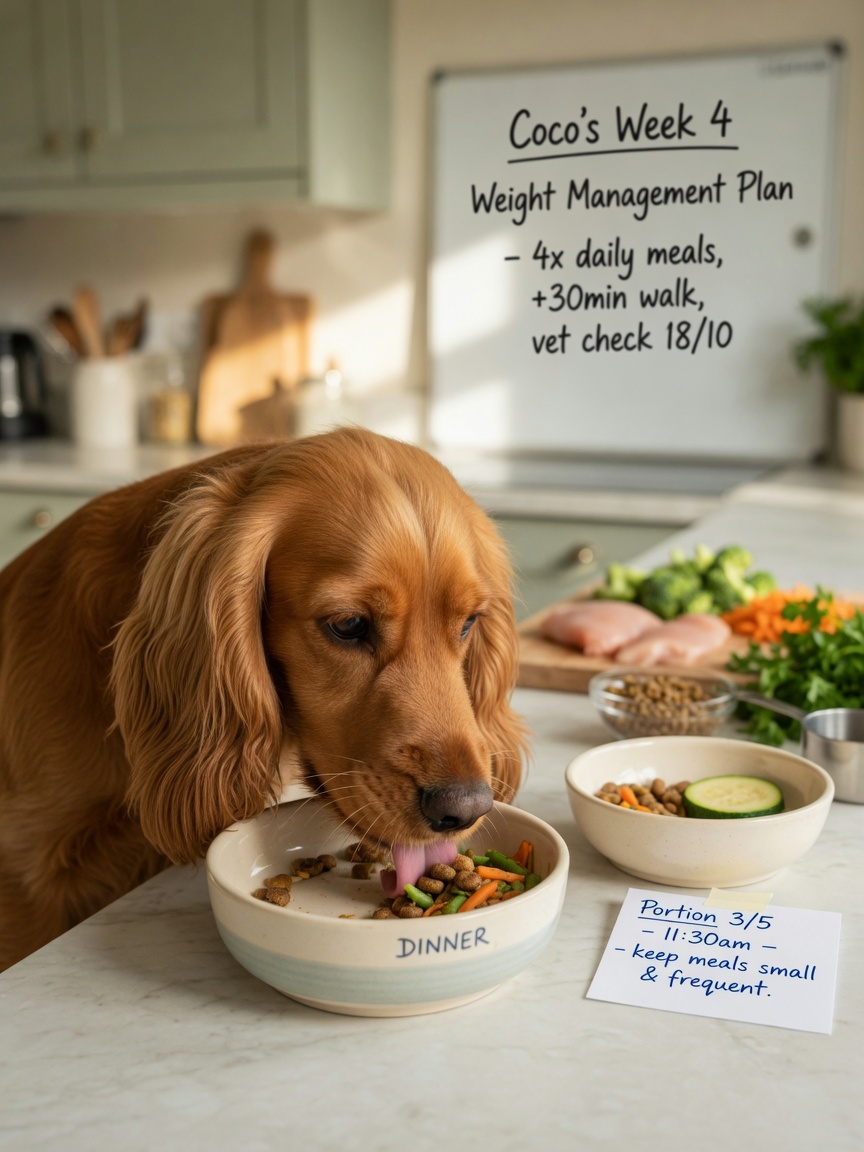
For dogs that recover from acute pancreatitis or live with the chronic form, diet becomes an ongoing management tool rather than a one-time fix.
Fat Restriction
Reducing dietary fat is the cornerstone of nutritional management. Most veterinary nutritionists recommend a diet containing no more than 10% fat on a dry matter basis for dogs with a history of pancreatitis. Many dogs require even lower levels during recovery. Your vet or a board-certified veterinary nutritionist can help identify an appropriate commercial diet or formulate a home-cooked option that meets this requirement without creating other nutritional gaps.
Feeding Frequency and Portion Control
Feeding smaller meals more frequently — three to four times daily rather than once — reduces the digestive load placed on the pancreas at any one time. This is particularly useful for dogs with chronic, low-grade disease. Strict portion control also supports healthy weight maintenance, which independently reduces risk.
What to Avoid
- Fatty table scraps and human food treats
- High-fat commercial treats, rawhide, and chews with added fat
- Sudden dietary changes, which can themselves trigger digestive upset
- Unsupervised access to bins, compost, or outdoor food sources
- Dietary supplements containing high levels of fish oil unless specifically directed by your vet, as excessive omega-3 supplementation can contribute to elevated triglycerides in some dogs
Living Well with Pancreatitis
Many dogs with a history of pancreatitis go on to live full, comfortable lives when managed carefully. The key principles are consistency in feeding, vigilance about fat intake, and prompt veterinary attention at the first sign of a recurrence. Dogs with chronic pancreatitis may eventually develop exocrine pancreatic insufficiency or diabetes as a consequence of ongoing tissue damage — both of which require their own management strategies.
Regular weight monitoring, routine blood work as recommended by your vet, and open communication about any changes in appetite, stool quality, or energy levels all contribute to better long-term outcomes. Pancreatitis is rarely a one-time event, but with informed management, the intervals between flare-ups can be extended significantly — or prevented entirely.