
Parrot Biting: Why It Happens and What Not to Do
A parrot bite is not something you forget in a hurry. Even a small conure can break skin with surprising ease, and a large macaw or cockatoo is capable of causing serious injury. Biting is also one of the most common reasons parrots are rehomed or surrendered — owners who feel they cannot safely interact with their own bird often reach a point of desperation. What is frequently missing from the conversation is an understanding of why biting occurs in the first place, because without that understanding, attempts to address it tend to make things considerably worse.
Biting Is Communication
This is the most important framework for understanding parrot biting, and it changes everything about how you respond. Parrots do not bite out of malice, spite, or dominance. They bite because they are trying to communicate something — and in most cases, biting represents a failure of earlier, subtler communication attempts that the human did not notice or did not respond to appropriately.
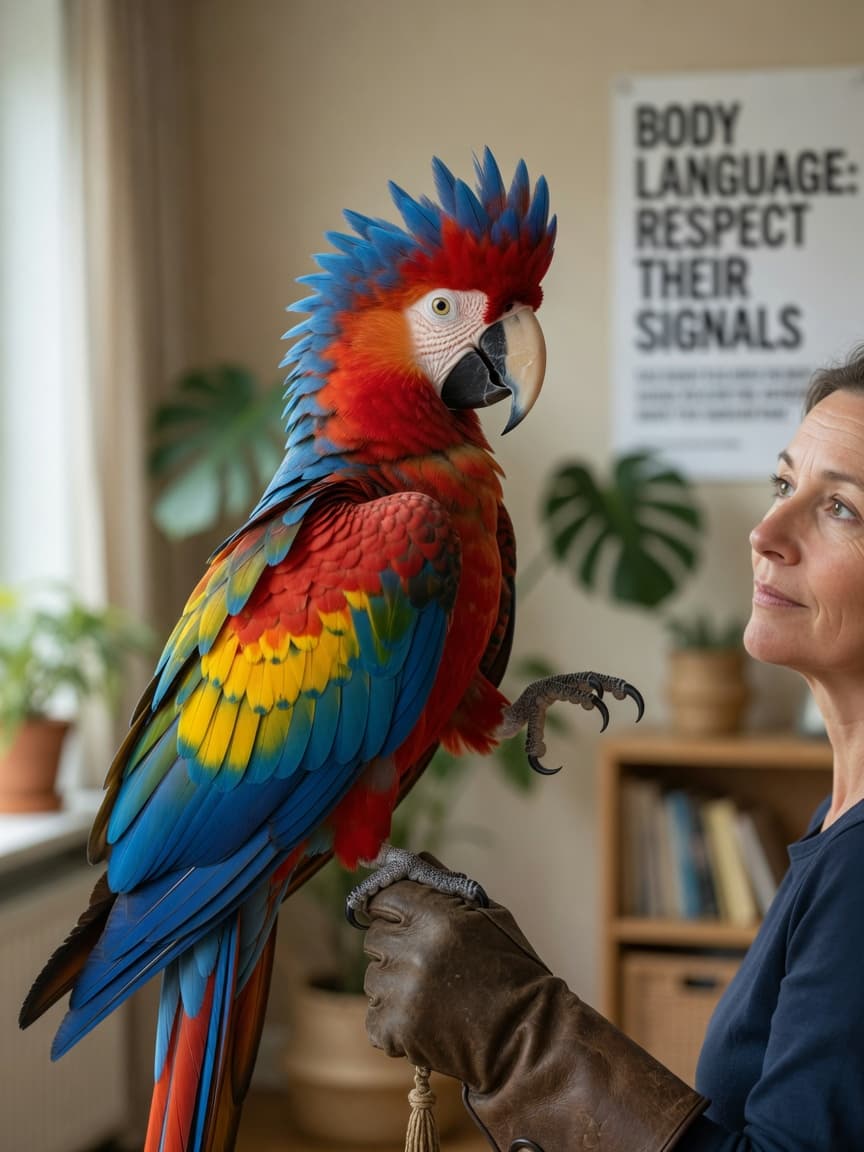
Before a parrot bites, it will almost always display warning signals. Pinning eyes (rapid dilation and constriction of the pupils), raised head feathers or crest, a fanned tail, a tense body posture, turning away, or moving to the far side of the perch — all of these are the parrot saying "I am uncomfortable" or "I do not want this right now." When humans miss or ignore these signals and continue to approach or handle the bird, biting is the escalation. It is the final communication tool the bird has available when everything else has failed.
Common Reasons Parrots Bite
Fear
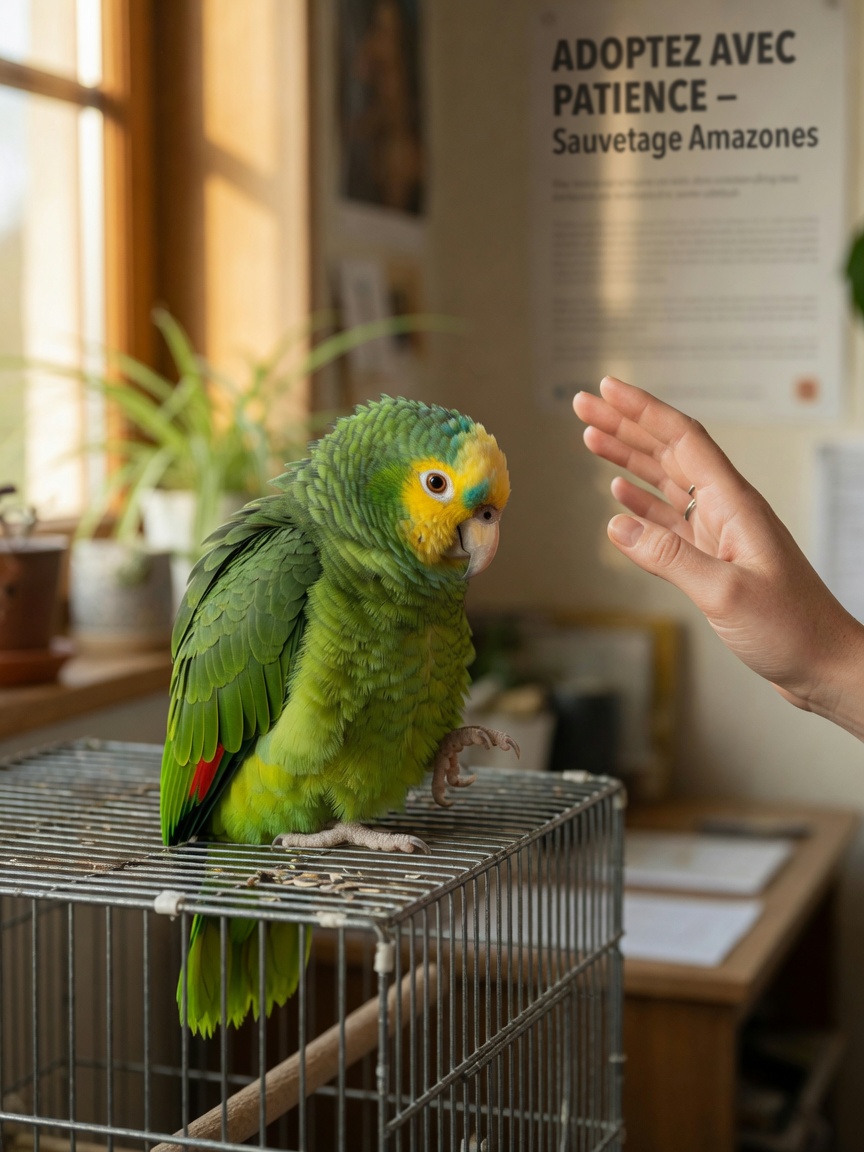
Fear is one of the most common drivers of biting, particularly in new or rescued parrots that have not yet established trust with their owner. A bird that has been mishandled previously, startled repeatedly, or exposed to unpredictable handling will learn that biting is an effective way to create space and end unwanted interaction.
Hormonal Behaviour
During breeding season, many parrots undergo significant hormonal changes that alter their behaviour substantially. A bird that has been reliably gentle for years may become unpredictable, territorial, or aggressive during this period. This is not a personality change — it is a temporary physiological state. Hormonal biting tends to be more explosive and less predictable than fear-based biting.
Territorial Responses
Many parrots become cage-territorial, biting hands that reach into their enclosure even when they are otherwise handleable. This is distinct from generalised aggression. The cage represents the bird's perceived safe zone, and intrusion triggers a protective response. Asking the bird to step up onto a perch and move away from the cage before handling, rather than reaching directly in, often resolves this.
Overstimulation
Petting sessions that go on too long, handling that becomes too intense, or interactions in an overly exciting environment can tip a parrot from engagement into overstimulation. The bite in these situations often feels sudden and unpredictable, but the bird's body language will usually have shifted before it happens — a slightly tighter body posture, moving the head away from contact, or a more rapid breathing rate.
Attention and Learned Behaviour
Parrots are highly intelligent and learn quickly what produces a result. If a bite has previously produced a strong, interesting reaction — shouting, a sharp intake of breath, the person leaving the room — the bird may repeat it because the outcome was stimulating or because it successfully ended an unwanted interaction.
What Not to Do
- Do not yell, scold, or make any strong emotional reaction immediately after a bite. This either rewards the bite with attention or increases the bird's anxiety, both of which make future biting more likely.
- Do not scruff, restrain, or physically punish a parrot for biting under any circumstances. This destroys trust, increases fear-based biting, and can cause lasting psychological harm to an animal with the emotional complexity of a young child.
- Do not push through warning signals and continue handling. If the bird is showing discomfort signals, the interaction should end — calmly, without drama, and on your terms before a bite occurs.
- Do not assume the bird is being dominant. The dominance framework for parrot behaviour has been largely discredited, and applying it leads to interventions (such as the "earthquake" — shaking the bird off your hand) that are counterproductive and distressing.
- Do not force interactions when the bird is hormonal, unwell, or in a new environment. These are high-risk periods where biting is more likely and trust-building requires patience rather than persistence.
Building Toward a Bite-Free Relationship
The foundation of reducing biting long-term is learning to read your individual bird's body language fluently. This takes time and attention but is entirely achievable. Observe what precedes biting, note the contexts in which it occurs, and begin ending interactions before the threshold is reached.
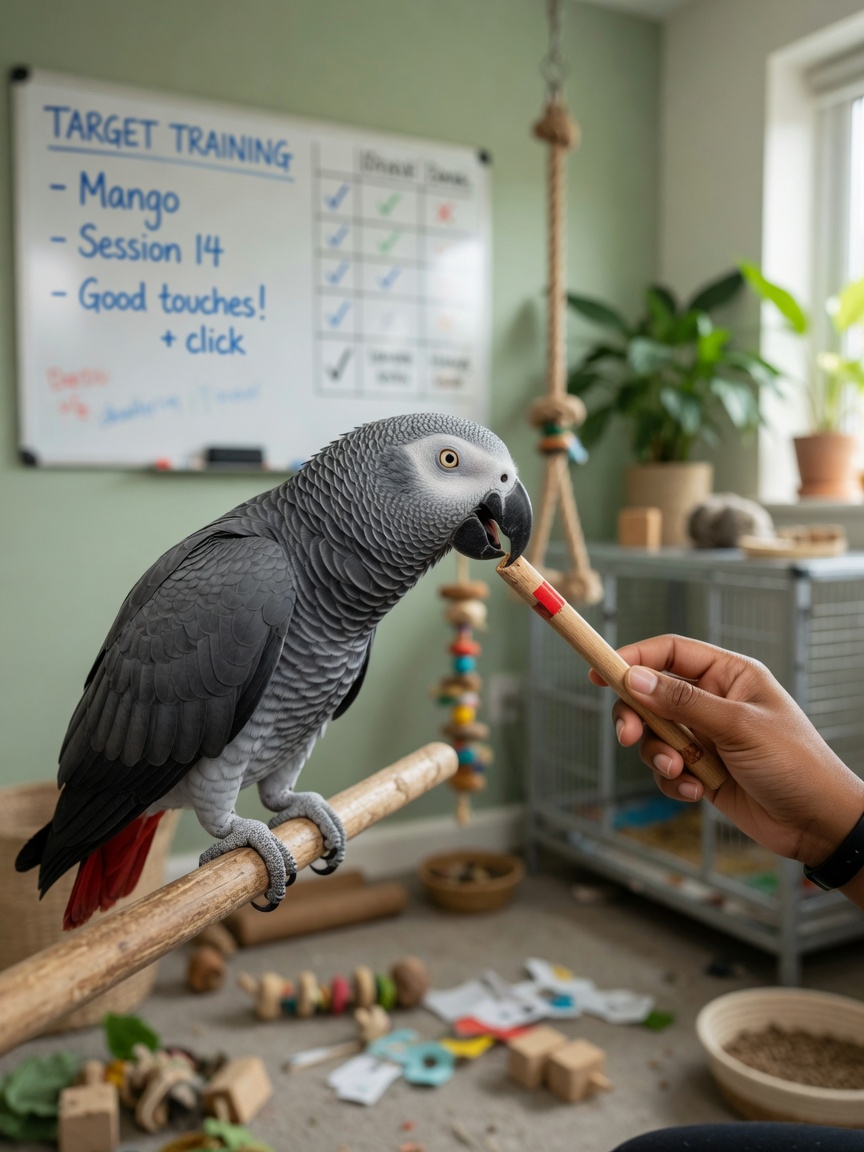
Positive reinforcement training — offering small food rewards for calm, cooperative behaviour — is the most evidence-supported approach to building trust and modifying biting behaviour. Target training, in which the bird is taught to touch a stick with its beak, gives the bird a job to do and creates a framework for calm interaction that benefits both parties. Working with an avian behaviour consultant can accelerate progress significantly if biting is severe or has a long history.
A parrot that bites is not a bad bird. It is a bird that has learned, usually quite reasonably, that biting is the most reliable tool it has. Change the conditions and you change the behaviour.