
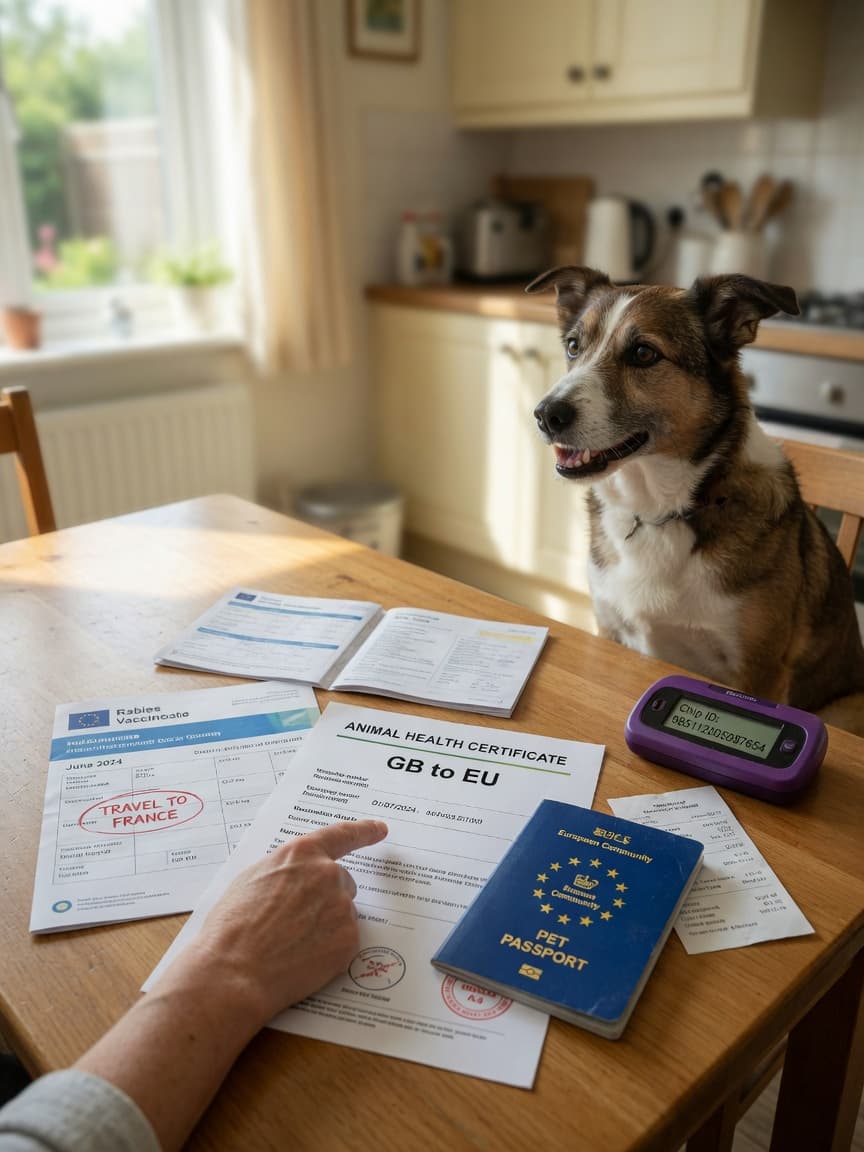
What Changed for UK Pets After Brexit
Before 1 January 2021, UK pet owners could travel freely across EU member states using the EU Pet Passport — a single document that covered ongoing vaccinations, health records, and identification for the lifetime of the animal. That system was straightforward, widely understood, and cost relatively little to maintain year on year.
From 1 January 2021, however, the rules changed completely. The United Kingdom is no longer part of the EU Pet Passport scheme. UK pets cannot obtain new EU Pet Passports, and any EU Pet Passport that was issued by a UK vet before Brexit is no longer valid for travel to the European Union. If you still have one of those old blue booklets in a drawer, it will not get your pet across the border.
This catches many owners by surprise, particularly those who had been travelling regularly to Europe before the pandemic and are only now returning to it. Understanding the new system before you book travel is essential — failing to comply with the requirements can result in your pet being refused entry to the EU, quarantined, or returned to the UK at your expense.
What UK Pets Need to Travel to the EU Now
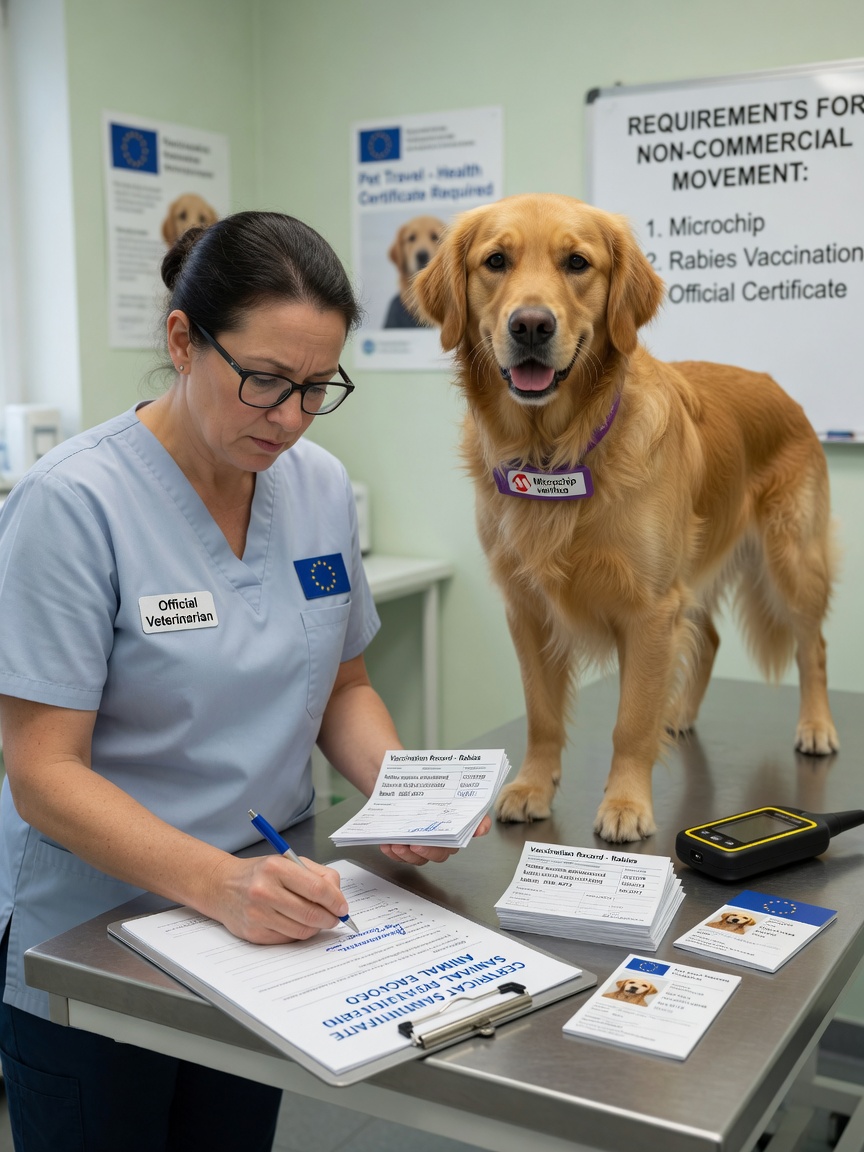
There are three core requirements that apply to all dogs, cats, and ferrets travelling from Great Britain to an EU member state. Each one must be in place before you travel.
Microchip
Your pet must be microchipped to the ISO 11784/11785 standard, which is a 15-digit chip. This is the same standard that has been required in England for dogs since 2016, so most pets in the UK will already have a compliant chip. The microchip must be implanted before, or at the same time as, the rabies vaccination is given — the chip cannot be fitted after the vaccine and retrospectively count toward compliance.
Rabies Vaccination
Your pet must have a valid rabies vaccination. If your pet has never been vaccinated against rabies before, you must allow at least 21 days after the vaccination before travelling to the EU. If your pet was previously vaccinated and the vaccination is being given as a booster within the valid period, the 21-day wait does not apply and you can travel sooner. Keep your vaccination records from your vet — these will need to be referenced when the Official Veterinarian completes your documentation.
Animal Health Certificate
The Animal Health Certificate, commonly referred to as the AHC, is the document that has replaced the EU Pet Passport for UK-to-EU travel. It must be completed and signed by an Official Veterinarian — not just any vet, but a vet who holds an OV qualification and is authorised by the Animal and Plant Health Agency (APHA). Not all vets are OVs, so you will need to check with your practice in advance or find an OV-registered practice near you.
The AHC must be issued within 10 days of travel if you are travelling by sea or air. If you are travelling via the Channel Tunnel — including Le Shuttle — the certificate must be issued within 5 days of travel. This shorter window applies specifically to Eurostar and Eurotunnel routes.
Importantly, the AHC is a single-use document. It covers one trip to the EU. If you travel to France in August, come home, and then want to go back in October, you need a new AHC for the October trip. The certificate is valid for onward travel within the EU for four months after issue, so if you are spending an extended period on the continent or visiting multiple countries, you do not need a new certificate for each country — only for each departure from the UK.
Tapeworm Treatment for Dogs
Dogs (but not cats or ferrets) entering Finland, Ireland, Malta, or Norway must receive a tapeworm treatment before arrival. Norway is not an EU member state but applies the same requirement. The treatment must be administered by a vet between one and five days before the dog's arrival in the country and must be recorded in the official documentation. If you are travelling to any of these destinations, plan the timing carefully — you cannot administer the treatment yourself, and it must fall within that precise window.
This requirement does not apply for most other EU destinations, including France, Spain, Germany, Italy, and the Netherlands, but it is worth confirming requirements for your specific destination when you arrange your AHC.
Approved Border Crossing Points
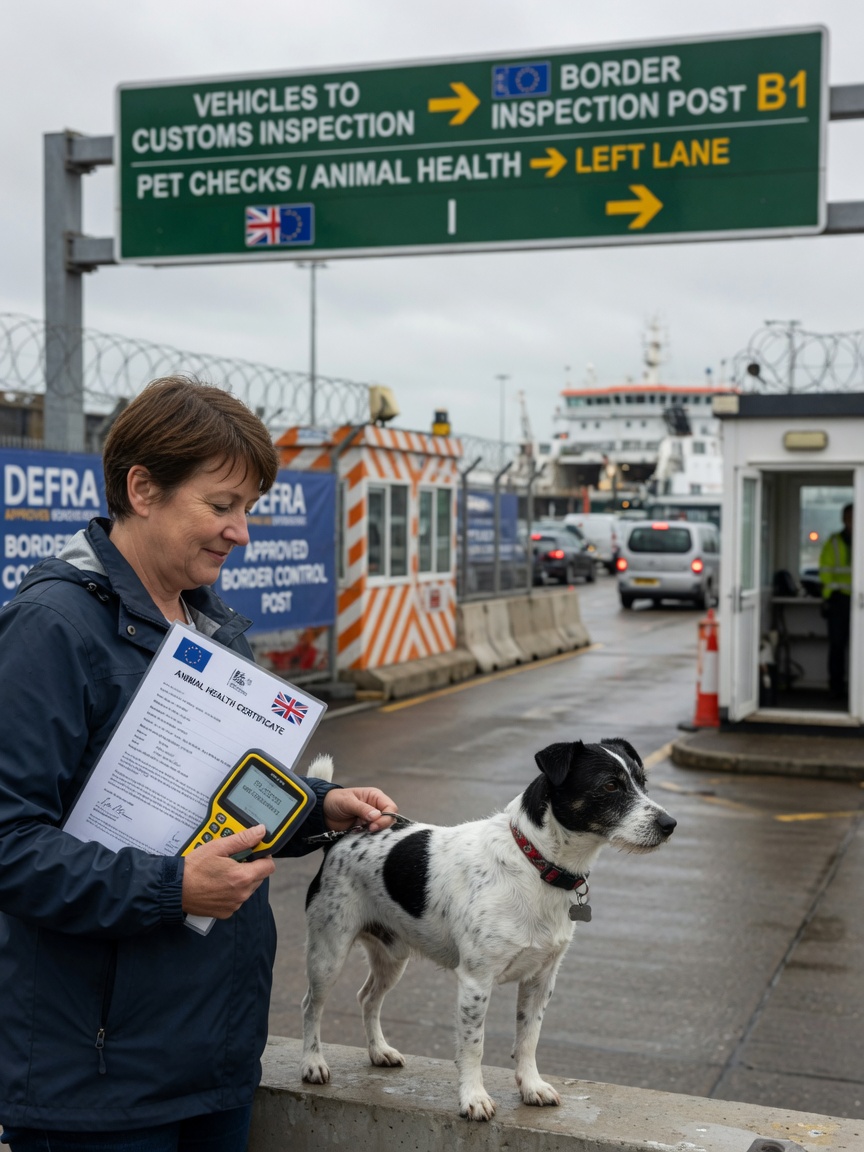
You cannot cross into the EU with a pet through any port or airport — entry must be made through an approved Border Inspection Post, also known as a BIP or a Post of Entry (PIP) in some documentation. Not all ports accept animals, and turning up at an unapproved crossing with a pet will result in entry being refused.
You can check approved entry points using the TRACES NT database, which is the EU's online system for tracking animal movements. Before booking travel, confirm that the port or airport you intend to use is listed as an approved entry point for pet animals.
Travel Between Great Britain and Northern Ireland
Separate rules apply to pet travel between Great Britain and Northern Ireland. Since October 2023, an AHC has been required for pets travelling from Great Britain to Northern Ireland via certain routes. This is a distinct requirement from the EU travel rules and applies to domestic travel within the United Kingdom. If you are planning travel on this route, check the current requirements with APHA before you travel, as these rules have been subject to ongoing development.
Bringing Pets Into the UK From the EU
If you are bringing a pet into Great Britain from an EU country — for example, if you have purchased or rehomed an animal while abroad — the rules are slightly different. The pet will need a GB Pet Health Certificate rather than an AHC. Pets entering from EU listed countries do not require a rabies antibody titre test, which is one of the more demanding requirements that applies to pets arriving from non-listed countries.
Common Mistakes to Avoid
- Assuming an old EU Pet Passport issued before Brexit is still valid — it is not.
- Vaccinating your pet against rabies and travelling within 21 days without checking whether a booster exemption applies.
- Booking travel through a port that is not an approved Border Inspection Post.
- Leaving it too late to find an Official Veterinarian — OV appointments can be in high demand, particularly in summer months.
- Not accounting for the shorter 5-day AHC window when using the Channel Tunnel.
- Forgetting that a new AHC is needed for every trip back from the UK to the EU.
Cost and Planning
The cost of an AHC typically ranges from around £100 to £200, depending on your vet practice and location. This cost applies per trip, which represents a significant ongoing expense compared to the old EU Pet Passport system. Building this cost — along with the OV appointment — into your travel planning well in advance will help avoid last-minute difficulties.
Start the process at least a month before travel to allow time to confirm your pet's rabies vaccination status, locate an OV vet, and book the appointment within the correct time window. With careful preparation, taking your pet to Europe after Brexit is entirely manageable.