
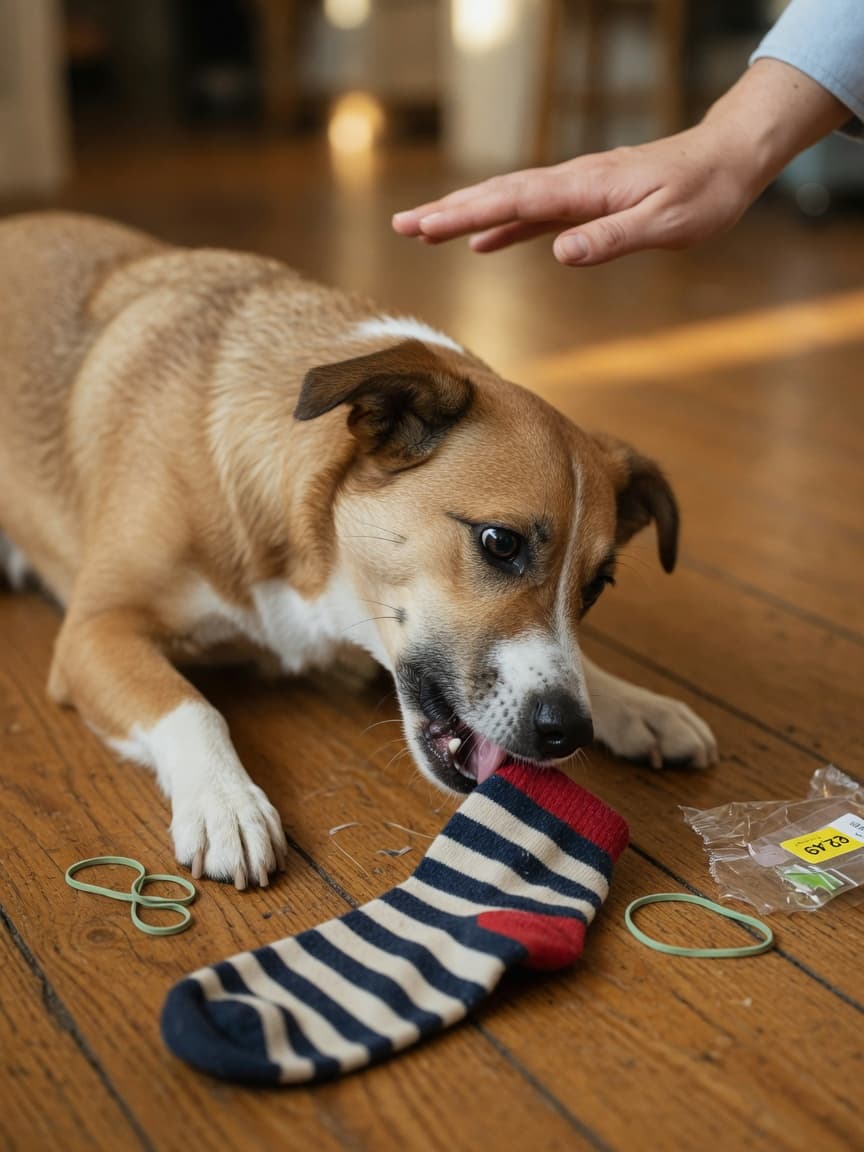
Your Dog Ate What?
Socks, stones, soil, plastic packaging, underwear, rubber bands — if your dog has consumed something that was never intended as food, you are not alone, and you are not imagining it. Pica is the persistent ingestion of non-nutritive, non-food substances, and it is one of the most commonly reported behavioural concerns in dogs seen by veterinary behaviourists. Beyond the frustration and expense, pica carries serious medical risks — from gastrointestinal obstruction requiring emergency surgery to heavy metal toxicity and internal perforation. Understanding what drives the behaviour is the starting point for addressing it safely.
Pica Versus Normal Puppy Mouthing
It is important to distinguish pica from the exploratory mouthing that is entirely normal in puppies. Young dogs investigate the world largely through their mouths, and occasional ingestion of objects during this phase is common. True pica involves persistent, compulsive ingestion of specific non-food categories — often in adult dogs — that continues despite correction and does not diminish naturally with age. If your dog is actively seeking out and swallowing particular materials repeatedly, this crosses into territory that warrants investigation rather than a "puppy phase" explanation.
Medical Causes That Must Be Ruled Out First
Before any behavioural intervention is considered, medical causes must be excluded. Pica can be a symptom of underlying disease rather than a primary behavioural problem, and treating only the behaviour without addressing the cause will fail.
Conditions Associated With Pica
- Gastrointestinal disease — inflammatory bowel disease, exocrine pancreatic insufficiency, and parasites can drive dogs to eat abnormal materials
- Nutritional deficiencies — deficiencies in iron, zinc, or other minerals have been associated with pica in some species, though evidence in dogs is limited
- Anaemia — dogs with anaemia sometimes consume soil or faeces
- Thyroid or adrenal dysfunction
- Neurological conditions affecting impulse control
- Side effects of certain medications, including corticosteroids, which drive increased appetite and indiscriminate eating
A full veterinary work-up including blood panel, faecal examination, and dietary history should precede any behavioural management programme.
Behavioural and Environmental Drivers
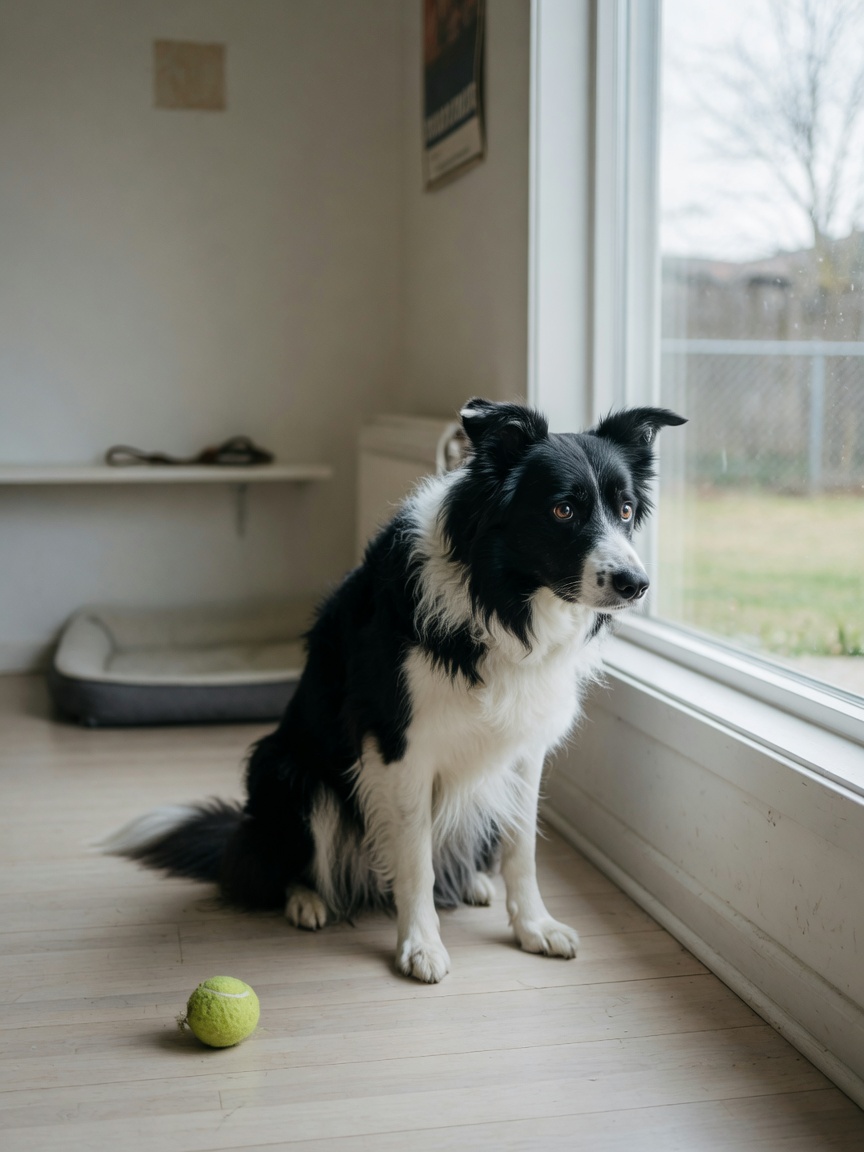
Boredom and Under-Stimulation
Dogs that lack adequate physical exercise, mental engagement, or appropriate chewing outlets will find their own entertainment. Pica in under-stimulated dogs is often a displacement or self-soothing behaviour. Working breeds — Border Collies, Huskies, Belgian Malinois — are particularly prone if their significant cognitive and physical needs are not met consistently.
Anxiety and Compulsive Disorders
In some dogs, pica functions as a compulsive disorder rooted in chronic anxiety. Separation anxiety, generalised anxiety disorder, and obsessive-compulsive type behaviours can all manifest as repetitive ingestion of specific substances. These dogs typically show other anxiety indicators — pacing, vocalisation, destructive behaviour — and require a comprehensive behavioural management plan, often with input from a veterinary behaviourist.
Attention-Seeking
Dogs quickly learn that picking up an item — a sock, a piece of rubbish — elicits an immediate, dramatic response from their owner. Even negative attention (chasing, shouting) is rewarding for some dogs. In these cases, pica is maintained by the owner's response, however well-intentioned.
Management and Treatment Strategies
Environmental Management
Remove access to preferred items wherever possible. This is not a cure but prevents dangerous ingestions while other interventions are implemented. Baby gates, crates during unsupervised periods, and tidying floors and bins are non-negotiable safety measures.
Enrichment and Exercise
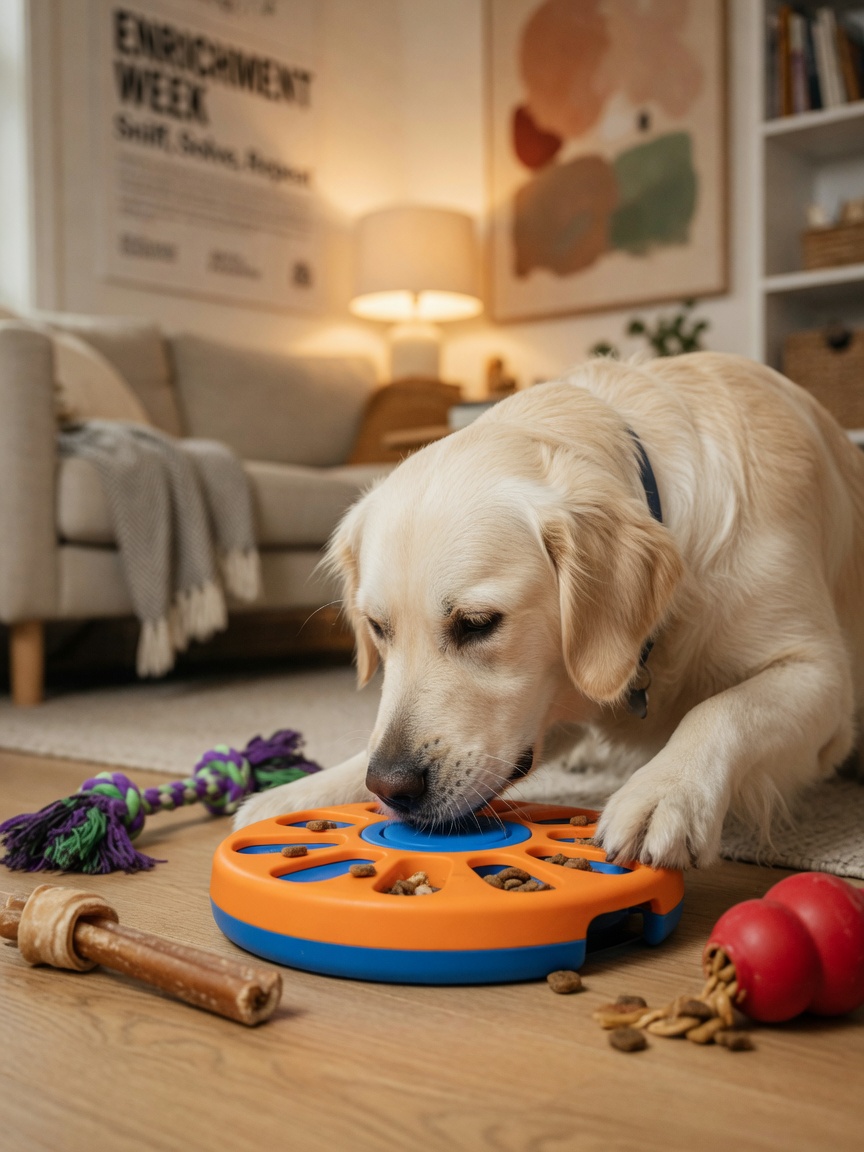
Increase daily exercise, introduce puzzle feeders and sniff work, and provide appropriate chewing outlets such as species-safe chews and food-stuffed enrichment toys. Many cases of pica in otherwise healthy adult dogs resolve substantially when mental and physical needs are genuinely met.
Training Approaches
Teaching a reliable "leave it" and "drop it" cue is essential, but these alone will not address the underlying drive. Work with a positive reinforcement trainer to build these behaviours, and consult a veterinary behaviourist if anxiety is suspected as a root cause. Medication may be warranted for anxiety-driven compulsive pica and should be discussed with your vet.
Practical Summary
- Consult your vet before assuming pica is purely behavioural — a medical work-up should always come first.
- Manage the environment immediately to prevent dangerous ingestions, particularly of sharp objects, toxins, and items that could cause obstruction.
- Know the signs of gastrointestinal obstruction: vomiting, lethargy, abdominal pain, inability to defecate. This is a surgical emergency — seek veterinary care immediately.
- Audit your dog's daily exercise and enrichment honestly. Most working dogs and large breeds need far more than they typically receive.
- Do not chase or shout when your dog picks up a forbidden item — calmly offer a high-value trade instead.
- Seek input from a veterinary behaviourist for persistent, anxiety-driven cases — this is not a problem that resolves with basic training alone.