
Beneath the Curls: What Poodle Owners Need to Know
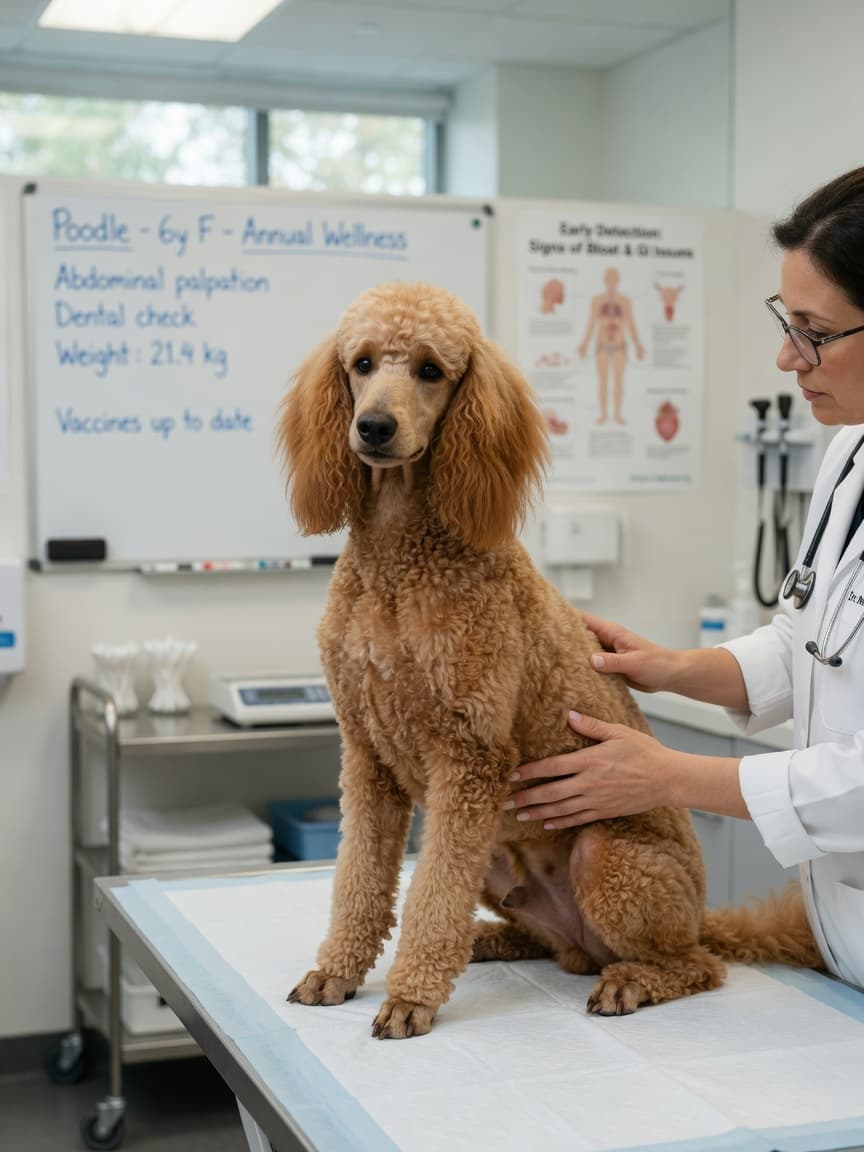
Poodles — whether Standard, Miniature, or Toy — are widely regarded as one of the healthiest of the popular pedigree breeds. That reputation is broadly deserved, but it can create dangerous complacency. The conditions that disproportionately affect Poodles include one of the most consistently misdiagnosed diseases in veterinary medicine, a skin disorder that is frequently mistaken for allergies, and a range of hereditary eye conditions that can cause preventable blindness. Understanding these issues is not about catastrophising — it is about being the kind of owner who catches problems early.
Addison's Disease: The Great Pretender
Hypoadrenocorticism — universally known as Addison's disease — occurs when the adrenal glands fail to produce adequate levels of cortisol and, in most cases, aldosterone. These hormones regulate stress response, electrolyte balance, and numerous metabolic functions. When they are deficient, the effects are wide-ranging and unpredictable, which is precisely why Addison's disease carries the nickname "the great pretender" in veterinary circles.
Standard Poodles have a documented genetic predisposition to the condition. Research suggests a heritable component, though the precise genes involved have not yet been fully characterised.
Recognising Addison's disease
- Intermittent vomiting and diarrhoea that appears to resolve and then recurs
- Lethargy and weakness that waxes and wanes, often triggered by stress
- Weight loss and reduced appetite over weeks to months
- Shaking or muscle tremors
- Collapse and severe weakness during an "Addisonian crisis" — a medical emergency requiring immediate veterinary attention
Diagnosis and long-term management
The ACTH stimulation test is the definitive diagnostic tool, measuring how the adrenal glands respond to a synthetic hormone signal. Routine blood panels may suggest Addison's through characteristic electrolyte abnormalities, but they cannot confirm it. Once diagnosed, management typically involves monthly injections of a mineralocorticoid hormone and daily oral glucocorticoid supplementation during stress. With correct treatment, most dogs with Addison's live entirely normal lifespans. The key is diagnosis — which is often delayed by months or years. If your Poodle has unexplained recurring gastrointestinal signs, ask your vet specifically about Addison's testing.
Sebaceous Adenitis: A Skin Condition Often Missed
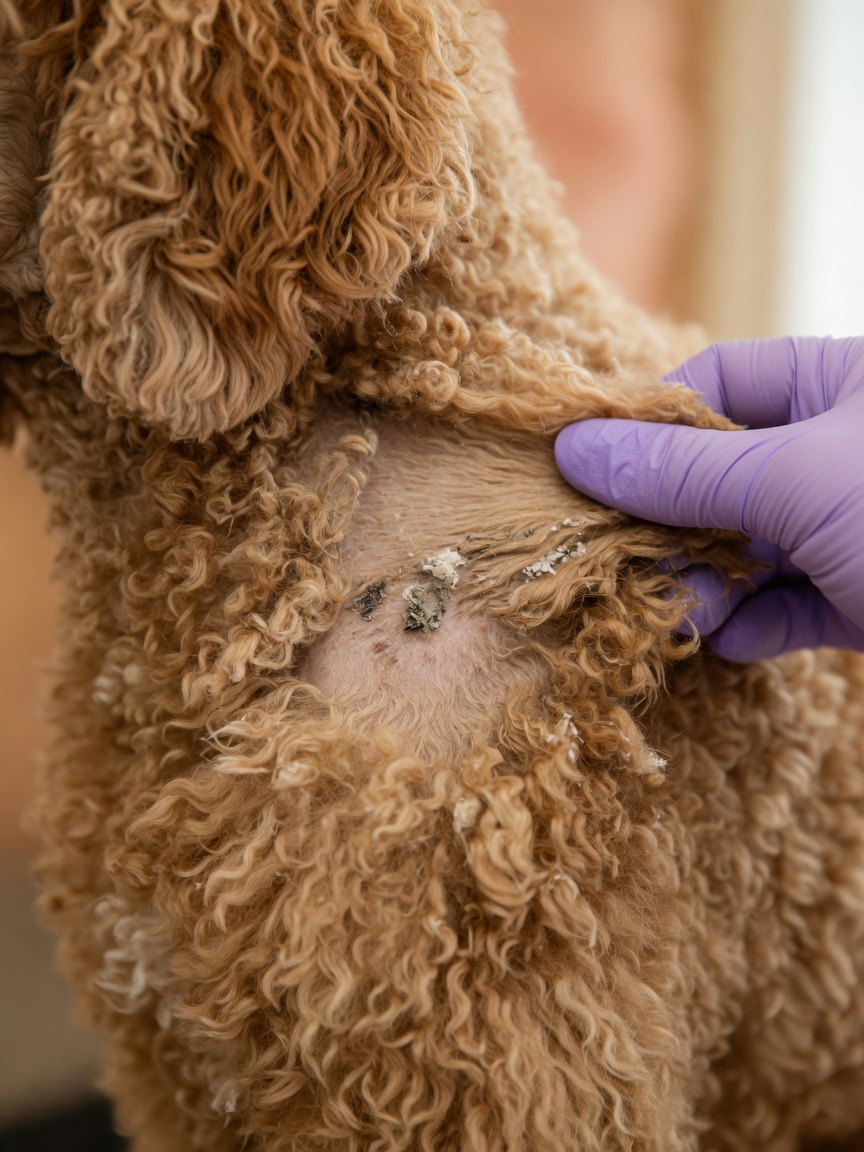
Sebaceous adenitis (SA) is an inflammatory condition in which the immune system attacks and destroys the sebaceous glands in the skin. These glands produce sebum, a waxy secretion that lubricates the skin and coat. When they are destroyed, the skin becomes dry, flaky, and prone to secondary bacterial and yeast infections.
Standard Poodles are among the most affected breeds. SA is heritable in Poodles, and reputable breeders use skin punch biopsy testing in breeding dogs to reduce prevalence. The condition is frequently misidentified as generalised seborrhoea, atopic dermatitis, or ringworm until a biopsy confirms the true diagnosis.
Signs of sebaceous adenitis
- Dull, dry, or brittle coat texture — particularly pronounced in the characteristic Poodle curl
- White, tightly adherent scale at the base of hairs
- Moth-eaten patches of hair loss, often beginning on the head and trunk
- Musty or unpleasant skin odour from secondary infections
- Thickened or hyperpigmented skin in chronic cases
Managing sebaceous adenitis
There is no cure, but SA can be managed effectively. Weekly oil-soaking baths using baby oil or commercial emollient preparations help replace lost sebum and soften scale. Antiseborrhoeic and moisturising shampoos are a mainstay of treatment. Some dogs respond to essential fatty acid supplementation, cyclosporine, or retinoid therapy in more severe cases. Your vet or a veterinary dermatologist can help build a protocol specific to your dog's level of involvement.
Hereditary Eye Conditions in Poodles
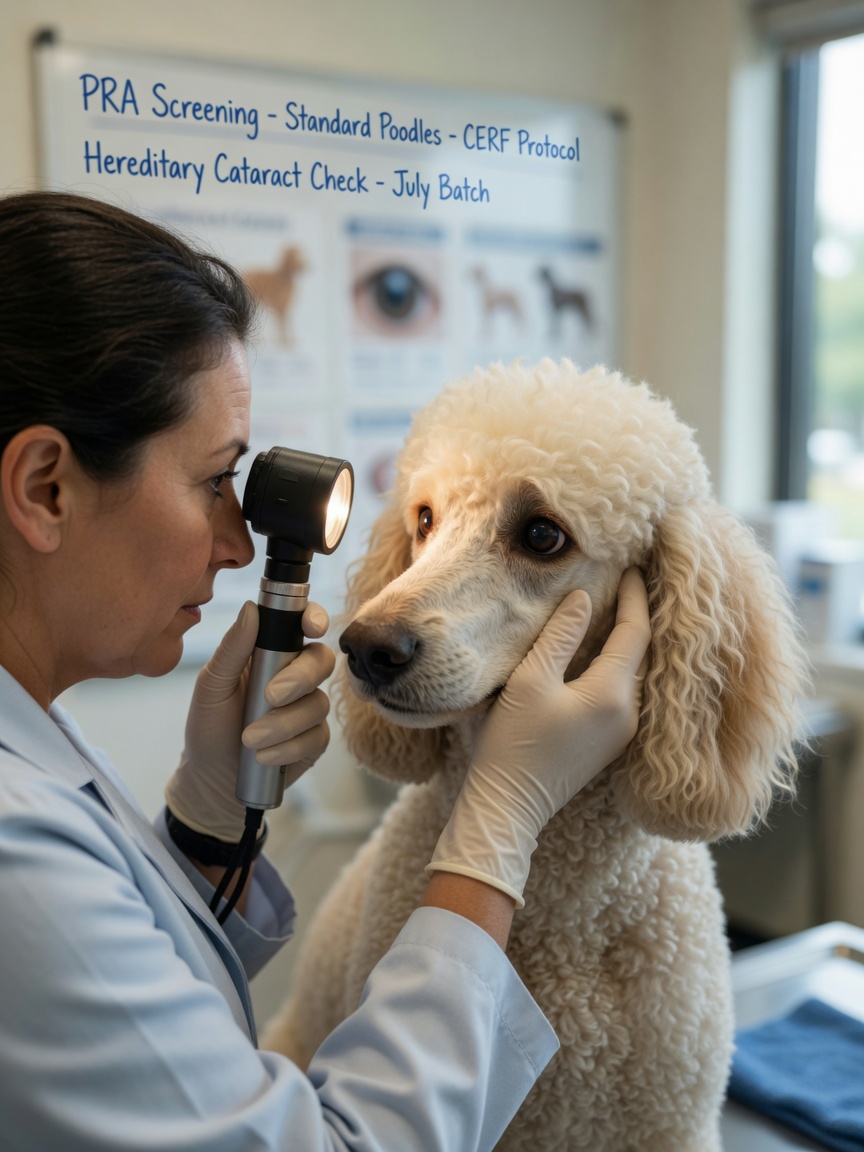
Poodles of all sizes are predisposed to several heritable eye conditions. Progressive retinal atrophy (PRA), cataracts, and optic nerve hypoplasia are the most significant.
Progressive retinal atrophy
PRA is a degenerative condition causing gradual loss of photoreceptor cells in the retina. Affected dogs typically first show difficulty seeing in low light conditions, progressing to complete blindness over months to years. DNA tests for the known PRA mutations in Miniature and Toy Poodles are widely available and should be used in all breeding programmes. Standard Poodles carry different mutations, and testing recommendations should be confirmed with your vet or a breed health coordinator.
Hereditary cataracts
Cataracts — clouding of the lens — can be hereditary in Poodles and are distinct from the age-related cataracts seen in all older dogs. Hereditary cataracts may appear as early as a few months of age. Annual eye examinations by a veterinary ophthalmologist under the BVA/Kennel Club eye scheme allow early detection. Surgical treatment is available and has a good success rate when performed before secondary glaucoma develops.
Other Breed-Specific Concerns
Miniature and Toy Poodles are prone to luxating patellas (kneecaps that slip out of position), tracheal collapse (a narrowing of the windpipe causing a honking cough), and dental overcrowding due to their small jaw size. Standard Poodles can develop gastric dilatation and volvulus (bloat) — a life-threatening emergency requiring immediate surgery. Feeding from a raised bowl and avoiding vigorous exercise immediately after meals are commonly recommended precautions, though the evidence base for specific prevention strategies continues to evolve.
Key Actions for Poodle Owners
- If your Poodle has recurring vomiting, lethargy, or unexplained weight loss, request an ACTH stimulation test specifically
- Have breeding dogs biopsy-tested for sebaceous adenitis before breeding
- Begin annual BVA eye examinations from one year of age, particularly for Miniature and Toy Poodles
- Confirm which PRA DNA tests are appropriate for your Poodle's variety and have them performed on breeding animals
- For Standard Poodles, discuss bloat risk-reduction strategies with your vet
- Establish a regular grooming and bathing routine from puppyhood — early changes in coat or skin texture are easier to identify in dogs you handle regularly
Poodles are intelligent, adaptable dogs that respond well to attentive care. Most of the conditions described above are manageable once correctly identified, and many are preventable with responsible breeding choices. Always bring specific concerns to your vet rather than relying on internet research for diagnosis.