
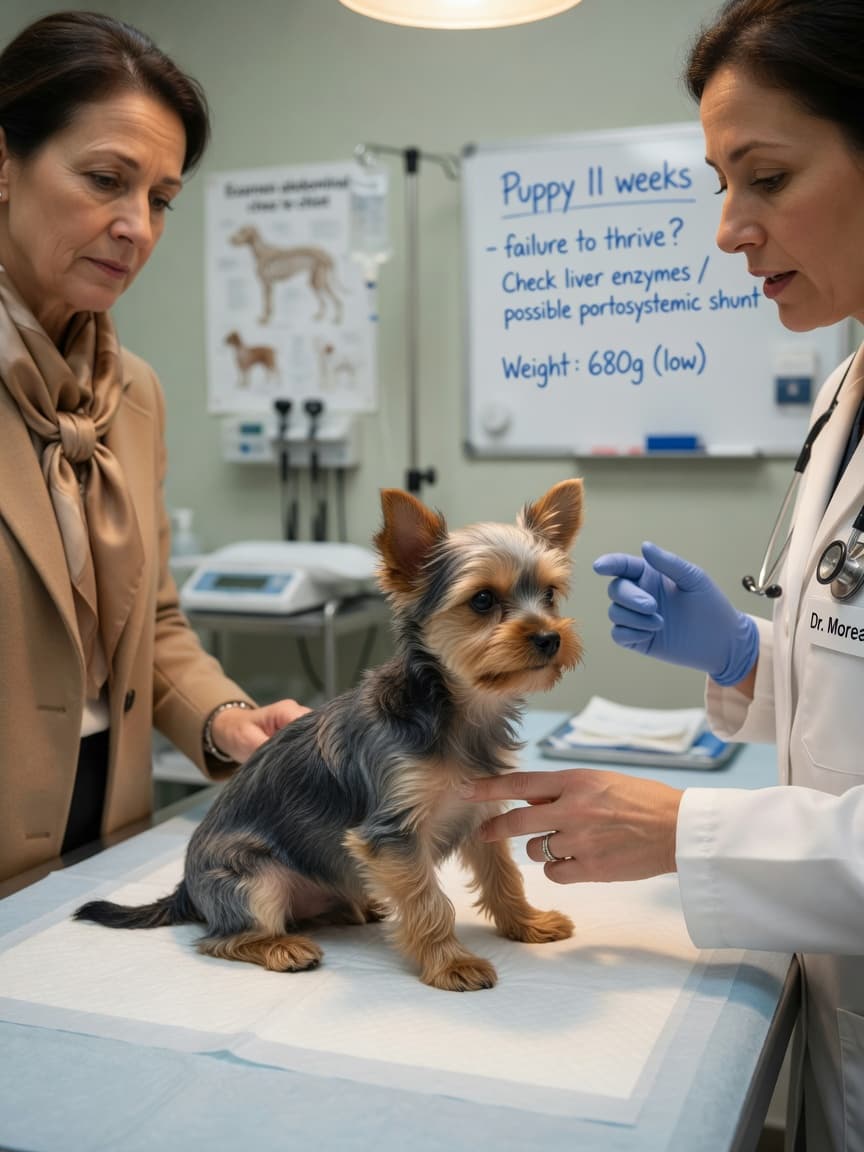
The Puppy That Never Quite Thrives
A litter of Yorkshire Terrier puppies is eight weeks old. Most are bouncing, gaining weight, and meeting milestones. One is noticeably smaller, sometimes wobbly after eating, and occasionally stares blankly at nothing. This pattern — the runt who seems neurologically "off" — is a classic presentation of a portosystemic shunt (PSS), a structural defect that allows blood to bypass the liver entirely.
What Is a Portosystemic Shunt?
In a healthy dog, blood from the gastrointestinal tract travels through the portal vein to the liver, where toxins are filtered, nutrients are processed, and waste products are transformed before the blood enters general circulation. In a dog with a portosystemic shunt, an abnormal blood vessel diverts portal blood directly into systemic circulation, sidestepping the liver completely.
Congenital vs Acquired Shunts
Congenital shunts are present from birth and represent the vast majority of cases. They may be extrahepatic (the abnormal vessel sits outside the liver — most common in small breeds) or intrahepatic (within the liver — more common in large breeds such as Irish Wolfhounds and Labradors). Acquired shunts develop secondary to chronic liver disease and portal hypertension; they are less common and typically present in older animals.
Breeds at Elevated Risk
While any dog can be affected, certain breeds carry a significantly higher predisposition due to inherited factors:
- Yorkshire Terriers — the most commonly affected breed
- Maltese
- Pugs
- Miniature Schnauzers
- Irish Wolfhounds (intrahepatic)
- Golden Retrievers
- Labrador Retrievers
Clinical Signs: More Than Just Small Size
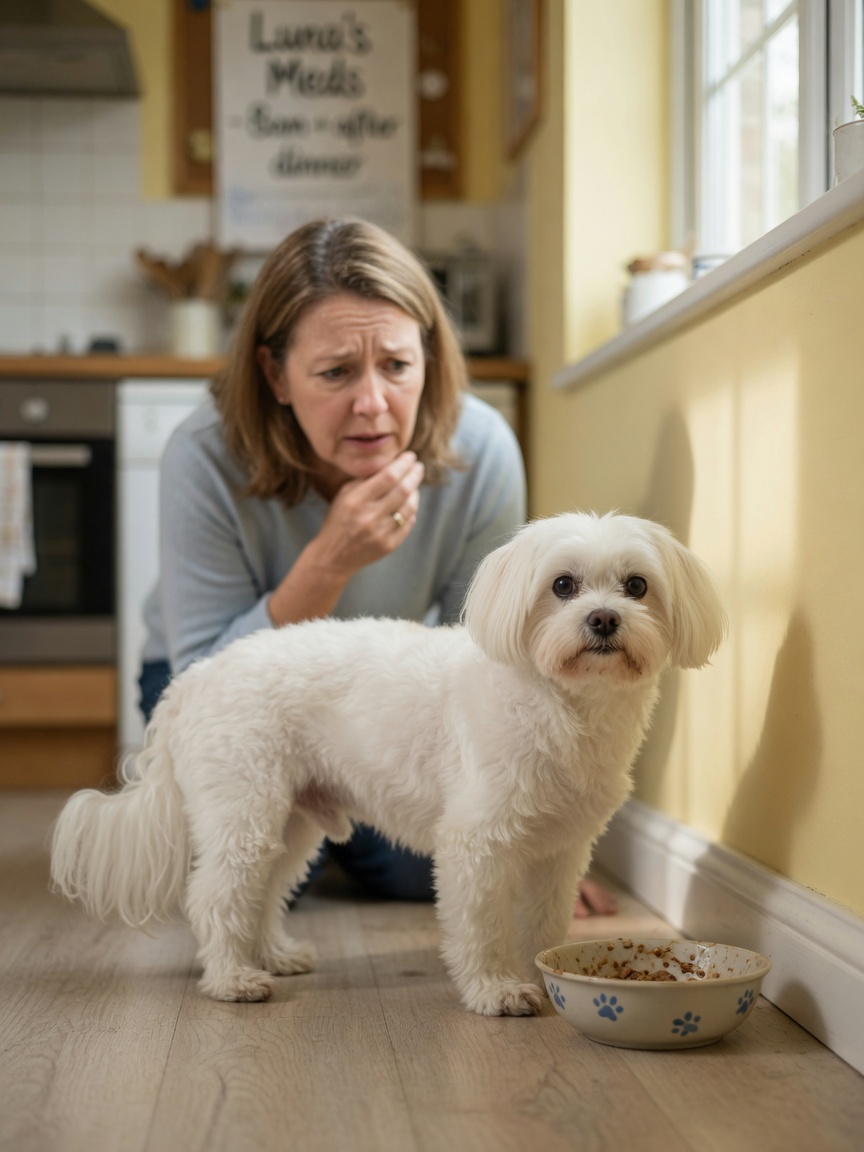
Because the liver is responsible for detoxifying ammonia and other metabolic byproducts, dogs with PSS develop hepatic encephalopathy — neurological dysfunction caused by toxin accumulation in the brain. Signs can be episodic and are often triggered by a high-protein meal.
Common Presentations
- Stunted growth and low body weight
- Disorientation, head pressing, or vacant staring
- Excessive salivation and drooling
- Urinating or drinking excessively
- Recurrent urinary tract infections or ammonium biurate bladder stones
- Seizures in severe cases
Many owners report that their dog seems "drunk" or confused, particularly in the hours following feeding. Symptoms often improve temporarily with fasting or low-protein meals, which is a telling clinical clue.
Diagnosis and Staging
Routine blood work may reveal low albumin, low glucose, mildly elevated liver enzymes, and a small liver (microhepatica) on imaging. Bile acids — measured fasting and two hours post-meal — are the standard screening test and are often markedly elevated. Definitive identification of the shunting vessel requires advanced imaging: Doppler ultrasound, CT angiography, or nuclear scintigraphy. CT angiography is increasingly the preferred method as it precisely maps the anatomy to guide surgical planning.
Treatment: Surgery Versus Medical Management
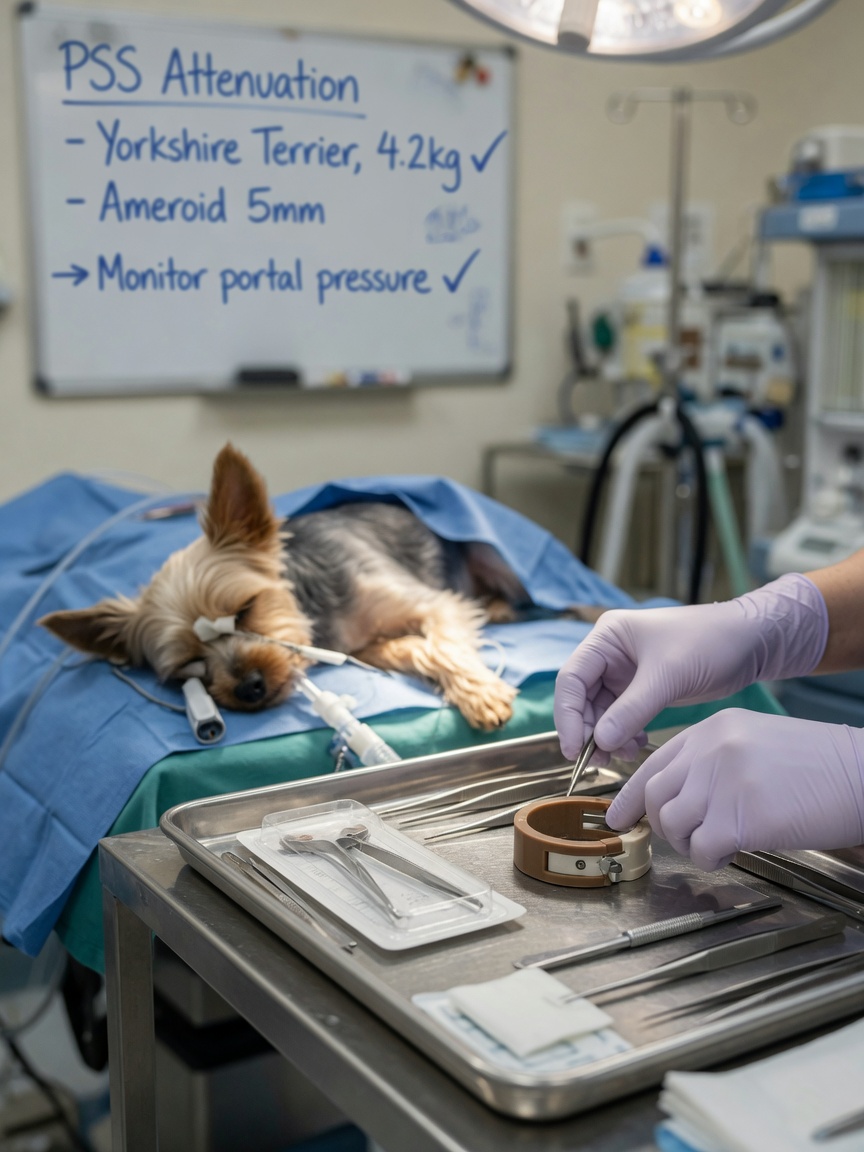
Surgical attenuation of the shunt is the definitive treatment and offers the best long-term prognosis, particularly for extrahepatic congenital shunts. Gradual occlusion using an ameroid constrictor or cellophane band allows portal circulation to adapt over weeks rather than causing sudden hypertension. Studies report good to excellent outcomes in approximately 85 per cent of dogs undergoing surgery for single extrahepatic shunts.
Medical management is used in dogs who are poor surgical candidates or when owners elect not to pursue surgery. It centres on a protein-modified diet (adequate but not excessive protein, emphasising plant and dairy sources over red meat), lactulose to reduce ammonia production in the gut, and antibiotics such as metronidazole to alter intestinal bacteria. Medical management controls signs but does not address the underlying shunt, and liver function typically continues to decline over time.
Any dog suspected of having a portosystemic shunt should be assessed by a veterinary internist or surgeon with experience in hepatic conditions. The earlier the diagnosis, the better the surgical outcome. If you have a small-breed puppy that is not keeping pace with its littermates and shows neurological episodes, do not wait — discuss bile acid testing with your vet promptly.