
What Pyometra Is and Why It Happens
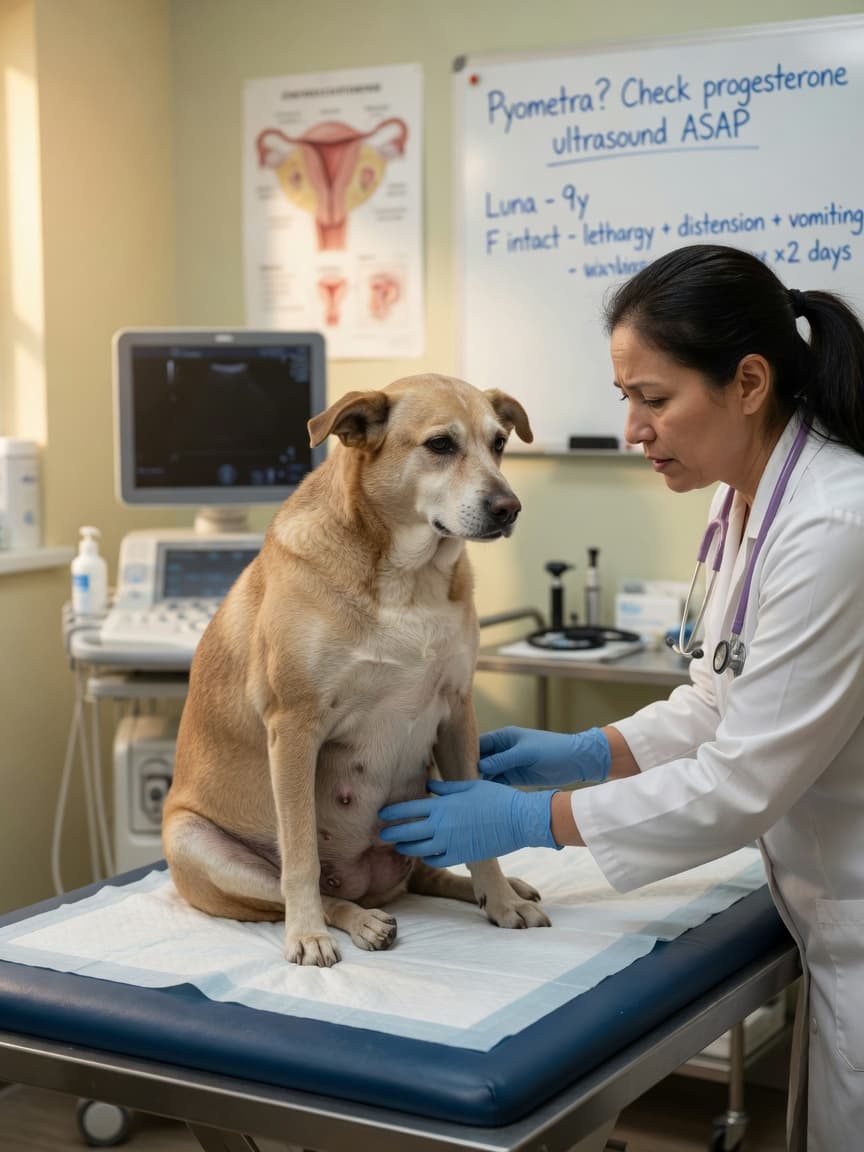
Pyometra is a severe bacterial infection of the uterus that primarily affects middle-aged to older intact female dogs. It is one of the most serious reproductive health emergencies in veterinary medicine, and without prompt treatment, it can be fatal within days. Despite how dangerous it is, many owners have never heard of it — until their dog develops it.
The condition develops as a result of hormonal changes that occur during and after a dog's oestrous cycle. Progesterone, which rises during the luteal phase following ovulation, stimulates the growth of the uterine lining. Over repeated cycles, this lining can become abnormally thickened — a condition called cystic endometrial hyperplasia. This thickened tissue creates an ideal environment for bacterial colonisation, typically by organisms such as Escherichia coli.
The bacteria often originate from the vaginal flora and ascend into the uterus when the cervix is relaxed during oestrus. Once established in the hormonally primed uterine tissue, the infection can escalate rapidly.
Two Types: Open and Closed
Pyometra is classified as either open or closed, depending on whether the cervix remains open or has closed after oestrus.
In open pyometra, the cervix remains partially open, allowing pus to drain from the vagina. Owners may notice a thick, often foul-smelling discharge that ranges in colour from cream to brown or blood-tinged. While this drainage is alarming, it actually makes the condition somewhat easier to detect and means the uterus is less likely to rupture — though it is still a medical emergency.
Closed pyometra is the more dangerous form. The cervix seals shut, trapping the infected material within the uterus. With nowhere to go, the uterus can distend enormously — sometimes to the size of a football in a large breed dog. Without the external sign of discharge, the condition may progress further before owners and even some clinicians recognise what is happening. Rupture of the uterus, leading to septic peritonitis, is a real risk and is almost always fatal if it occurs.
Recognising the Signs

Pyometra typically develops within four to eight weeks after a season, though it can occur at any point during the luteal phase. The timing is an important diagnostic clue.
Signs to watch for include:
- Increased thirst and urination — often one of the earliest signs, caused by bacterial toxins affecting kidney function
- Lethargy and reduced appetite
- A distended or visibly swollen abdomen
- Vomiting
- Fever, though some dogs remain afebrile even with severe infection
- Vaginal discharge in cases of open pyometra
- General malaise that worsens rapidly over a short period
If your unspayed female dog shows any combination of these signs within two months of her last season, pyometra should be at the top of the differential diagnosis list until proven otherwise.
Diagnosis
Diagnosis is made through a combination of clinical examination, blood work, and imaging. Blood tests often reveal an elevated white cell count, though in severe cases the count can paradoxically appear normal or even low as the immune system becomes overwhelmed. Kidney markers may be elevated, and protein levels can be abnormal.
Abdominal ultrasound is the most reliable way to visualise the infected uterus. A skilled ultrasonographer can see the fluid-filled uterine horns clearly, assess the degree of distension, and check for signs of rupture or peritoneal involvement. Radiographs can also be helpful but may be less specific in early cases.
Speed of diagnosis matters enormously. This is not a condition where a wait-and-see approach is appropriate.
Treatment: Surgery Is the Standard
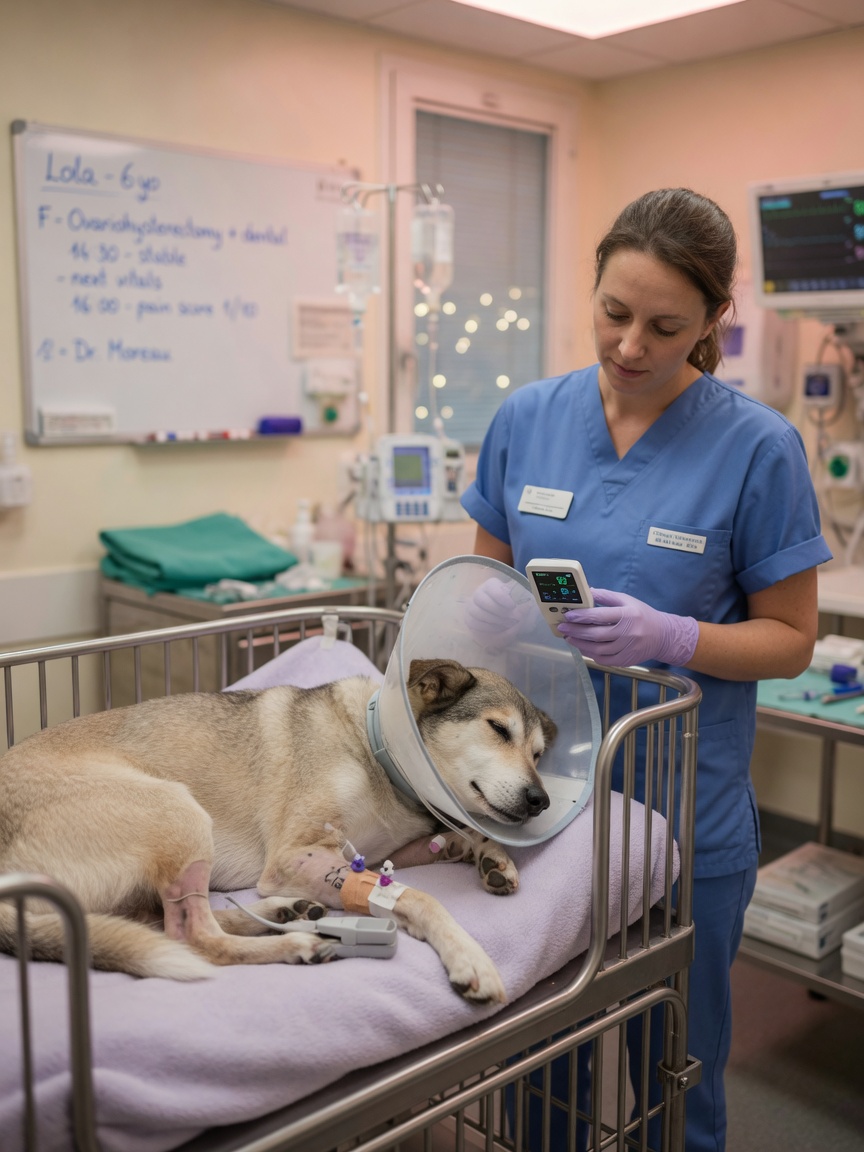
The definitive treatment for pyometra is surgical removal of the infected uterus and ovaries — an emergency ovariohysterectomy. This eliminates the source of infection and prevents recurrence. Most dogs who are treated promptly make a full recovery, though the surgery carries higher risk than routine spaying due to the dog's compromised condition.
Before surgery, veterinary teams typically stabilise the patient with intravenous fluids, antibiotics, and pain management. The goal is to optimise the dog for anaesthesia as quickly as possible without delaying the surgical intervention unnecessarily.
In some carefully selected cases — typically young dogs with open pyometra who are intended for future breeding — medical management using prostaglandins or aglepristone may be attempted. This approach is less reliable, carries significant risks including uterine rupture, and requires intensive monitoring. It is not appropriate for closed pyometra, critically ill patients, or most older dogs. Even when successful, recurrence in subsequent cycles is common.
Recovery and Long-Term Outlook
Dogs who receive prompt surgical treatment have a good to excellent prognosis. The recovery period typically involves hospitalisation for one to several days depending on the severity of the condition at presentation, followed by oral antibiotics and a period of restricted activity at home.
Kidney function, if affected, usually improves once the source of bacterial toxins is removed, though in severe cases some degree of permanent renal compromise is possible.
Prevention Is Straightforward
Spaying eliminates the risk of pyometra entirely. For any female dog not intended for breeding, this is the most compelling reason to consider early spaying, particularly given that the lifetime risk of pyometra in intact females is estimated at 25 percent by the age of ten.
For those who do keep intact females — whether for breeding or personal preference — understanding the signs of pyometra and acting quickly if they appear could be the difference between a full recovery and a preventable death. Knowing what to look for is not alarmist. It is simply good ownership.