
Small Dog, Complex Health Needs
The Shih Tzu's compact frame, flat face, and large prominent eyes are what most people fall for — and they are precisely the anatomical features that create the breed's most significant health vulnerabilities. Eye injuries that would be minor in other breeds can become sight-threatening emergencies in Shih Tzus within hours. Respiratory compromise is built into the breed's skull structure. And the long spine paired with short legs creates a configuration that predisposes these dogs to painful — and potentially paralysing — disc disease. None of this is reason to avoid the breed, but it is reason to be prepared.
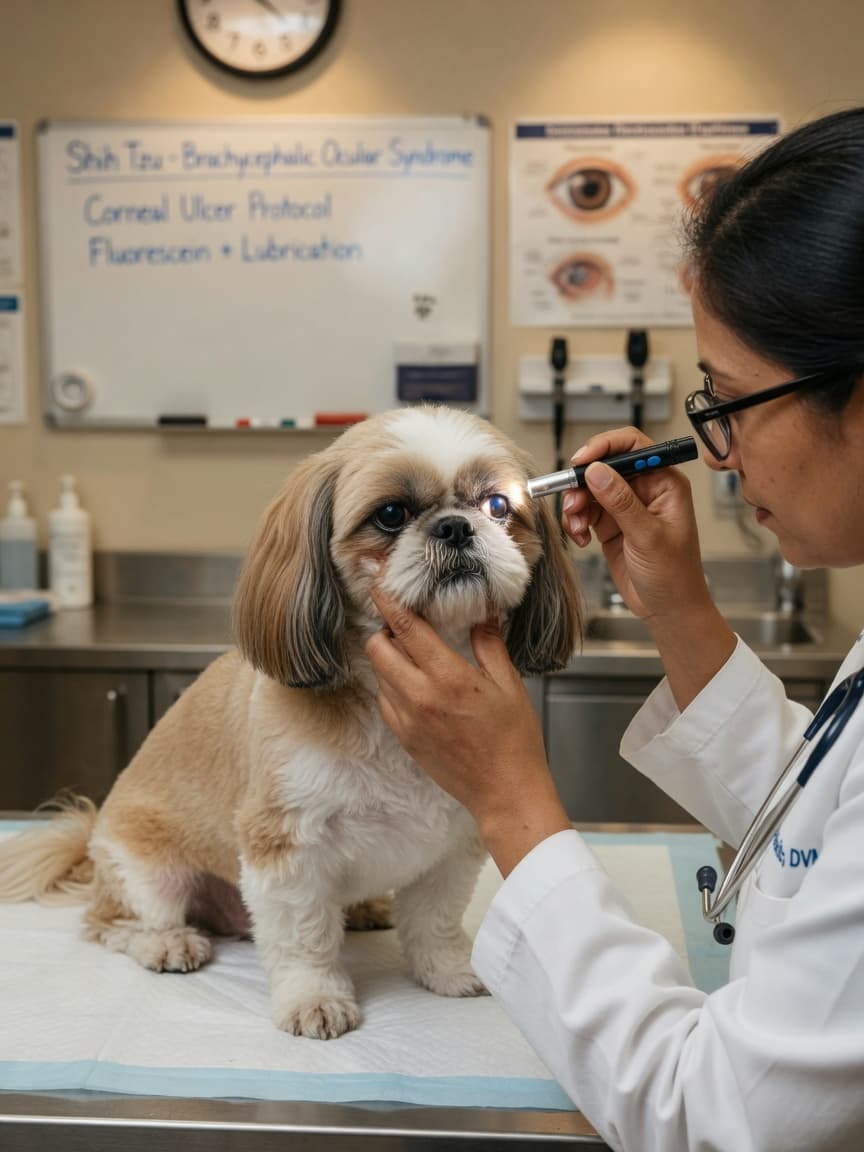
Corneal Ulcers: A Veterinary Emergency in Disguise
The Shih Tzu's eyes protrude significantly from the skull — a condition called exophthalmos — and have relatively shallow eye sockets offering less natural protection. Combined with inadequate blinking in some individuals (lagophthalmos), this means the corneal surface is frequently exposed and vulnerable to drying, minor trauma, and infection.
A corneal ulcer is a break in the surface of the cornea. In most dogs, small ulcers heal rapidly with appropriate treatment. In Shih Tzus, ulcers can progress to "melting" — a rapid enzymatic breakdown of corneal tissue that can perforate the eye in as little as 24 to 48 hours. This is not an exaggeration; it is a well-recognised phenomenon in brachycephalic breeds with prominent eyes.
Signs of a corneal ulcer
- Squinting or holding one eye closed
- Visible pawing or rubbing at the eye or face
- Excessive tearing or discharge from one eye
- Cloudy or hazy appearance to the cornea
- Sensitivity to light
What to do
Any sign of eye discomfort in a Shih Tzu warrants same-day veterinary assessment, not a wait-and-see approach. Treatment typically involves antibiotic drops, pain relief, and an Elizabethan collar to prevent self-trauma. More advanced ulcers may require surgical intervention including conjunctival grafts or specialist referral to a veterinary ophthalmologist. Routine facial hair management — keeping hair trimmed away from the eye surface — and careful handling to avoid eye trauma are basic preventive measures. Some owners apply ophthalmic lubricant drops as directed by their vet to reduce surface drying.
Brachycephalic Obstructive Airway Syndrome in Shih Tzus
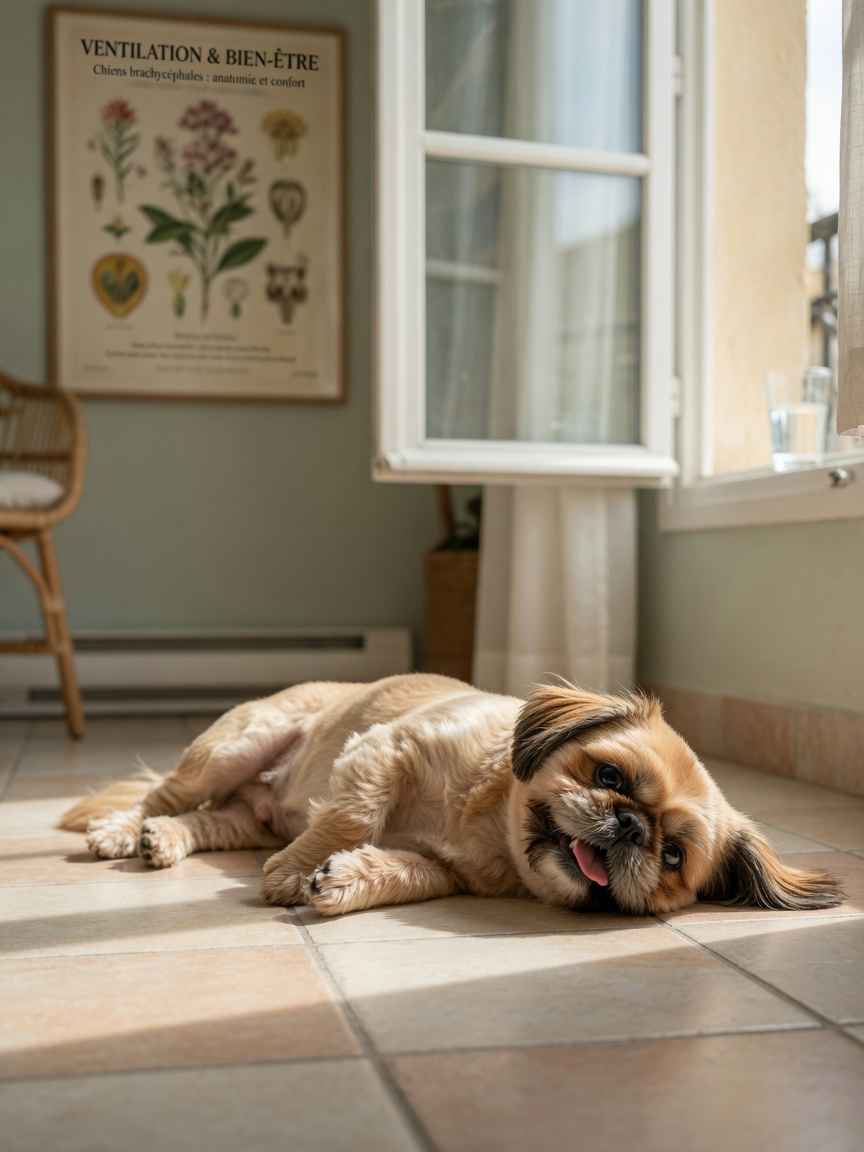
Like Bulldogs, Pugs, and Boxers, Shih Tzus are brachycephalic — their skulls are compressed in a way that affects nasal passages, soft palate, and tracheal dimensions. The resulting condition, BOAS, means many Shih Tzus are working significantly harder to breathe than their behaviour suggests.
Common signs of BOAS
- Loud, snorting breathing that is audible at rest
- Rapid overheating during even mild activity or in warm rooms
- Sleep disruption, restlessness at night, or sleeping in unusual positions to improve airflow
- Gagging, regurgitation, or a reverse-sneezing pattern
- Blue or grey gum colour during exercise — seek emergency care immediately
Managing and treating BOAS
Maintaining a lean body weight is the single most impactful non-surgical intervention, as even mild excess weight substantially worsens respiratory function in brachycephalic dogs. Use a harness rather than a collar, avoid exercise during warm weather or humid conditions, and ensure your home has cool, well-ventilated areas. Many Shih Tzus benefit from corrective surgery — widening narrowed nostrils and shortening an elongated soft palate — which can significantly improve quality of life and reduce long-term airway damage. A functional grading assessment by a BOAS-trained vet can objectively quantify the degree of obstruction and guide the decision for surgery. Do not assume your Shih Tzu is "just noisy" — noisy breathing indicates work that should not be necessary.
Intervertebral Disc Disease: Protecting the Spine
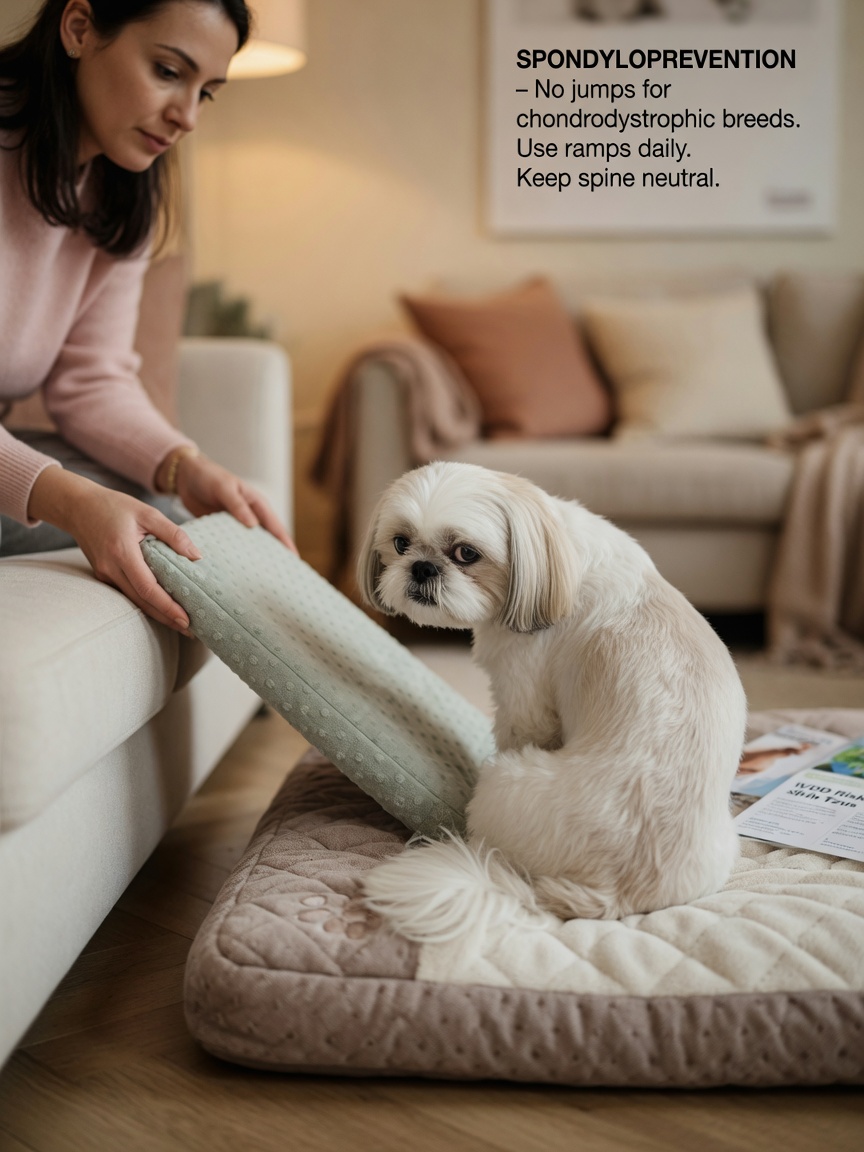
Shih Tzus are chondrodystrophic — they carry genes that cause abnormal cartilage development, which affects not only limb length but also the intervertebral discs that cushion the spine. In chondrodystrophic breeds, these discs age prematurely and can herniate (burst) with relatively minor provocation, pressing on the spinal cord and causing pain, weakness, or paralysis.
Hansen Type I disc disease — the acute, explosive type — is the most common presentation in chondrodystrophic breeds including Shih Tzus. It can occur at any age from around two years onwards and may be triggered by jumping from furniture, rough play, or sometimes no identifiable cause at all.
Recognising spinal problems
- Sudden crying out in pain, particularly when picked up or when moving
- Reluctance to jump up or climb stairs when previously happy to do so
- A hunched or guarded posture of the back
- Wobbling or weakness in the hind limbs
- Loss of bladder or bowel control — a neurological emergency requiring immediate veterinary care
Prevention and management
Preventing all disc disease in a chondrodystrophic breed is not possible, but reducing the load placed on the spine is sensible. Ramps or steps to help your dog access sofas and beds (or restricting access entirely) reduce the repeated impact of jumping. Maintaining healthy body weight reduces spinal loading. For dogs with confirmed IVDD, treatment depends on the severity of neurological signs: mild cases may be managed with strict rest and anti-inflammatory medication; moderate to severe cases, particularly those with limb weakness or incontinence, often require surgical decompression. Outcomes are significantly better when surgery is performed within 12 to 24 hours of onset of severe signs. This is a condition where time genuinely matters.
Additional Concerns in the Breed
Shih Tzus are also prone to dental disease due to overcrowding of teeth in a small jaw — daily tooth brushing and regular professional dental scaling are recommended from an early age. Portosystemic shunts (abnormal blood vessel connections that bypass the liver) are seen more frequently in Toy breeds and can cause stunted growth, neurological signs, and poor body condition in young dogs. Ear infections, while less structurally predisposed than in Cocker Spaniels, can occur due to hair growing within the ear canal, which should be managed by a groomer familiar with the breed.
Shih Tzu Owner Action Plan
- Treat any sign of eye discomfort as same-day veterinary urgency — do not wait overnight
- Keep facial hair trimmed away from the eye surface and check eyes daily
- Arrange a BOAS functional assessment if your dog's breathing is audible at rest
- Use a harness, avoid heat, and keep body weight lean to reduce respiratory and spinal strain
- Install ramps or steps to furniture, or restrict jumping entirely
- If your dog cries out suddenly, shows hind limb weakness, or loses bladder control, contact a vet immediately
- Begin dental hygiene routines from puppyhood and schedule regular professional dental checks
Shih Tzus are engaging, characterful dogs that form deep bonds with their owners. The health challenges described here are real but manageable with proactive ownership and a good working relationship with your veterinary practice. Always consult your vet for any concerns specific to your individual dog rather than attempting home diagnosis or treatment.