
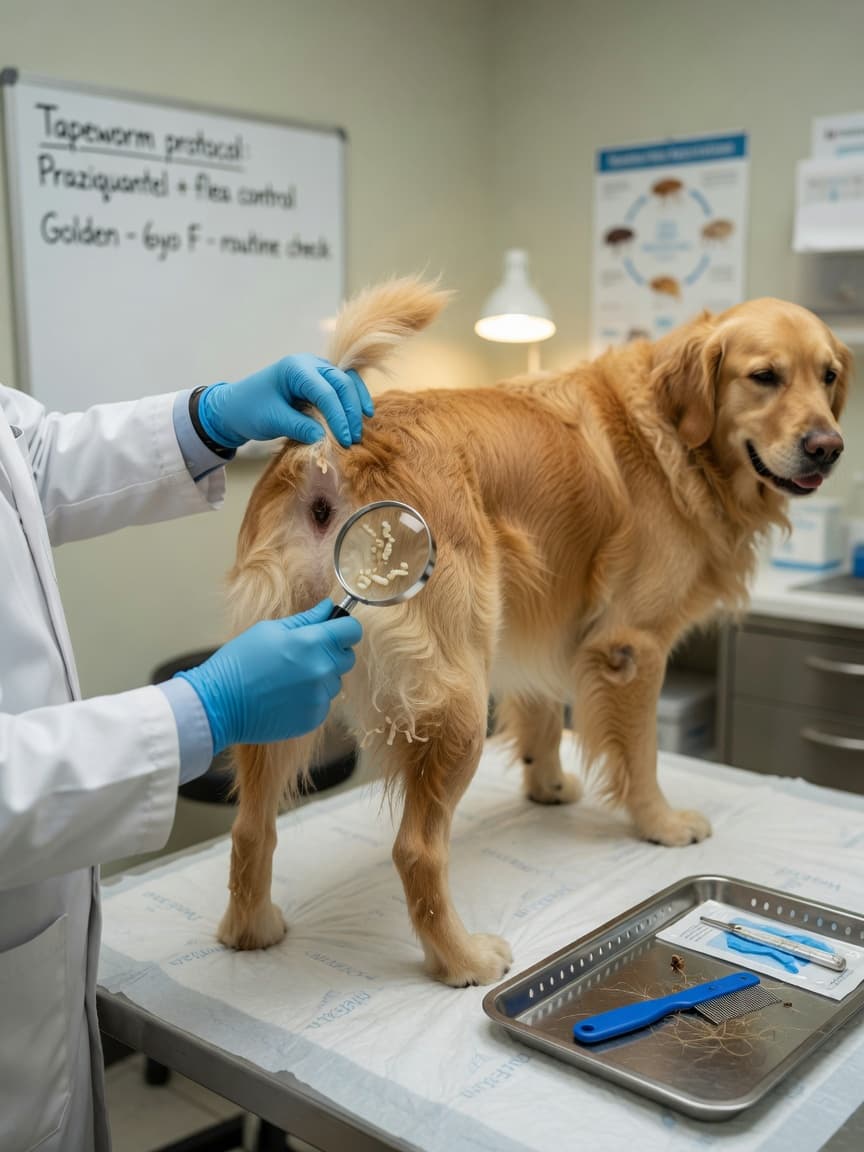
The Flea You Missed Could Be the Tapeworm You Did Not Expect
Up to 50% of dogs treated for fleas are also harbouring tapeworms — yet many owners address only one problem at a time. If your dog has had fleas recently, or if you have spotted small, rice-like segments around their tail or in their bedding, there is a very good chance a tapeworm infection is already underway. Understanding how the two are connected is the first step to breaking the cycle.
How Fleas Spread Tapeworms
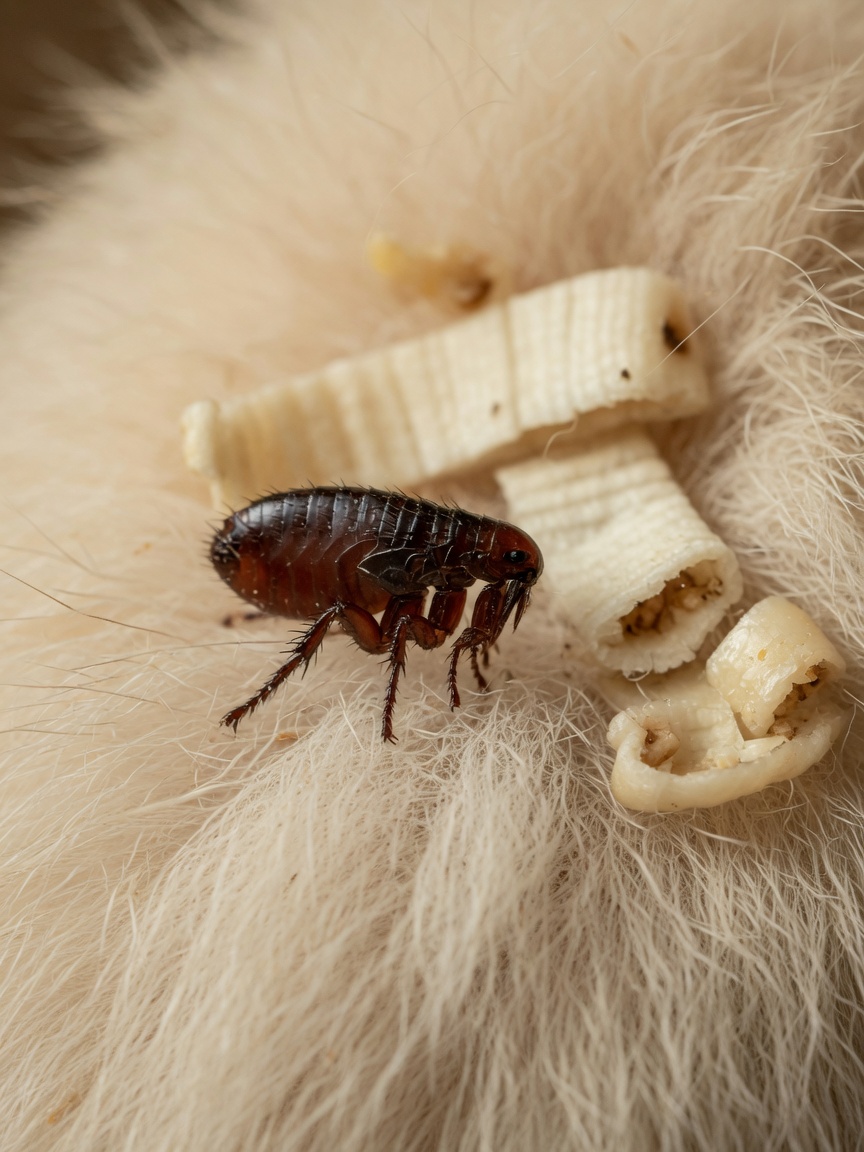
The most common tapeworm affecting UK dogs is Dipylidium caninum. Its life cycle depends on fleas as an intermediate host. Flea larvae consume tapeworm eggs in the environment; as the larvae mature into adult fleas, the tapeworm develops inside them. When a dog grooms itself and swallows an infected flea — something that takes less than a second — the tapeworm is ingested and begins to mature in the dog's small intestine.
Dogs can also acquire Echinococcus granulosus by eating raw infected offal, or Taenia species by hunting and consuming rabbits or rodents. However, the flea-borne route remains by far the most common route of infection in household pets.
Recognising a Tapeworm Infection
Signs in Your Dog
- Small, cream-coloured segments (proglottids) visible around the anus, on faeces, or on bedding
- Scooting or excessive licking around the tail area
- Mild weight loss despite a normal appetite
- A dull coat or general poor condition in heavier infections
- Visible worm segments in vomit in some cases
It is worth noting that many dogs show no obvious signs at all, particularly in early or mild infections. Routine faecal testing at your veterinary practice remains the most reliable way to confirm a diagnosis.
Signs of a Concurrent Flea Problem
- Persistent scratching, especially around the base of the tail, belly, and groin
- Flea dirt (dark specks that turn red when wet) in the coat
- Red or irritated skin, hair loss, or scabs
- Finding live fleas on the dog or in soft furnishings
Treating Tapeworms
The good news is that tapeworm treatment is straightforward. The drug praziquantel is the standard treatment and is highly effective against Dipylidium caninum. It works by causing the worm to dissolve within the gut, so you may not see any worms passed in the stool after treatment — this is normal. Praziquantel is available in tablet, spot-on, and injectable forms, and your vet will recommend the appropriate formulation and dose for your dog's weight.
A single dose is usually sufficient for a Dipylidium infection, but repeat treatment may be advised if flea control is not simultaneously addressed, since reinfection can occur rapidly.
Treating Fleas: The Part Owners Most Often Underestimate

This is where most treatment plans fall short. Roughly 95% of a flea population lives not on the pet, but in the environment — in carpets, soft furnishings, cracks in floorboards, and pet bedding. Treating only the dog leaves a reservoir of fleas in the home, and reinfection follows within days.
- Treat all pets in the household simultaneously with a vet-recommended product
- Wash all pet bedding at 60°C or above
- Vacuum thoroughly and frequently, including under furniture and along skirting boards
- Use a household flea spray containing an insect growth regulator (IGR) to disrupt the flea life cycle in soft furnishings and carpets
- Maintain monthly flea prevention year-round, not only during warmer months
Central heating has extended the flea season in UK homes year-round, so seasonal treatment is no longer adequate.
Zoonotic Risk: Can Humans Get Tapeworms from Dogs?
Dipylidium caninum can infect humans, though it is uncommon. Infection requires accidentally swallowing an infected flea — a risk that is highest in young children who may handle pets and then put their hands in their mouths. Echinococcus species present a more serious public health concern, as infection in humans can lead to cysts forming in the liver or lungs. This is primarily a risk for dogs in rural areas that have access to raw offal or infected wildlife carcasses.
Practising good hygiene — particularly handwashing after handling dogs — significantly reduces any human risk.
Practical Summary
- If your dog has had fleas, treat for tapeworms at the same time
- Use praziquantel-based worming treatment, dosed correctly for your dog's weight
- Treat every pet in the household for fleas simultaneously
- Target the home environment, not just the animal
- Maintain year-round flea prevention to prevent reinfection
- Consult your vet to confirm diagnosis, especially if symptoms persist or your dog hunts