
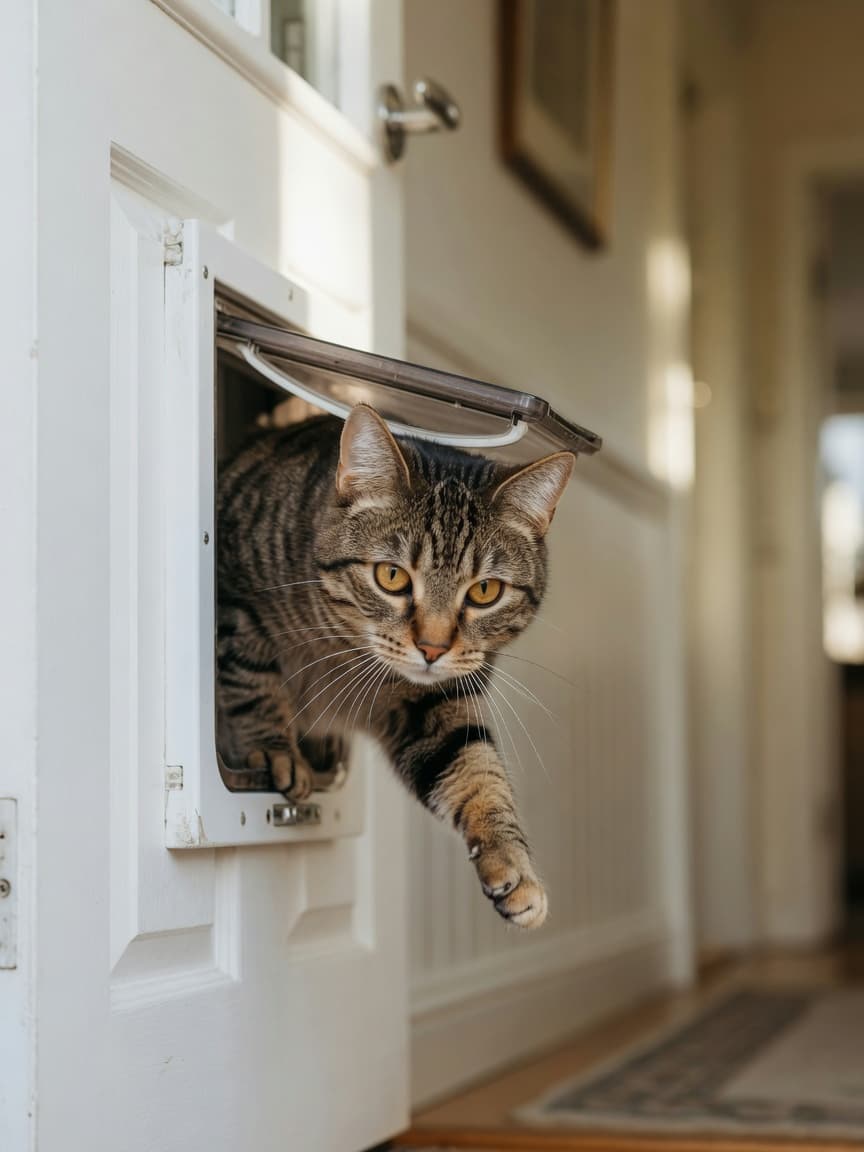
Most Cats Do Not Understand Doors That Push Back
A cat that has spent its life walking through open doorways has no conceptual framework for a door that requires physical effort to open and closes again behind it. The flap is not intuitive. Many owners fit a cat flap, expect the cat to figure it out, and then find the animal sitting beside it, meowing. This is not stubbornness — it is a lack of information. The good news is that with the right approach, most cats can learn to use a cat flap reliably within one to three weeks. Some take a day or two. Very few take longer than a month.
Before You Start: Choosing the Right Flap
Not all cat flaps are equal from a cat's perspective. A flap that requires significant force to push open, or that snaps back quickly and loudly, is much harder to train a reluctant cat to use than one with a lighter, slower mechanism. Microchip-activated flaps are excellent for security but sometimes have a brief locking click that startles cats early in training. If possible, switch the flap to permanently unlocked mode for the duration of training and reintroduce the electronic lock only once the cat is fully confident.
The flap should also be installed at a height appropriate for the cat — the base of the flap sitting approximately at chest height for the individual animal, allowing it to step through without stooping uncomfortably.
Phase One: Removing the Door Entirely
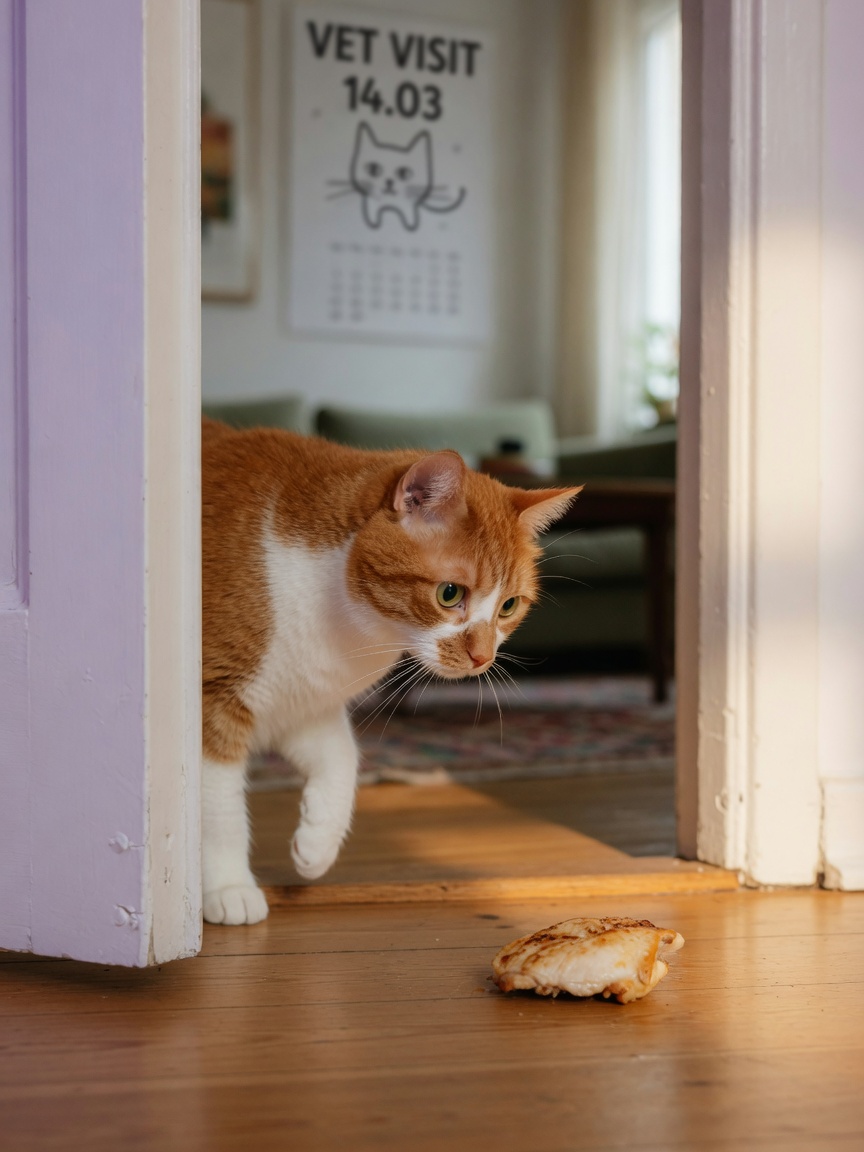
If the flap panel is detachable, remove it completely for the first stage of training. What you are left with is simply an opening in the door. Allow the cat to discover this opening on its own, or encourage it with a treat placed just on the other side. The goal in this phase is purely to establish comfort with the opening and confidence that passing through it leads somewhere safe and rewarding. Spend as many days on this phase as needed — there is no benefit to rushing.
If the flap is not detachable, tape it fully open so it provides no resistance and treat it as an open hole for now.
Phase Two: Introducing the Flap With Support
Reattach the flap (or untape it) and hold it open with your hand or a piece of tape propping it up slightly. The flap is now visible and present, but the cat does not yet need to push it. Encourage the cat to pass through using a high-value treat — a small piece of cooked chicken, a favourite wet food, or a commercial treat that you know the cat responds to strongly. Lure it toward the flap, let it take the treat from your hand through the gap, then lure it fully through.
Work both directions from the beginning. Cats need to understand the flap from both the inside and the outside, and some cats who are confident going out through the flap will baulk at pushing it from the outside initially. Treat and reward both directions equally.
Phase Three: Introducing Light Resistance
Gradually reduce the amount by which the flap is propped open, over several sessions across one to three days. The cat should now be pushing the flap slightly to pass through. Continue using high-value treats as the primary motivator. Keep sessions short — five minutes maximum — and always end on a successful push rather than a failed attempt.
If the cat is hesitant at any point, go back one step rather than pressing forward. The most common mistake at this stage is increasing resistance too quickly. Patience here pays significant dividends later.
Phase Four: Full Flap Movement
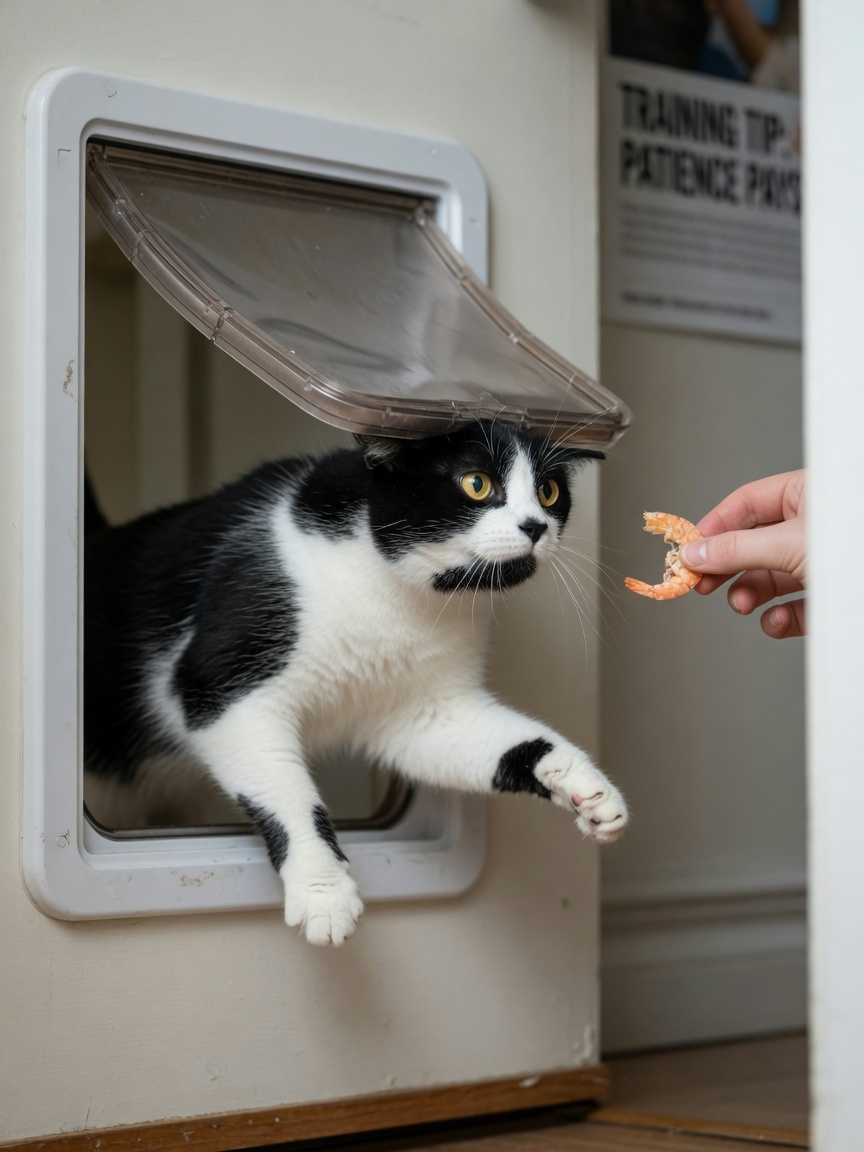
The flap is now fully closed and the cat must push it open independently. Some cats make this transition smoothly; others need additional encouragement. The following approaches are useful for cats that stall at this stage:
- Hold a treat on the far side of the flap so the cat can smell it but must push through to reach it
- Tap gently on the far side of the flap while calling the cat by name — curiosity often overcomes hesitation
- Have a second person on the far side offering treats while you remain neutral on the near side
- Try training when the cat is naturally motivated — just before a mealtime is often the most productive window
Do not push the cat through the flap physically. This is frightening and damages the trust that training depends on. The cat must choose to go through.
Common Problems and How to Solve Them
The Cat Goes Out But Will Not Come Back In
This is the more common direction problem and usually reflects that the cat has not yet understood the flap works in both directions, or that the outside is more rewarding than the inside currently is. Sit on the outside and use treats to call the cat back through the flap, rewarding lavishly on arrival. Repeat this from the inside over several sessions until the cat is using both directions with equal confidence.
The Cat Was Using the Flap and Has Suddenly Stopped
A regression usually has a specific cause: a frightening experience passing through the flap (a noise, an encounter with another animal on the other side, the flap snapping back and hitting the cat), or the electronic lock activating unexpectedly before the cat was ready. Identify the likely cause and address it directly — returning to an earlier phase of training if needed.
The Cat Simply Refuses
A very small number of cats, particularly older animals or those with anxiety-related conditions, do not adapt to cat flaps readily. If three to four weeks of consistent, positive, patient training produces no progress at all, consult your vet. Anxiety, arthritis (which can make pushing painful), or other medical factors may be contributing. In some cases a different type of flap or a wider opening may resolve the issue.
Step-By-Step Summary
- Set the flap to unlocked or remove it entirely — begin with an open hole
- Reward the cat for approaching and passing through the opening with high-value treats
- Gradually introduce the flap in propped-open position, reducing the gap over several days
- Train both directions from the start — in and out require equal practice
- Never push the cat through physically; use only positive reinforcement
- If progress stalls completely after four weeks, seek veterinary advice to rule out pain or anxiety