
Tiny Cells With an Enormous Job
Platelets are the smallest cells in the blood and among the most critical. Without enough of them, a dog's ability to stop even minor bleeding is severely compromised — and with a platelet count low enough, spontaneous haemorrhage can occur without any injury at all. Thrombocytopenia, the medical term for a low platelet count, is one of the most frequently identified haematological abnormalities in dogs, and its causes span an astonishing range from infections to immune disease to cancer.
What the Numbers Mean
Normal platelet counts in dogs range from approximately 200,000 to 500,000 per microlitre of blood. Clinical signs of bleeding typically do not emerge until counts fall below 50,000 per microlitre. Spontaneous, life-threatening haemorrhage becomes a risk when counts drop below 20,000 to 30,000 per microlitre. The severity of clinical presentation is closely tied to both the absolute count and the speed of decline.
It is worth noting that certain breeds — particularly Cavalier King Charles Spaniels — have naturally lower platelet counts and larger platelets due to a hereditary condition called macrothrombocytopenia. These dogs have low counts on routine panels but do not bleed abnormally, and they do not require treatment.
How Thrombocytopenia Develops: The Three Core Mechanisms
Decreased Production
If the bone marrow is damaged or suppressed, it cannot produce sufficient platelets. This occurs in aplastic anaemia, bone marrow neoplasia, certain drug toxicities, and infections that directly target bone marrow precursor cells. Ehrlichia canis, a tick-borne pathogen, is a classic example of an infection that suppresses platelet production alongside platelet destruction.
Increased Destruction
The most common cause of severe thrombocytopenia in dogs is immune-mediated destruction. In immune-mediated thrombocytopenia (IMT), antibodies coat the surface of platelets, causing the spleen and liver to remove them from circulation at an accelerated rate. This can occur as a primary (idiopathic) disorder or secondary to drugs, infections, or underlying disease including cancer.
Increased Consumption or Sequestration
Disseminated intravascular coagulation (DIC) — a catastrophic clotting disorder secondary to severe illness — consumes platelets at a rate the bone marrow cannot match. Splenic disease can also cause platelets to pool and become sequestered in the spleen, reducing circulating numbers without true destruction.
Common Causes in Clinical Practice
- Immune-mediated thrombocytopenia (primary or secondary)
- Tick-borne diseases: Ehrlichia, Anaplasma, Rocky Mountain spotted fever
- Certain medications, including some antibiotics, chemotherapy agents, and non-steroidal anti-inflammatories
- Systemic infection or sepsis
- Disseminated intravascular coagulation as a complication of another illness
- Bone marrow disease or neoplasia
- Splenic disease, particularly haemangiosarcoma
Recognising the Signs
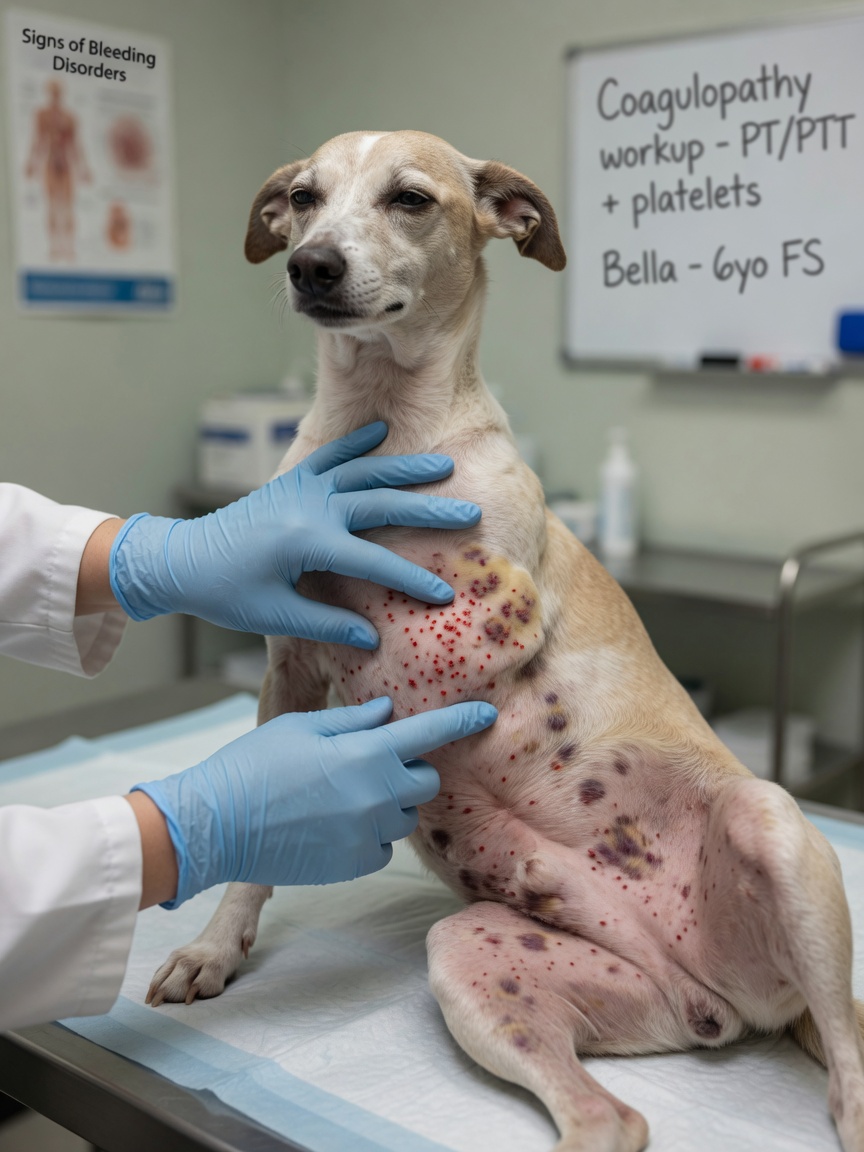
Bleeding signs in thrombocytopenia tend to affect small vessel beds first — skin and mucous membranes — rather than producing the deep muscle or joint bleeds seen in clotting factor disorders.
- Petechiae: pinpoint red or purple spots on the skin, gums, or whites of the eyes
- Ecchymoses: larger bruised areas on the skin or gums
- Nosebleeds or bleeding from the gums
- Blood in the urine or faeces
- Prolonged bleeding after minor wounds or venepuncture sites
- In severe cases, bleeding into the eye, brain, or gastrointestinal tract
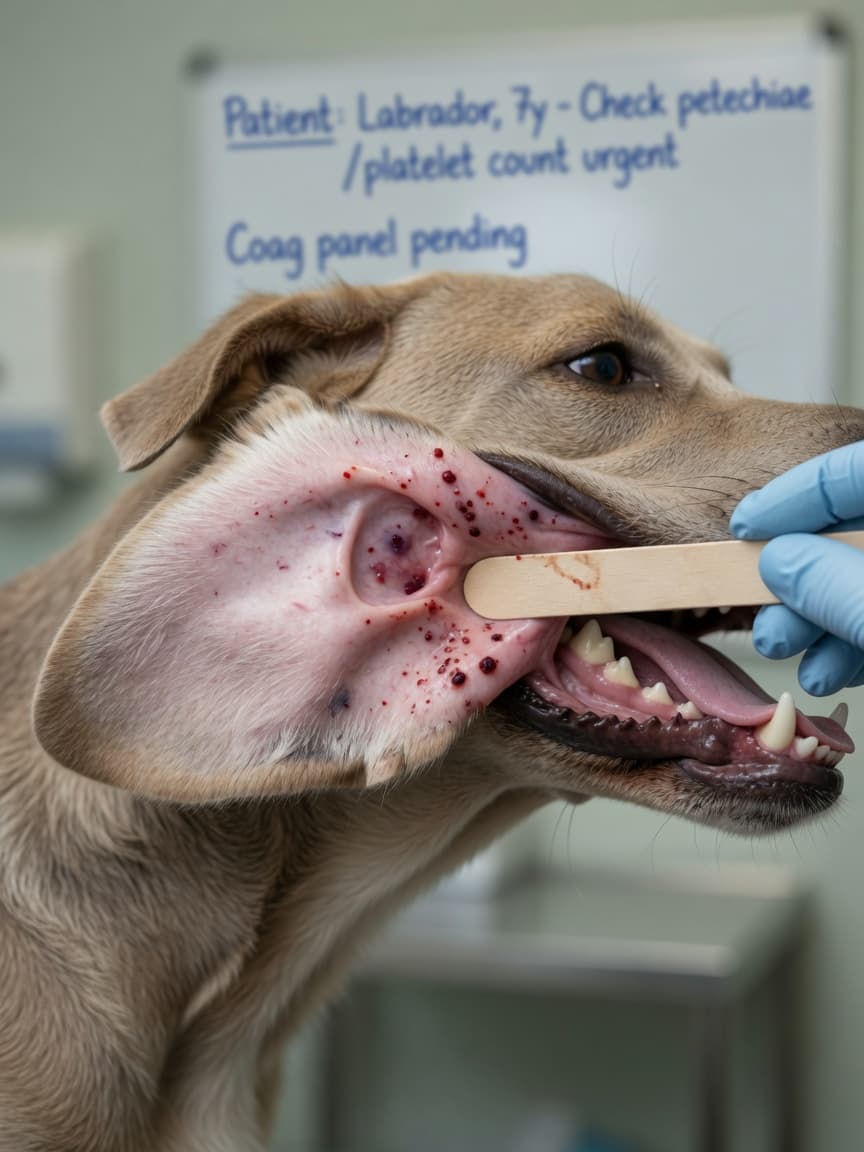
Petechiae on the gums or inner ear flap are among the most reliable early visual signs and should prompt immediate veterinary assessment.
Diagnosis and Treatment

Diagnosis begins with a full blood count, blood smear review to confirm true thrombocytopenia rather than platelet clumping, and a biochemistry panel. Tick-borne disease testing is standard in most regions. Further investigation may include bone marrow aspiration, abdominal ultrasound, and coagulation testing to assess for DIC.
Treatment by Cause
- Immune-mediated thrombocytopenia: immunosuppressive doses of corticosteroids are the first-line treatment; additional agents such as vincristine, azathioprine, or mycophenolate may be added in refractory cases
- Tick-borne disease: doxycycline is highly effective and often produces a rapid platelet response
- Drug-induced thrombocytopenia: withdrawal of the offending drug, with supportive care; recovery is usually prompt once the drug is removed
- DIC: aggressive treatment of the underlying condition alongside supportive transfusion therapy
Platelet transfusions are rarely used in dogs because transfused platelets survive only hours in circulation. They are reserved for acute life-threatening haemorrhage as a bridge to definitive treatment.
What Dog Owners Should Know
- Petechiae — small red pinpoints on the skin or gums — are a medical emergency, not a wait-and-see finding
- Tick prevention is one of the most effective ways to reduce the risk of tick-associated thrombocytopenia
- Always inform your vet of any medications your dog is receiving, including supplements, when thrombocytopenia is suspected
- IMT often responds well to treatment, but relapses can occur — long-term monitoring is essential
- Prognosis depends heavily on the underlying cause; early diagnosis consistently improves outcomes
- Your veterinarian is the essential partner in managing this condition — never adjust immunosuppressive medications without guidance