
A Tick Is Never Just a Tick
In the United Kingdom alone, ticks are responsible for transmitting Lyme disease, babesiosis, and anaplasmosis — diseases that can cause serious, sometimes permanent, harm to both pets and their owners. The risk is not limited to woodland walks; ticks now thrive in urban parks, coastal grassland, and suburban gardens. A 2018 survey found ticks on dogs in every county in England. Knowing how to remove a tick correctly is no longer optional knowledge for pet owners — it is essential.
Why Removal Technique Matters
The way you remove a tick directly affects the risk of disease transmission. Ticks feed by anchoring their mouthparts into the skin and slowly engorging on blood over several days. During this process, pathogens in the tick's gut can be transmitted to the host — but this transfer is not instantaneous. Correct removal, completed quickly and cleanly, reduces the window of transmission significantly. Incorrect removal can accelerate transmission by stressing the tick and causing it to regurgitate its gut contents into the wound.
The Right Method
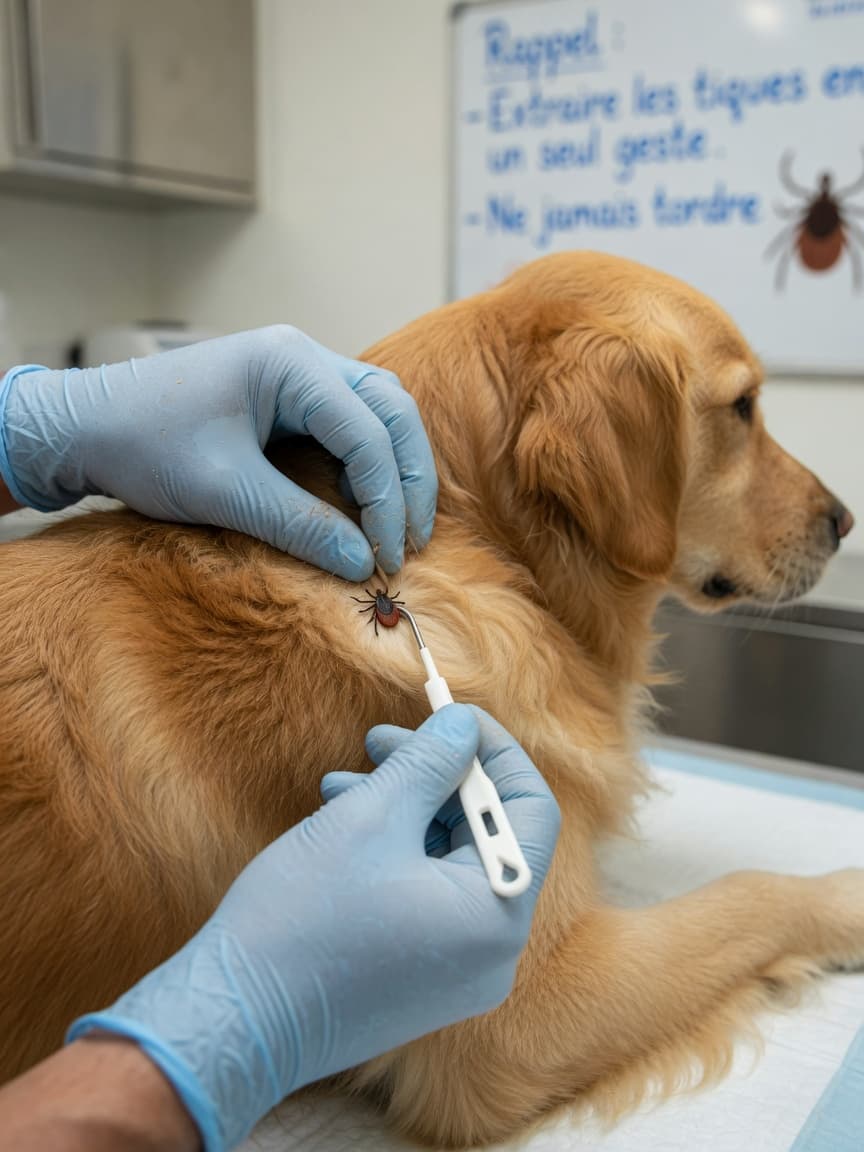
The only recommended tool for tick removal is a proper tick removal device — either a tick twister hook (also called an O'Tom hook) or fine-pointed tweezers designed for tick removal. Both are widely available from vet practices and pet shops and cost very little.
Part the fur to expose the tick clearly. Position the hook or tweezers as close to the skin surface as possible, gripping the tick at the base of its body — as near to the point of attachment as you can get. Apply slow, steady, upward traction without twisting, jerking, or squeezing the tick's body. The tick should release within a few seconds. Once removed, place it in a sealed bag or container and dispose of it — do not crush it between your fingers. Clean the attachment site with an antiseptic wipe or saline solution, then wash your hands thoroughly.
The Wrong Methods
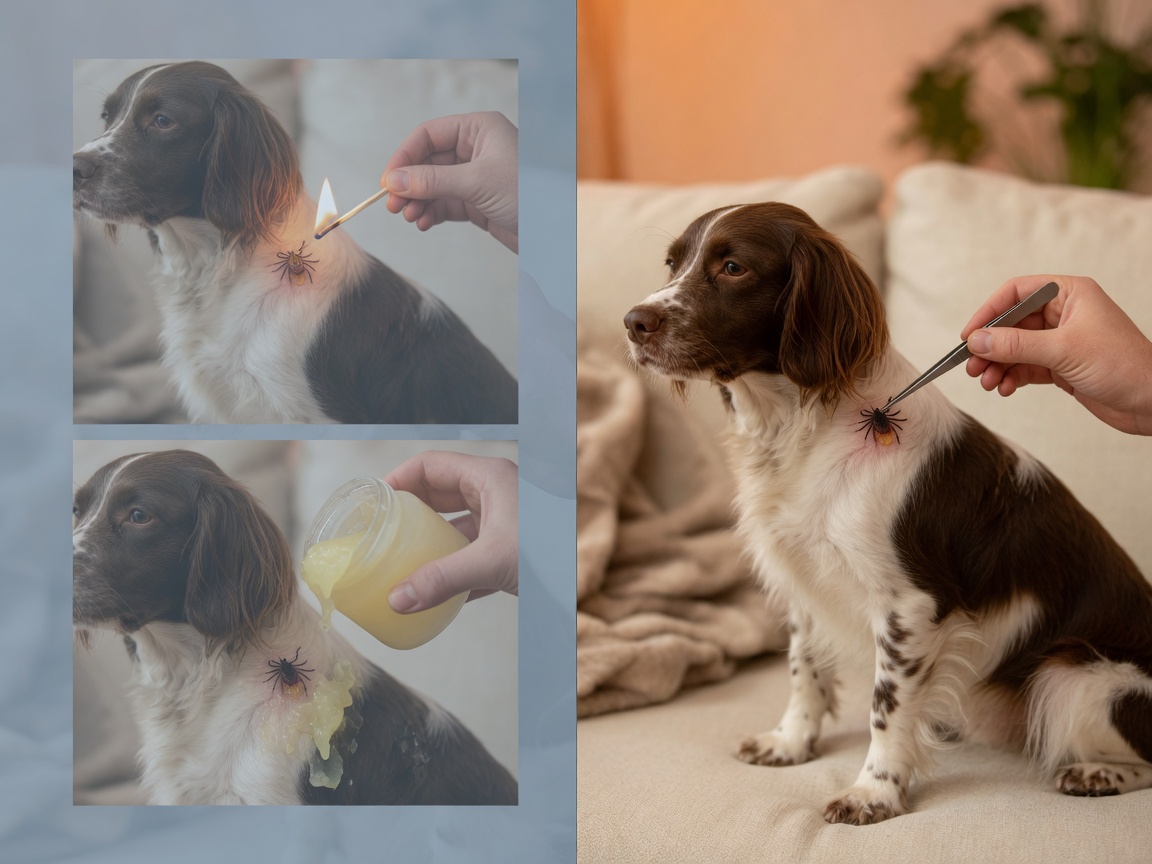
A number of folk remedies for tick removal persist online and in popular advice despite evidence that they increase risk. None of the following should ever be used:
- Applying petroleum jelly, butter, or oil to the tick — this suffocates the tick slowly and causes it to regurgitate, increasing the risk of pathogen transmission
- Burning the tick with a match or lighter — causes the same regurgitation response and risks burning your pet
- Spraying the tick with chemicals, nail varnish remover, or insect repellent while attached — again, stresses the tick and provokes regurgitation
- Twisting or jerking the tick — risks breaking off the mouthparts, which remain embedded in the skin and can cause a local infection
- Squeezing the body of the tick between your fingers — compresses the gut contents toward the mouthparts and increases transmission risk
If mouthparts do break off and remain in the skin, leave them alone. The body will usually expel them naturally. Do not dig at the skin with a needle, as this introduces further infection risk.
Post-Removal Monitoring
Watching the Bite Site
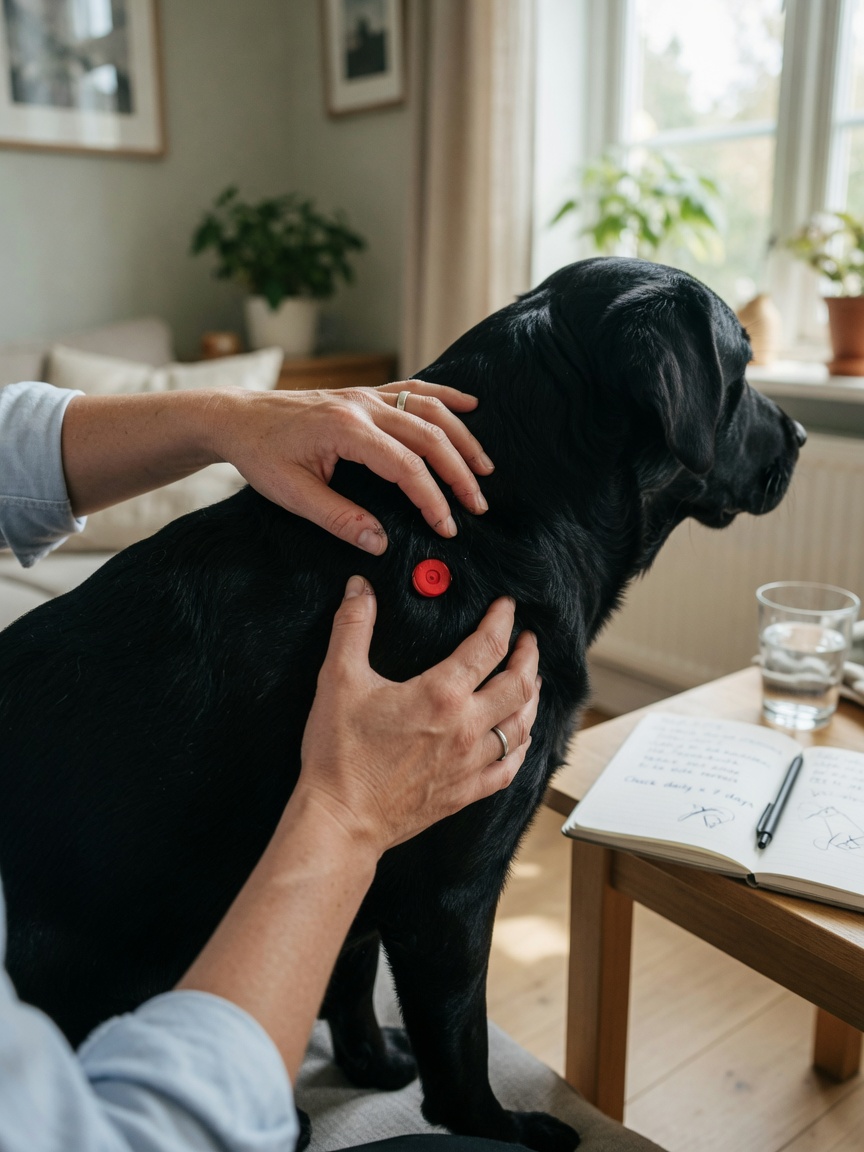
After removal, monitor the bite site daily for at least two weeks. A small red mark immediately after removal is normal. A growing circular redness — the so-called bullseye rash — is a potential indicator of Lyme disease infection and warrants immediate veterinary consultation. Not all infected animals or people will develop a visible rash, however, so the absence of one is not a guarantee of safety.
Watching Your Pet's Health
Symptoms of tick-borne illness in dogs include fever, lethargy, loss of appetite, joint swelling or lameness, and in severe cases, anaemia or neurological signs. These symptoms may not appear for days to weeks after the tick bite. If your dog develops any of these signs within a month of known tick exposure, inform your vet and mention the tick bite specifically — it is relevant diagnostic information they will need.
Cats are less commonly affected by tick-borne illness in the UK but can carry ticks indoors and pass them to humans. Any tick found on a cat should be removed with the same care.
Keeping a Record
Note the date of removal and the location on your pet's body where the tick was found. If your pet becomes unwell in the following weeks, this information helps your vet narrow down the likely cause and timeline. Photographing the tick before disposal can also be useful.
Prevention
Year-round tick prevention using veterinary-prescribed products is the most effective way to protect your pet. Spot-on treatments, tablets, and collars are all available, with varying durations of action and suitability for different animals. Your vet can advise on the most appropriate product for your pet's lifestyle and health status. After every walk in tick-prone areas, run your fingers through your pet's coat — checking especially around the ears, neck, groin, armpits, and between the toes — and remove any ticks before they have had time to attach fully or engorge.
Practical Summary
- Use a tick hook or fine-pointed tick tweezers — not fingers, matches, or oils
- Grip at the base, as close to the skin as possible, and pull slowly and steadily upward
- Never squeeze, twist, burn, or coat the tick while attached
- Clean the bite site and your hands after removal
- Monitor for a bullseye rash and systemic symptoms for up to a month
- Record the date and location of the bite
- Discuss year-round tick prevention with your vet