
The Test That Is Frequently Forgotten — and Frequently Revealing
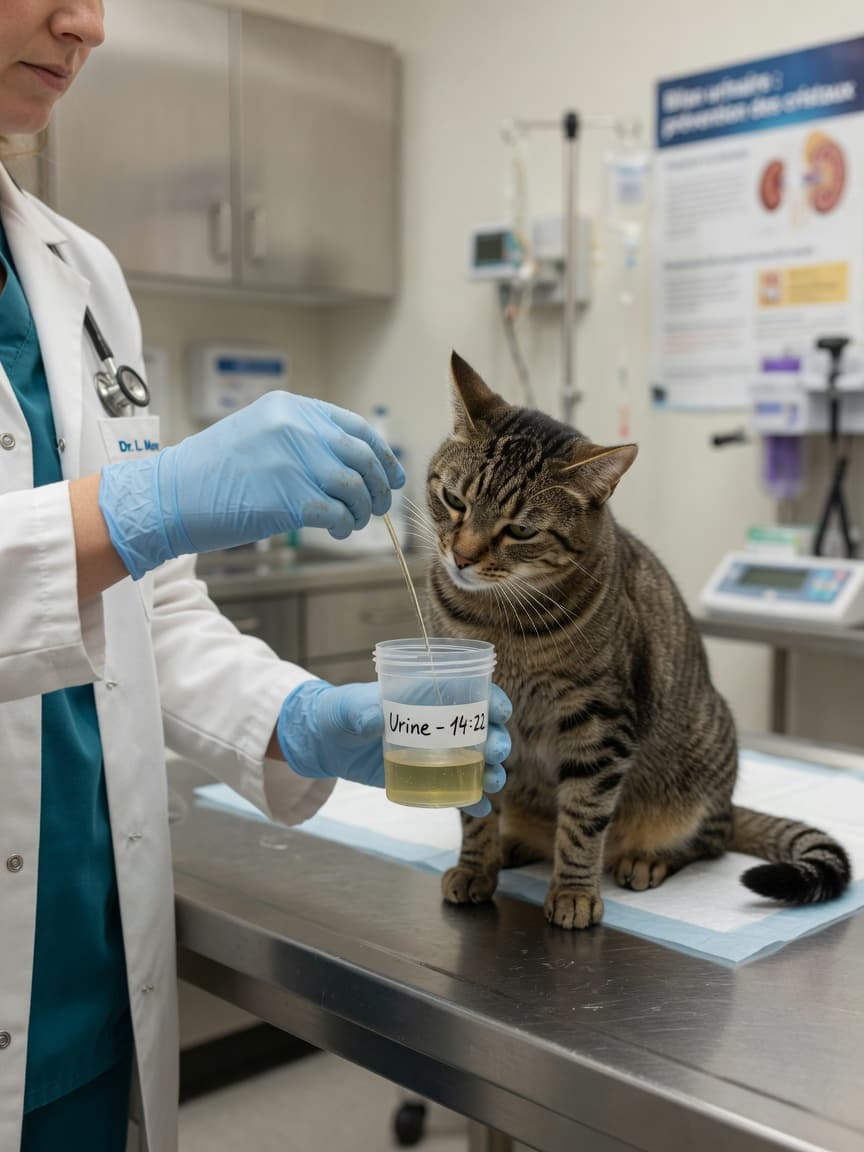
Urinalysis is one of the most underutilised diagnostic tools in routine pet care. While blood panels receive considerable attention, a urine sample collected at the same appointment can reveal conditions that blood tests alone will miss — including early kidney disease, urinary tract infections, diabetes, and protein-losing disorders. In cats especially, where chronic kidney disease affects an estimated 30–40% of individuals over 15 years, urine assessment is not optional; it is essential.
How Urine Samples Are Collected
The method of collection affects the reliability and interpretation of results. Your vet will recommend one of three approaches depending on what is being investigated.
Free Catch
The owner collects a midstream urine sample at home, typically in a clean container provided by the practice. This is convenient but carries a higher risk of contamination from the environment, skin, or fur, which can affect bacterial culture results.
Cystocentesis
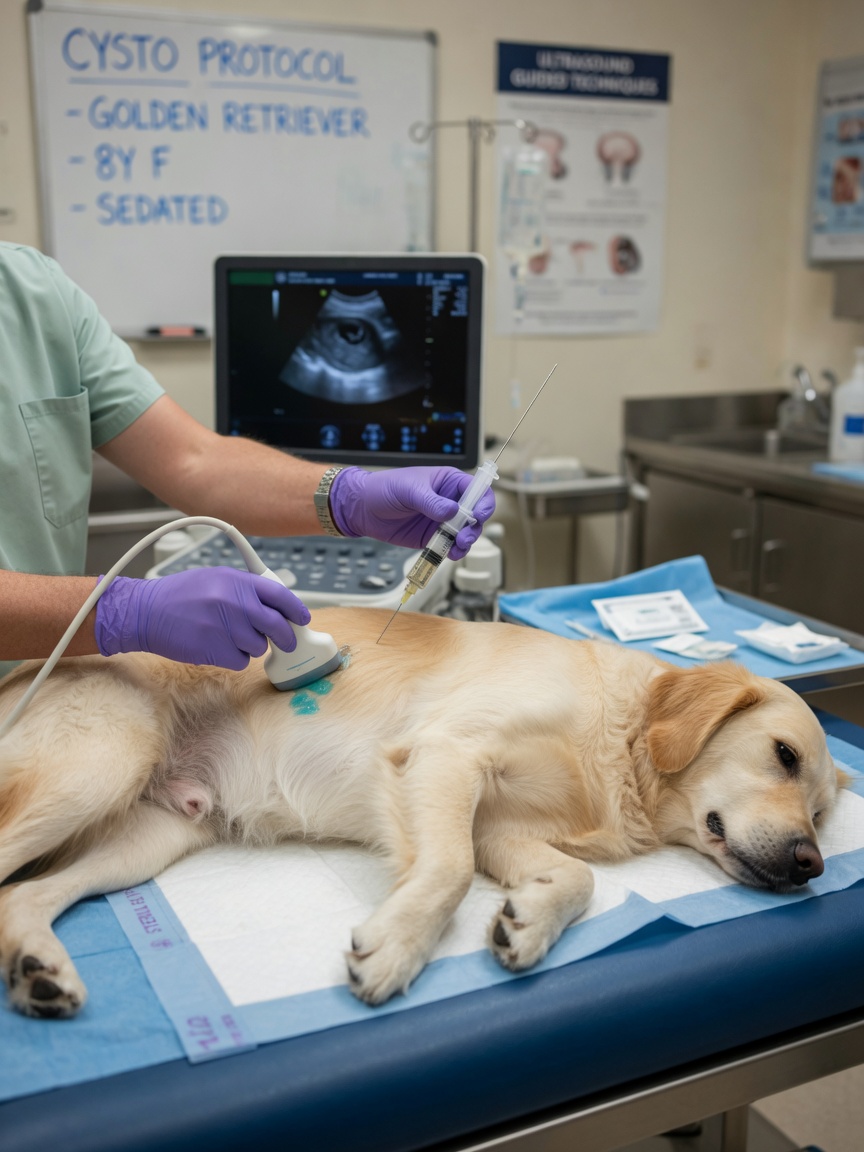
A veterinarian uses a needle to collect urine directly from the bladder through the abdominal wall, guided by ultrasound if necessary. This produces an uncontaminated sample and is the preferred method when a urinary tract infection is suspected and bacterial culture is needed.
Catheterisation
Used less commonly for routine diagnostics, catheterisation collects a sample directly from the bladder via a urinary catheter. More common in male dogs or when other methods are not suitable.
For routine wellness screening, a free-catch morning sample (the first urine of the day) is generally acceptable. Morning urine is more concentrated and therefore more representative of the kidneys' ability to concentrate urine.
What a Full Urinalysis Includes
Physical Properties
- Colour and clarity: normal urine is pale to mid-yellow and clear. Cloudy urine suggests cells, crystals, or bacteria. Red or brown discolouration indicates blood or haemoglobin.
- Specific gravity: this measures urine concentration and is one of the most important values in the panel. Healthy kidneys concentrate urine. Low specific gravity — particularly below 1.030 in dogs and 1.035 in cats — may indicate impaired kidney function, diabetes insipidus, or excess water intake.
Chemical Analysis (Dipstick)
- pH: abnormal urine pH can predispose to certain crystal and stone types
- Protein: healthy urine contains little to no protein. Persistent proteinuria — protein in the urine — signals kidney damage and warrants further investigation, including a urine protein:creatinine ratio
- Glucose: glucose in the urine is abnormal and typically indicates diabetes mellitus, though certain kidney conditions can also cause it
- Ketones: present in diabetic ketoacidosis, a serious and potentially life-threatening complication of uncontrolled diabetes
- Blood: blood on dipstick can indicate urinary tract infection, bladder stones, inflammation, or in some cases tumours
- Bilirubin: present in small amounts in dogs but abnormal in cats; elevated levels suggest liver or bile duct disease
Microscopic Examination
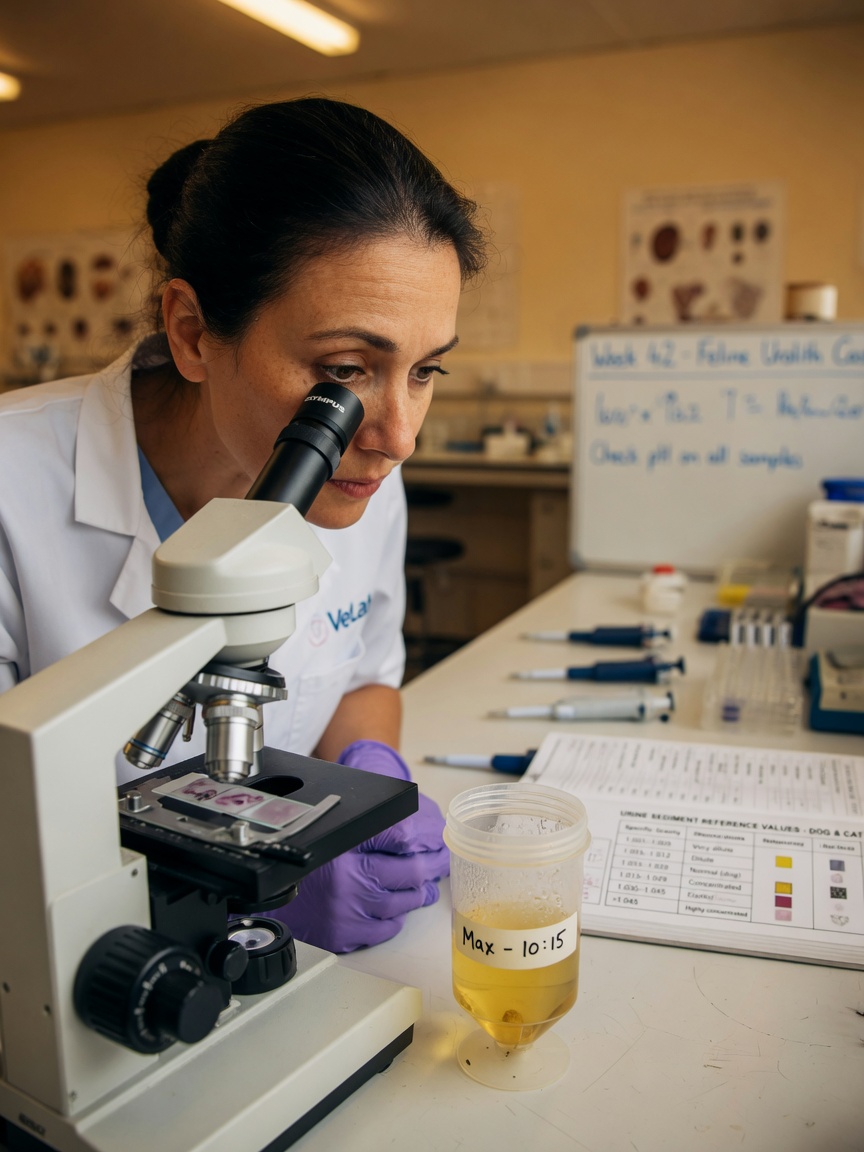
A sample is spun in a centrifuge and the sediment examined under a microscope. This component is particularly revealing.
- Red blood cells: confirm haematuria (blood) indicated on dipstick
- White blood cells: elevated numbers indicate infection or inflammation in the urinary tract
- Bacteria: rods or cocci visible on sediment examination, particularly alongside white blood cells, strongly suggest infection
- Casts: cylindrical structures formed in the kidney tubules; their presence and type provide specific information about kidney injury
- Crystals: struvite, calcium oxalate, and urate crystals may be found; context matters, as some crystals appear in normal urine while others, combined with symptoms, suggest stone formation risk
- Epithelial cells: transitional cells from the bladder lining; abnormal clusters may rarely indicate transitional cell carcinoma
Conditions Urinalysis Can Detect or Support
- Chronic kidney disease: low specific gravity and proteinuria are early indicators, often preceding changes in blood markers
- Urinary tract infections: white blood cells, bacteria, and sometimes blood in the sediment
- Bladder stones and crystals: crystal type guides dietary and medical management
- Diabetes mellitus: glucose and potentially ketones present
- Diabetes insipidus: consistently dilute urine in the absence of kidney disease
- Protein-losing nephropathy: significant proteinuria requiring further quantification
- Liver disease: bilirubin and abnormal urobilinogen
- Urinary tract tumours: suspicious epithelial cells, persistent blood
Why Urinalysis Matters Alongside Bloodwork
Blood tests measure what has already accumulated in the circulation — they are downstream indicators. Kidney function, for example, is not meaningfully reflected in blood creatinine until roughly 75% of kidney function has been lost. Urine concentration, by contrast, can begin to decline much earlier. Running both together gives a far more complete picture of kidney health than either test alone.
In cats especially, routine annual urinalysis from middle age is strongly supported by evidence. Given how common kidney disease is in this species, and how manageable it is when caught early, it represents a genuinely high-value screening tool at relatively low cost.
When Your Vet Should Run a Urine Test
- As part of any senior wellness examination
- When your pet shows increased thirst or urination
- When blood kidney markers are elevated or borderline
- If your pet is straining to urinate, urinating frequently in small amounts, or showing blood in the urine
- For monitoring pets with known kidney disease, diabetes, or urinary tract conditions
- Pre-operatively alongside bloodwork for a more complete health picture
If your pet's annual check-up does not routinely include urinalysis, it is worth discussing with your vet whether it should. For many animals, particularly cats in their middle and senior years, the information it provides is simply too valuable to leave out.