
The Supplement That Becomes a Poison in Excess
Vitamin A is an essential nutrient for cats. Unlike dogs and humans, cats cannot convert beta-carotene from plant sources into active vitamin A and must obtain it preformed from animal tissue. This biological reality has led some well-meaning owners — particularly those feeding raw or home-prepared diets — to include liver generously and frequently. The outcome can be a condition called hypervitaminosis A: vitamin A toxicity. It is painful, progressive, and largely irreversible once skeletal changes have occurred.
Why Cats Are Particularly Vulnerable
Fat-soluble vitamins — A, D, E, and K — behave differently from water-soluble vitamins in the body. Water-soluble vitamins in excess are excreted in urine relatively efficiently. Fat-soluble vitamins accumulate in adipose tissue and the liver, building up over time if intake consistently exceeds the body's capacity to utilise or excrete them.
Vitamin A is stored predominantly in the liver. In cats, the liver can accumulate extraordinary concentrations of vitamin A before overt toxicity signs appear. This means the condition develops insidiously over months or years, with no obvious symptoms during the accumulation phase. By the time clinical signs emerge, the vitamin A burden in the body is already severe.
Cats are also among the species most sensitive to vitamin A toxicity. Their unique metabolic profile, which evolved to handle the high vitamin A content of a small-prey diet, does not make them immune to excess — it makes them efficient at storing and concentrating the vitamin rather than excreting it.
The Source: Raw Liver
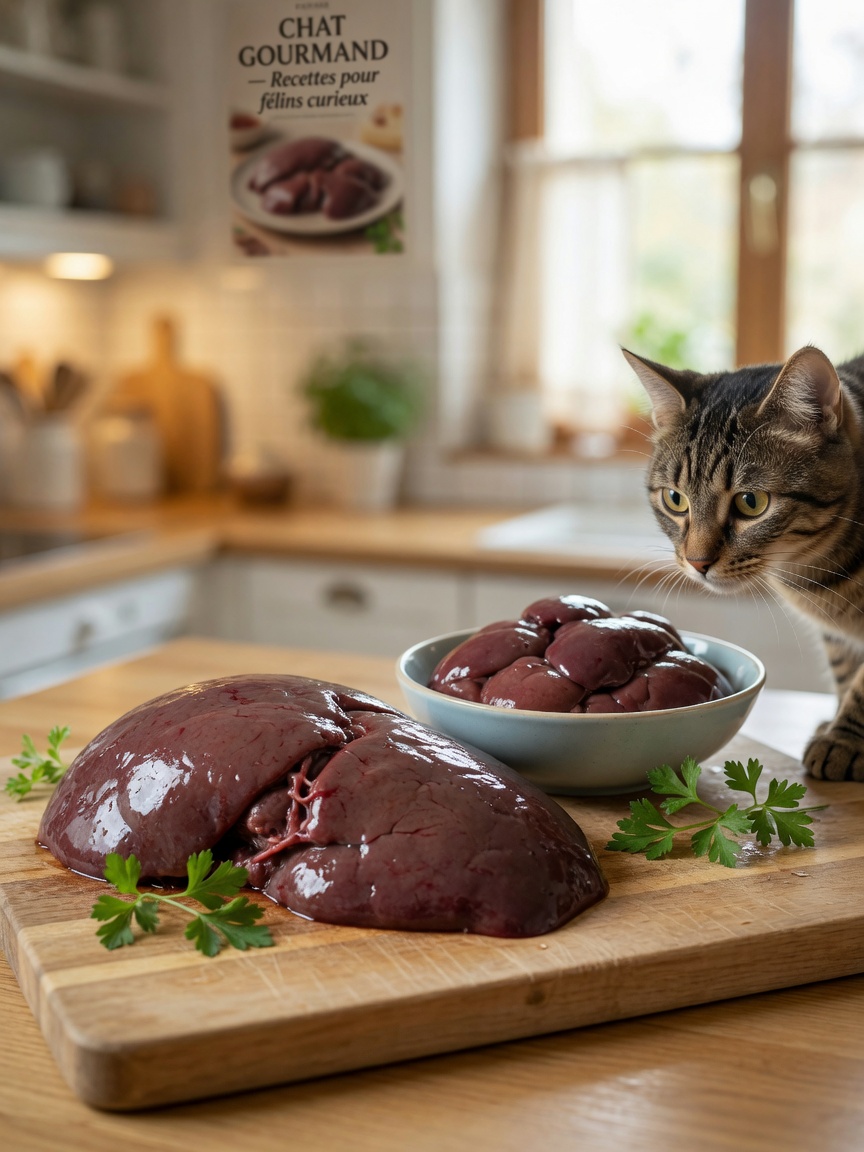
The most common cause of hypervitaminosis A in domestic cats is the regular feeding of raw liver, particularly beef liver. Beef liver contains extraordinarily high concentrations of vitamin A — a 100 gram portion of raw beef liver provides approximately 16,000 to 20,000 micrograms of retinol activity equivalents. The estimated safe upper limit for cats is considerably lower, and daily feeding of liver rapidly accumulates a toxic burden.
Chicken liver contains lower but still significant vitamin A concentrations. Fish liver oils, including cod liver oil, are another concentrated source that is occasionally given to cats as a supplement. Well-intentioned owners adding cod liver oil to boost omega-3 intake can inadvertently deliver vitamin A at doses that, over time, reach toxic thresholds.
In home-prepared raw diets, liver is often included as a nutrient-dense ingredient — which it is, in moderation. The problem arises when liver becomes a daily fixture or is fed in amounts that reflect enthusiasm for organ meat rather than a calibrated nutritional approach.
What Hypervitaminosis A Does to a Cat's Body
The hallmark of chronic vitamin A toxicity in cats is the development of deforming cervical spondylosis — the formation of abnormal bony growths, or exostoses, along the spine, particularly in the neck and upper back region. These bony outgrowths fuse vertebrae, restrict movement, and cause significant pain. Affected cats may hold their neck in a fixed, rigid position, appear reluctant to move, become unwilling to groom their hindquarters, and show progressive changes in posture as the spine becomes increasingly immobile.
The pain associated with cervical spondylosis can be severe and chronic. Some cats show reluctance to be touched around the neck and shoulders, become irritable, or develop changes in behaviour that owners may attribute to aging rather than pain. Weight loss is common, partly because pain and reduced mobility affect the cat's ability and desire to engage with normal behaviours including eating.
In acute toxicity — more common with supplement overdose than dietary accumulation — additional signs include lethargy, skin changes, and liver damage. Chronic toxicity affecting the skeleton is the more common presentation in cats fed liver-heavy diets over extended periods.
Diagnosis and What Veterinary Examination Reveals
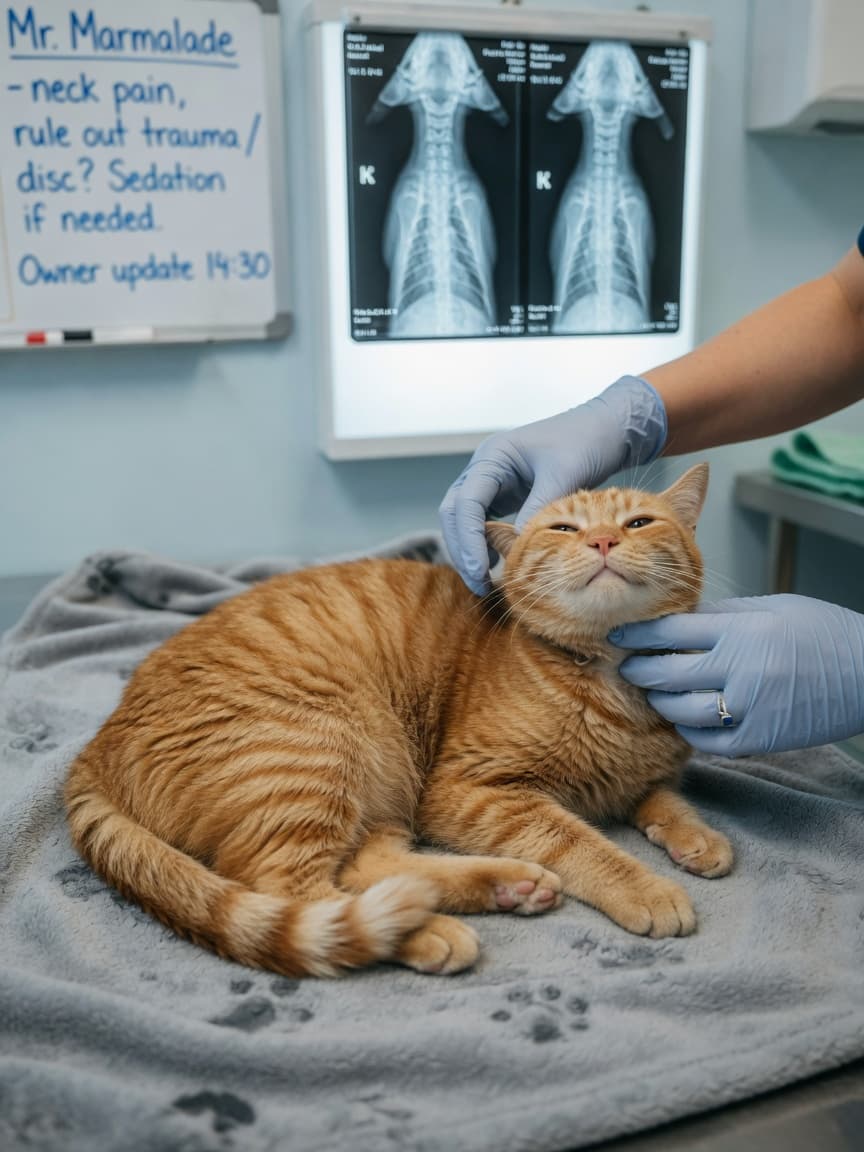
Diagnosis involves a combination of clinical signs, dietary history, radiography, and blood testing. X-rays of affected cats show characteristic bony proliferation around the cervical vertebrae and sometimes along the thoracic spine. Blood testing may reveal elevated vitamin A concentrations, although this does not always correlate precisely with tissue accumulation. A thorough dietary history — including any supplements, raw food additions, or regular treats — is an essential part of the diagnostic picture.
Asking owners directly about liver and supplement use is often revealing. Many owners do not mention liver or cod liver oil unless specifically asked, because they do not perceive these as problematic additions. Establishing what a cat actually eats, rather than what commercial food they are nominally on, is critical to diagnosis.
Is the Damage Reversible?
This is one of the most difficult aspects of hypervitaminosis A in cats. The bony changes that have already formed are not reversible. Exostoses that have fused vertebrae will remain. However, removing the source of excess vitamin A halts the progression of new bony growth, and some improvement in comfort and mobility may occur as inflammation around the new bone formations resolves over time. Pain management, physiotherapy in cooperative cats, and appropriate supportive care become the focus of treatment.
The prognosis depends heavily on the extent of skeletal involvement at the time of diagnosis. Cats diagnosed relatively early, with limited vertebral fusion, have a better quality of life outcome than those presenting with widespread cervical rigidity. This reinforces the value of dietary awareness before clinical signs develop.
Safe Levels and Sensible Inclusion of Liver
Liver is genuinely a nutritious food for cats and does not need to be eliminated entirely. It provides high-quality protein, iron, B vitamins, copper, and of course vitamin A. The key is moderation. As a rough guideline, liver should not comprise more than 5% of a cat's total diet — for most cats, this translates to a small amount two or three times per week at most, not daily feeding.
- Do not feed raw liver daily, regardless of the type.
- Avoid cod liver oil as a regular supplement — use fish body oils for omega-3 supplementation instead, as these are low in vitamin A.
- If feeding a home-prepared or raw diet, work with a veterinary nutritionist to ensure the formulation is balanced and does not inadvertently concentrate vitamin A.
- Commercial complete cat foods are formulated to contain vitamin A within safe ranges — supplementing on top of a complete commercial diet is rarely necessary and introduces the risk of excess.
Vitamin A is essential, but the gap between adequate and toxic is narrower than most owners realise. Understanding where liver sits in the broader dietary picture — as an occasional nutrient-dense addition rather than a staple — is the most reliable way to prevent a condition that, once established, cannot be undone.