
What to Do If Your Horse Colics
Colic represents one of the most common medical emergencies in horses, and as a horse owner, understanding how to respond can quite literally mean the difference between life and death. Colic—abdominal pain—occurs in roughly one in ten horses annually, ranging from mild discomfort to life-threatening conditions requiring surgical intervention. Whether your horse is experiencing a simple gastric upset or a severe impaction, knowing the immediate steps to take could save your animal's life and prevent complications. This guide will walk you through recognising colic, taking appropriate action, and understanding when professional help is essential.
Recognising the Signs of Colic
Early detection of colic symptoms allows for prompt treatment and better outcomes. Watch for these key warning signs:
- Restlessness and frequent position changes
- Rolling or attempting to lie down repeatedly
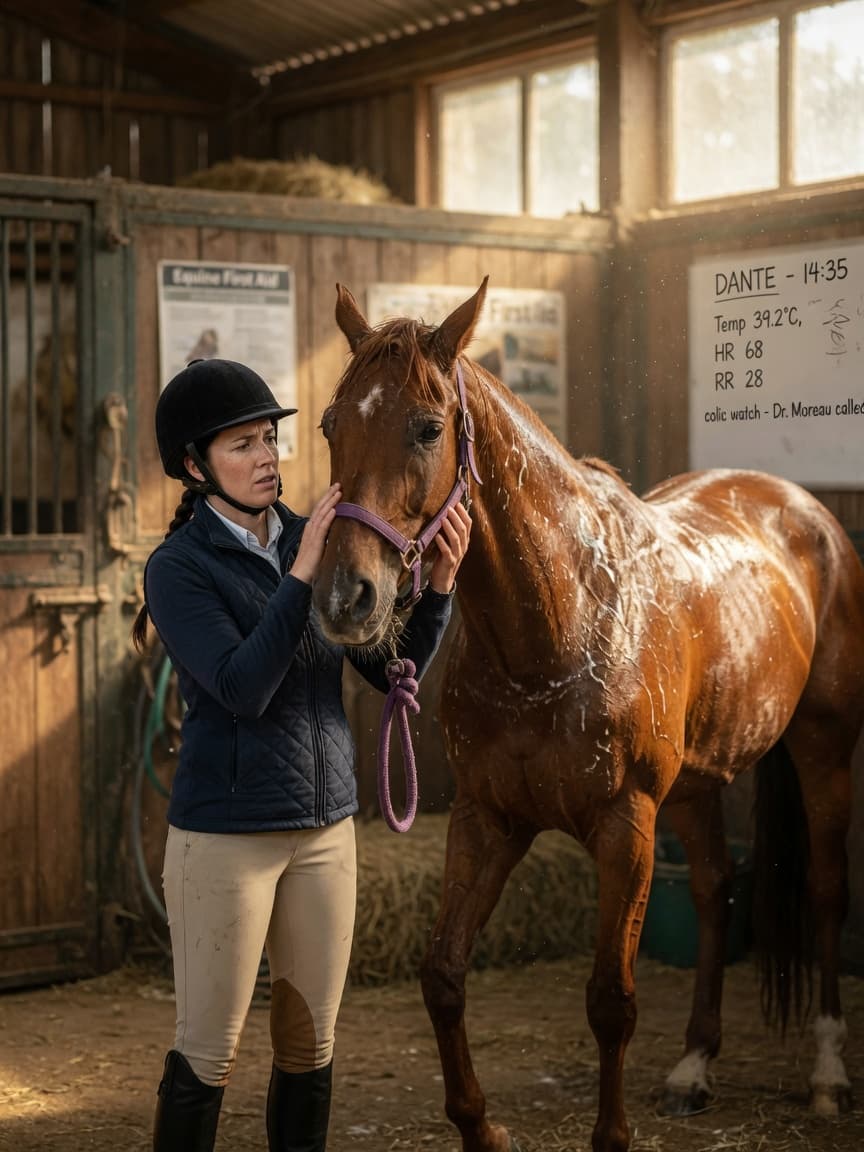
- Sweating, particularly around the neck and flanks
- Reduced or absent appetite
- Decreased faecal output or straining
- Elevated heart rate (normal is 36-40 beats per minute; colic may raise this to 60+)
- Listening to the abdomen and hearing little to no gut sounds
- Pawing at the ground or biting at the sides
Some horses display mild signs—simply looking uncomfortable or standing with their hind legs stretched backward. Others show severe distress. Regardless of severity, any abdominal pain warrants investigation and often veterinary attention.
Immediate Steps to Take
When you suspect colic, act quickly but calmly. Your composed response will help keep your horse settled.
- Stop feeding immediately and remove access to hay and concentrates
- Call your veterinarian without delay, even if symptoms seem mild. Describe the signs you've observed and your horse's vital signs if you can measure them
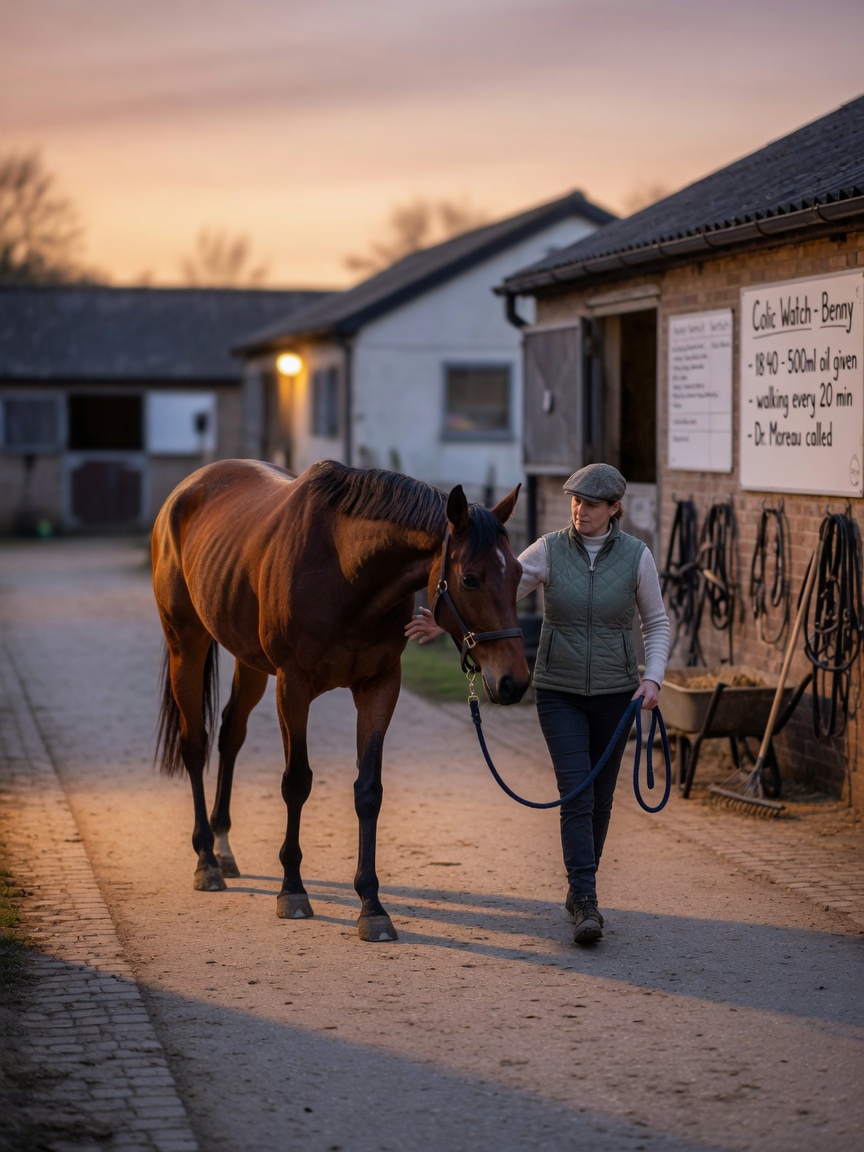
- Walk your horse gently in hand at a steady pace. Walking promotes gut motility and prevents rolling, which can worsen some colics
- Monitor vital signs including heart rate, temperature, and respiratory rate. Note any changes to report to your vet
- Provide small amounts of water if your horse wants to drink, though avoid large quantities
- Keep the environment calm and avoid stressful situations that might agitate your horse further
What Your Veterinarian Will Do
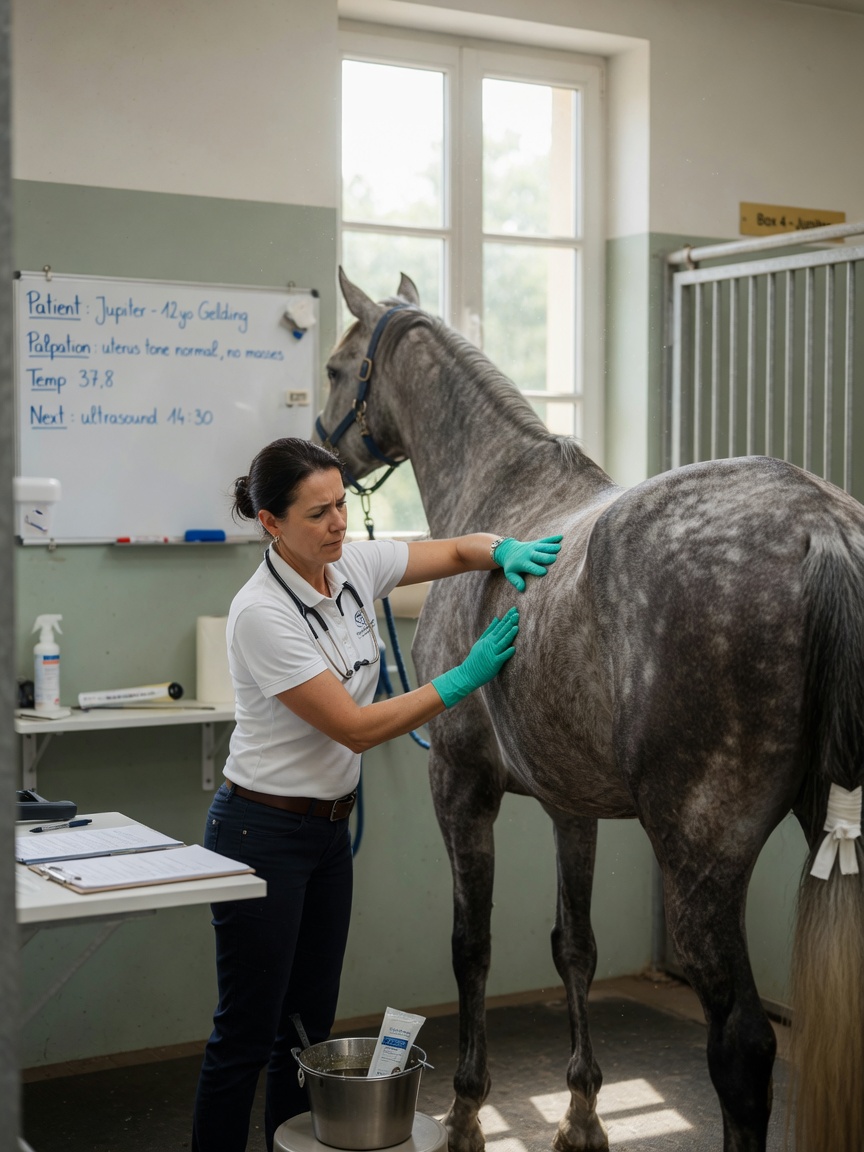
Upon arrival, your vet will conduct a thorough examination including physical assessment, rectal palpation, and potentially ultrasound or nasogastric intubation. Most cases of colic (approximately 75%) resolve with conservative medical management, including pain relief, fluids, and gut motility medications. Your vet may administer intravenous fluids if dehydration is present, or insert a nasogastric tube to relieve pressure in the stomach.
In approximately 5-10% of cases, colic proves surgical, requiring referral to an equine hospital. Never delay seeking professional help hoping the problem will self-resolve.
Common Types of Colic and Their Causes
Understanding colic types helps contextualise your horse's condition:
- Impaction colic: Blockage of the colon, often linked to dehydration or poor quality forage
- Gas colic: Excessive gas accumulation causing distension and pain
- Spasmodic colic: Muscular contractions of the bowel, often triggered by diet changes
- Displacement colic: The intestine shifts position, potentially requiring surgery
- Strangulation: Severe, surgical emergency where blood supply to the bowel is compromised
Prevention Strategies
Whilst not all colic is preventable, several management practices significantly reduce risk:
- Maintain consistent feeding schedules and avoid sudden diet changes
- Provide unlimited access to quality hay and fresh water
- Ensure regular exercise and turnout
- Monitor dental health and floating teeth annually
- Minimise stress and maintain stable routines
- Use appropriate supplements to support digestive health as recommended by your vet
Key Takeaways
Colic demands immediate attention, but most cases resolve favourably with prompt veterinary care. Remember to call your vet first, keep your horse calm and gently moving, and monitor vital signs. Prevention through consistent management, quality nutrition, and routine care helps protect your horse's health and reduces colic risk. Trust your instincts—if something seems wrong, professional evaluation is always worthwhile.