
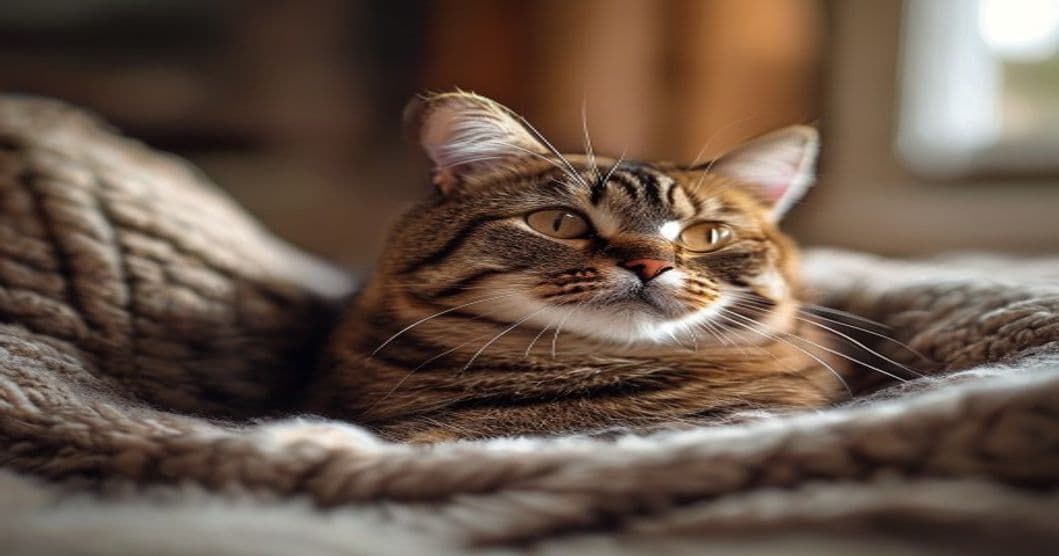
The Unwanted Gift at the Back Door
You find it on the kitchen floor at 6am: a mouse, a small bird, sometimes something you cannot immediately identify. Your cat sits nearby looking entirely pleased with themselves. If you have an outdoor cat, this is not an aberration — it is the expression of a deeply embedded biological drive that domestication has softened around the edges but never come close to eliminating.
The Predator That Never Left
Felis catus, the domestic cat, diverged from its wild ancestor Felis silvestris lybica relatively recently in evolutionary terms. Unlike dogs, who have been selectively bred over thousands of years for specific roles that required suppressing certain predatory behaviours, cats were largely self-selected — humans tolerated them around grain stores because they hunted rodents. The predatory drive was not bred out; it was the whole point.
Estimates suggest that well-fed domestic cats still kill billions of birds and small mammals annually worldwide. A cat does not need to be hungry to hunt. Hunger and predation are regulated by different neurological systems. A full cat will still stalk, chase and kill — the drive is not contingent on need.
Why They Bring It to You
This is the part that puzzles most cat owners. The cat could eat the prey outdoors, leave it where it fell, or cache it. Instead, it arrives at your door like a delivery.
The Teaching Hypothesis
One widely cited explanation is that cats — particularly female cats — are bringing prey home as a form of instruction. In wild or feral colonies, adult cats bring prey back to kittens, first dead and then increasingly alive, to teach hunting skills. Some behaviourists suggest that domestic cats perceive their owners as inept hunters who need feeding or training. It is a flattering interpretation, though difficult to prove conclusively.
Territory and Safe Space
Another well-supported explanation is simpler: your home is the cat's core territory and their safest space. Bringing prey home is not about teaching you anything — it is about bringing a resource back to a secure location. Wild cats cache food in safe areas. Your kitchen is the safest place the cat knows.
Social Bonding
A third possibility is affiliative behaviour. Cats who are socially bonded share resources with each other. Bringing prey to a trusted household member may be an extension of the same social behaviour seen between bonded cats — sharing food as an expression of relationship.
In practice, all three explanations may be partially correct, and the relative contribution of each probably varies between individual cats and contexts.
Does It Mean Your Cat Is Unhappy or Bored?
Not necessarily. Hunting is intrinsically rewarding for cats regardless of their welfare status — it is neurologically pleasurable. However, cats with insufficient mental stimulation and physical challenge may hunt more intensively. Providing structured play that mimics the hunt-chase-catch-kill sequence — using a wand toy, followed by a food reward at the end — can partially satisfy the predatory drive in a controlled way.
Research suggests that play feeding, where cats work for their food through puzzle feeders and activity toys, also reduces hunting frequency in some individuals. It is not a complete solution, but it addresses the underlying drive rather than simply trying to prevent access to prey.
Managing the Behaviour
- Fitting your cat with a well-designed, brightly coloured collar cover or a collar with a bell can reduce hunting success, particularly for birds — though some cats adapt to these over time
- Keeping cats indoors during dawn and dusk significantly reduces kills, as these are peak small mammal and bird activity periods
- Daily interactive play sessions of at least 10 to 15 minutes, structured to mimic predatory sequences, can reduce overall hunting motivation
- Puzzle feeders and food activity toys provide cognitive challenge and engage the predatory system productively
- Castration reduces roaming and some prey-directed activity, though it does not eliminate hunting behaviour
- Do not punish a cat for bringing prey home — the behaviour is instinctive and punishment will not reduce it, but it can damage your relationship with the cat
When to Be Concerned
Hunting behaviour itself is normal. However, if your cat begins bringing home prey and immediately appears lethargic, loses interest in food, or shows any signs of illness, seek veterinary advice. Rodents and birds can carry parasites, secondary rodenticide poisoning, and bacterial infections. Ensuring your cat is up to date with parasite prevention treatments is advisable for any outdoor hunter. If you have any concerns about what your cat may have been exposed to through their prey, your vet is the appropriate first point of contact.