
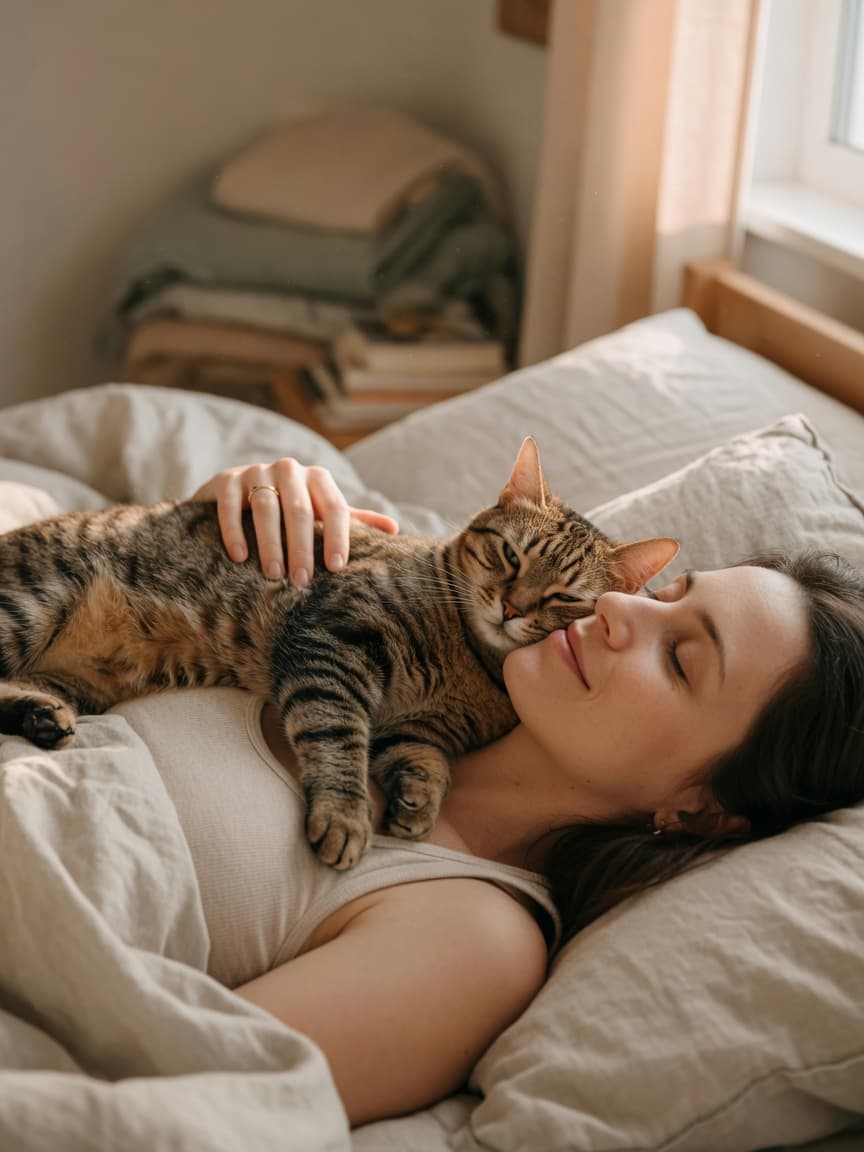
Why Do Cats Lie On Your Chest?
If you've ever had a cat settle onto your chest whilst you're relaxing, you've experienced one of the most comforting moments of pet ownership. That warm, purring bundle pressed against your heart isn't random—it's a deliberate behaviour rooted in feline biology, psychology, and affection. Understanding why cats choose your chest reveals fascinating insights into how they communicate trust and bond with their human companions.
The Science of Chest Lying
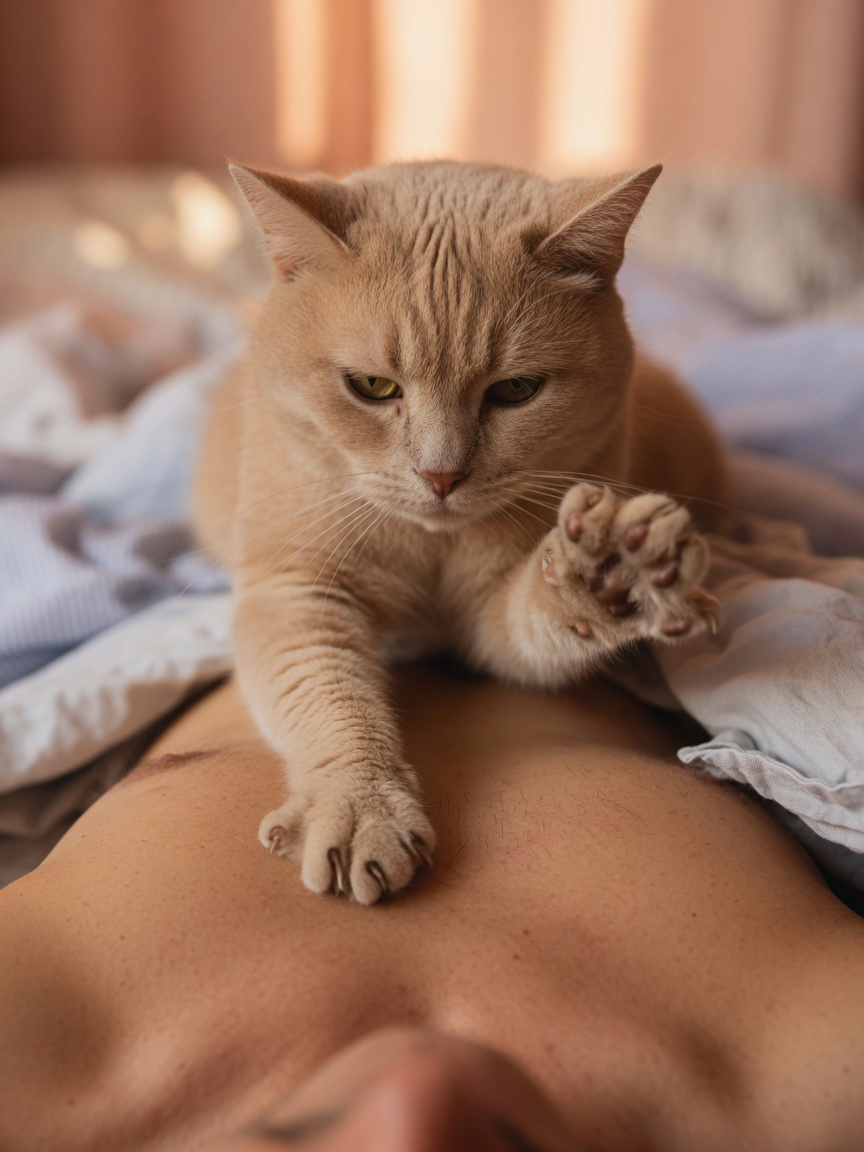
When your cat lies on your chest, they're engaging in behaviour that serves multiple purposes. The chest area provides warmth, comfort, and proximity to your heartbeat, which can be deeply soothing for cats. Your cat's body temperature naturally runs between 38-39°C—higher than humans—so they're naturally drawn to heat sources, particularly during cooler months or when they're feeling unwell.
The rhythmic sound of your heartbeat mimics the maternal heartbeat kittens experience during nursing, creating a sense of security and calm. This is why many cats seem particularly drawn to chests and why they often knead (make paddling motions with their paws) whilst lying there—it's a throwback to kittenhood behaviour.
Trust and Bonding
A cat lying on your chest is demonstrating significant trust. Your chest is a vulnerable area, and cats only rest in exposed positions when they feel safe. This behaviour indicates your cat considers you a secure attachment figure—essentially their safe haven.
- Cats choose to rest on chests of people they trust implicitly
- This position allows them to monitor their surroundings whilst feeling protected
- The behaviour strengthens your emotional bond and mutual affection
- Cats that lie on your chest are more likely to be confident and well-adjusted
Scent Marking and Territory
Your chest isn't just a comfortable resting spot—it's also a prime location for scent marking. Cats have scent glands in their cheeks, paws, and flanks. By lying on your chest, they're depositing their scent and claiming you as part of their family group. This behaviour, called allorubbing, is how cats create social cohesion within their community.
Health Monitoring Behaviours
Interestingly, cats sometimes increase chest-lying behaviour when they or their owners are unwell. Some theories suggest cats may detect subtle changes in body temperature, heart rate, or stress hormones. Whilst we shouldn't read too much into this, many cat owners report their cats became particularly clingy during illnesses.
If your cat suddenly changes their chest-lying habits—either dramatically increasing or ceasing the behaviour—it's worth monitoring their overall health and consulting your veterinarian if other changes occur.
Creating the Perfect Chest-Lying Environment
To encourage this bonding behaviour safely:
- Ensure you're in a relaxed state—cats respond to your calm energy
- Avoid sudden movements that might startle your cat
- Let your cat initiate the contact rather than forcing them onto your chest
- Respect their boundaries if they decide to leave
- Keep your bedroom temperature comfortable for both of you
Key Takeaways
Your cat lying on your chest is a gift—it represents trust, affection, and contentment. This behaviour combines practical thermoregulation with deep emotional bonding, creating a mutually beneficial experience. By understanding the reasons behind this endearing habit, you'll appreciate these moments even more and can reciprocate your cat's trust by providing a safe, warm, and calm presence. Whether your cat visits your chest occasionally or makes it their preferred napping spot, you can be assured they're showing you one of the highest forms of feline affection.