
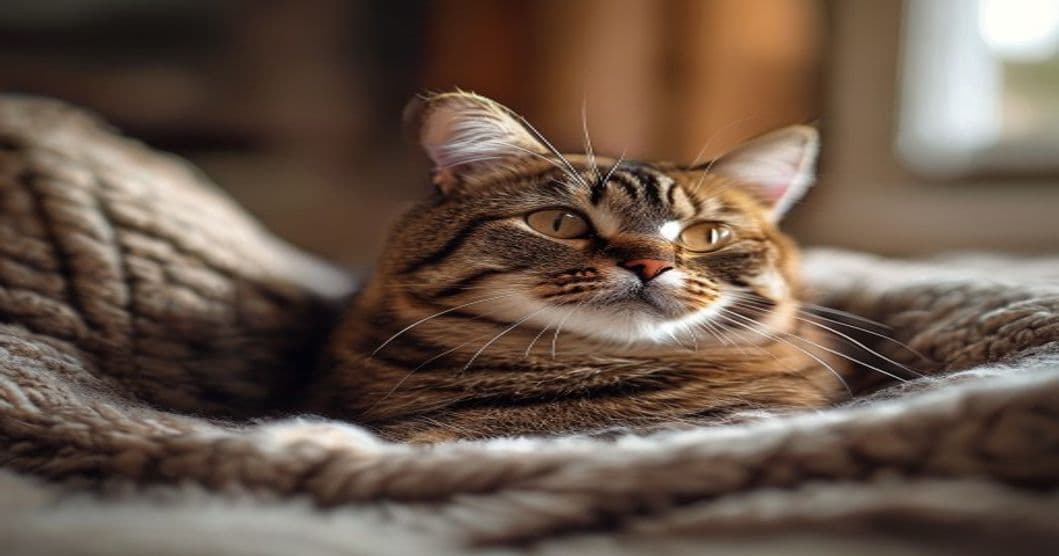
Why Do Cats Knead? The Science Behind Biscuit-Making
By Sarah Bennett, Certified Animal Nutritionist
Watch a cat settle in for a nap or curl up on your lap, and you'll likely witness one of the most endearing feline behaviors: the slow, rhythmic pressing of alternating front paws against a soft surface. Cats knead blankets, pillows, your stomach, other cats, and sometimes thin air. The behavior looks simple, but its origins and functions are layered. Understanding why cats knead gives you a window into both their evolutionary past and their emotional present.
The Origin: A Nursing Kitten Reflex
Kneading begins in the first hours of life. Newborn kittens instinctively press their paws rhythmically against their mother's mammary glands while nursing. This mechanical pressure stimulates milk letdown — the release of milk from the glands into the ducts. The motion is not voluntary at first; it is a hardwired reflex that ensures the kitten gets adequate nutrition during the most vulnerable period of its life.
The kneading reflex is paired, from the very beginning, with warmth, nourishment, and the comfort of close contact with the mother. This pairing is what makes the behavior so durable: the nervous system encodes it alongside some of the most positive sensory experiences a cat will ever have. Even as the kitten grows, weans, and develops into an adult, the motor pattern remains accessible — and so does the emotional state it was originally associated with.
Kneading as a Comfort and Contentment Behavior
In adult cats, kneading most commonly occurs during moments of relaxation, safety, and positive arousal. A cat that kneads while being petted, while settling on a favorite blanket, or while lying beside a trusted companion is, in a very real neurological sense, revisiting the emotional state of nursing — safety, warmth, and satiety.
Research on feline affective states indicates that repetitive self-soothing behaviors like kneading activate reward pathways similar to those triggered during social bonding. Cats that knead on their owners are not merely comfortable — they are expressing a level of trust and attachment that many other species reserve for close family members. If your cat kneads on you, take it as a genuine compliment.
Scent Marking Through Paw Glands
Cats have scent glands distributed across their bodies, including between the digital pads on each paw. These glands produce pheromones — chemical signals that convey identity, territory, and social status to other cats. When a cat kneads a surface, it is not just pressing; it is depositing scent.
This territorial function of kneading is particularly evident when cats knead new objects introduced to the home (a fresh blanket, a new piece of furniture), or when they knead you after you have returned from somewhere that carries unfamiliar smells. They are, in effect, re-labeling these surfaces or people as familiar and safe. This is the same impulse that drives cheek-rubbing and head-bunting, just expressed through the paws.
Stretching and Muscle Maintenance
Cats are obligate athletes — their musculoskeletal systems are built for explosive acceleration, precise leaping, and sustained hunting sequences. Kneading engages the flexor and extensor muscles of the forelimbs and shoulders in a low-intensity, repetitive way that functions similarly to a stretch. Many cats extend their claws during kneading, which further engages the flexors of the digits and helps maintain claw health by shedding the outer sheath.
Kneading is often observed when a cat is transitioning between rest and activity, or immediately after waking — contexts where muscle warm-up and stretch are physiologically appropriate. It is one of the body's efficient multitaskers: emotionally calming and physically beneficial at the same time.
Preparing a Sleeping Spot: An Ancestral Behavior
Before domestic cats had memory foam cat beds and fleece blankets, their wild ancestors slept in grass, leaves, and undergrowth. Kneading and treading the ground Why Do Dogs Spin Why Do Dogs Spin Why Do Dogs Spin Before Lying Down? Ancient Instinct Explained">Before Lying Down? Ancient Instinct Explained">Before Lying Down? Ancient Instinct Explained">before lying down served a practical purpose: it flattened vegetation to create a smoother, more comfortable resting surface and potentially disturbed any insects or small creatures hiding in the bedding. It may also have helped to assess the ground for stability and hidden hazards.
Modern domestic cats retain this pre-sleep kneading behavior even though the substrate is typically already soft and safe. It is a behavioral fossil — a relic of an ancestral context that persists because it was reliably useful for millions of years. Your cat turning circles and kneading its cushion before lying down is, in miniature, an echo of its wild heritage.
Female Cats Kneading Before Estrus
Unspayed female cats may show increased kneading behavior in the days leading up to estrus (heat). This is thought to be related to the hormonal changes that prepare the reproductive system — the behavior may help the cat communicate its physiological state or simply reflect a generalized increase in restless, self-soothing behaviors that accompany the hormonal surge. If you notice your unspayed female cat kneading more insistently than usual and combining it with increased vocalization, rolling, and affection-seeking, she may be entering or approaching a heat cycle.
When Kneading Becomes Excessive: A Stress Indicator
While kneading is most often a positive behavior, frequency and context matter. A cat that kneads obsessively for extended periods, particularly in a monotonous, trance-like way, may be using the behavior as a displacement activity — a coping mechanism for stress, anxiety, or boredom. This is analogous to repetitive self-soothing behaviors in other species under chronic stress.
Signs that kneading may have crossed into compulsive territory include: kneading that continues even when the cat appears otherwise agitated, kneading combined with wool-sucking or fabric-chewing (most common in Siamese and Burmese breeds), inability to interrupt the behavior, and kneading accompanied by other stereotypies. Environmental enrichment, reduced stressors, and in some cases veterinary or behavioral consultation are appropriate responses.
In contrast, brief kneading before settling down, gentle kneading during social interactions, or occasional kneading of favorite objects is completely normal at any life stage.
Should You Try to Stop Kneading?
In the vast majority of cases, no. Kneading is a normal, healthy expression of a cat's emotional and physical state. If the claw pressure is uncomfortable on your lap, keep a thick blanket handy as a buffer, or gently redirect your cat to a nearby cushion. Keep nails trimmed regularly — every two to three weeks for indoor cats — to minimize any discomfort from sharp points during kneading sessions.
- Kneading originates as a nursing reflex in newborn kittens and persists into adulthood because of the strong positive emotional associations built during that period.
- Adult cats knead primarily as a comfort behavior, but also to scent-mark surfaces, stretch muscles, and prepare sleeping spots.
- Paw glands deposit pheromones during kneading, making it a territorial and social signaling behavior as well as an emotional one.
- Unspayed females may show increased kneading before and during estrus as part of hormonal behavioral changes.
- Excessive, obsessive kneading — especially combined with fabric sucking or other stereotypies — can indicate chronic stress and warrants evaluation.
- Kneading on you is a sign of trust and attachment; a thick lap blanket and regular nail trims make it comfortable for everyone.
References
- Bradshaw JWS, Casey RA, Brown SL. The Behaviour of the Domestic Cat. 2nd ed. CABI; 2012. [Referenced in: Bradshaw JW. The evolutionary basis for the feeding behavior of domestic dogs and cats. J Nutr. 2006;136(7 Suppl):1927S–1931S. PMID: 16772461]
- Vitale Shreve KR, Udell MA. What's inside your cat's head? A review of cat (Felis silvestris catus) cognition research past, present and future. Anim Cogn. 2015;18(6):1195–1206. PMID: 26154674