
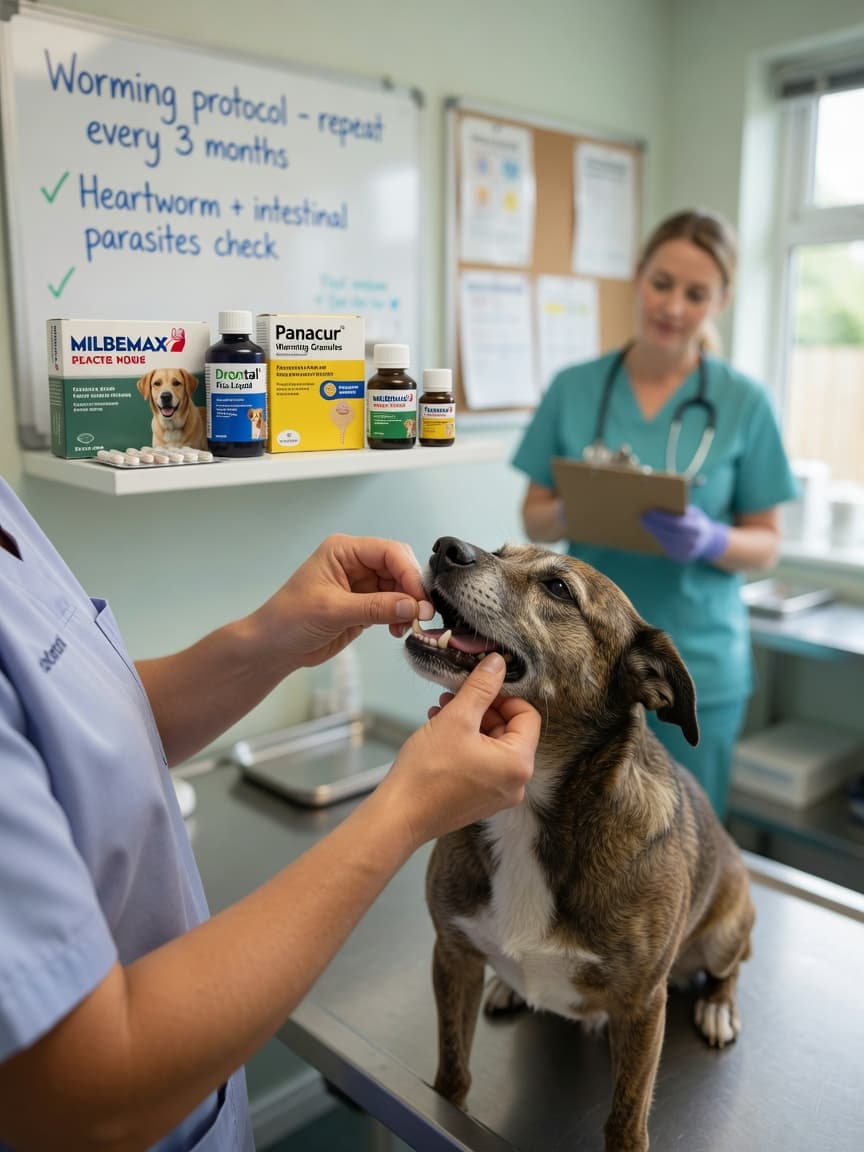
Worms Are Common, Serious, and Largely Invisible
Studies estimating the prevalence of intestinal worms in pet dogs and cats consistently find infection rates ranging from ten to thirty percent in surveyed populations, with some regions reporting considerably higher figures. Most infected animals show no obvious signs. You will not see worms in your pet's stool in the majority of cases, and weight loss, dull coat, and pot-bellied appearance — the classic signs associated with worm burden — tend to appear only in heavy infections or young animals. This near-invisibility is precisely why an evidence-based worming schedule matters, rather than treating only when you suspect a problem.
Which Worms Are We Actually Treating
Effective worming requires understanding that the term "worms" encompasses several distinct parasites with different biology, transmission routes, and risks.
Roundworms
Toxocara canis in dogs and Toxocara cati in cats are the most prevalent intestinal worms in UK pets. Puppies and kittens are frequently born with or acquire roundworms early in life, but adult animals can carry them too, particularly those with outdoor access. Roundworms are a zoonotic concern — human infection, while uncommon, can cause serious complications including ocular larva migrans and is a significant public health reason for regular treatment in pets that share space with children.
Tapeworms
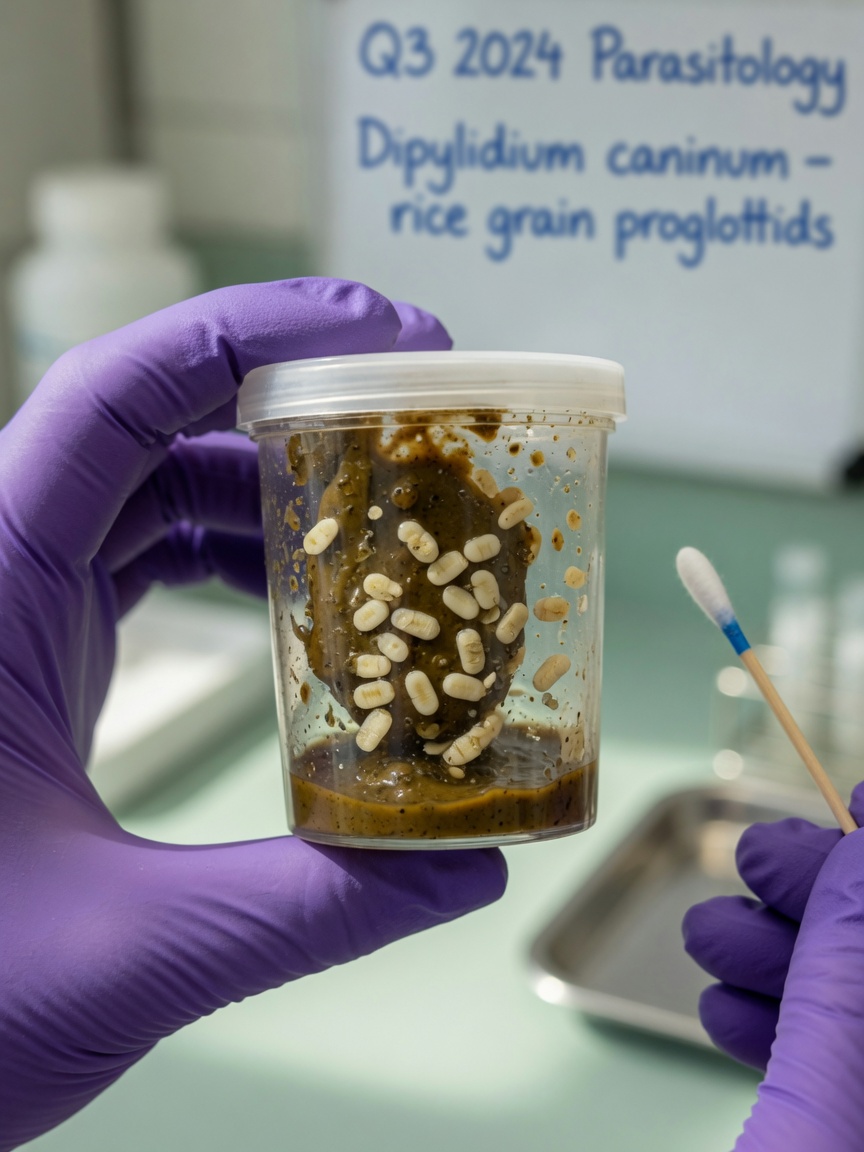
The most common tapeworm in UK dogs and cats is Dipylidium caninum, transmitted by ingesting infected fleas during grooming. Effective flea control reduces tapeworm risk but does not eliminate it. Taenia species tapeworms are acquired by hunting and consuming prey animals — particularly relevant for rural dogs and outdoor cats. Segments resembling grains of rice around the tail or in fresh faeces are the most reliable owner-reported sign of tapeworm infection.
Lungworm
Angiostrongylus vasorum, the dog lungworm, has expanded its geographic range significantly across the UK and Europe in recent years. Infection occurs when dogs ingest infected slugs or snails — or water and grass contaminated with their slime trails. Lungworm is not treated by standard worming products and requires a specific licensed treatment. Clinical signs include coughing, exercise intolerance, bleeding problems, and in severe cases, neurological signs. This is an important point: assuming a standard wormer covers lungworm is a potentially dangerous misconception.
Whipworms and Hookworms
Whipworm (Trichuris vulpis) is more common in dogs than cats and can cause significant large bowel diarrhoea. Hookworms are less prevalent in the UK but common in continental Europe and other regions. Both are covered by certain broad-spectrum prescription products.
How Often Should Adult Dogs and Cats Be Wormed
UK veterinary guidance for adult dogs and cats without specific risk factors generally recommends treatment every three months. However, this is a minimum starting point, not a ceiling. The appropriate frequency depends on lifestyle factors that significantly influence exposure risk.
Monthly treatment is typically recommended for dogs in lungworm-endemic areas, dogs that regularly scavenge or hunt, dogs in contact with young children, and dogs that have previously had confirmed worm burdens. Monthly treatment is also recommended for cats with regular outdoor access and confirmed hunting behaviour. Conversely, an elderly indoor-only cat with no wildlife exposure may be adequately protected on a quarterly schedule.
Discuss your individual pet's lifestyle with your vet to establish the most appropriate frequency rather than applying a universal protocol.
What to Look for in Worming Products

Worming products vary enormously in what they cover. Over-the-counter products often target roundworms only, or roundworms and some tapeworms. For broader coverage — including lungworm, whipworm, and the full tapeworm spectrum — a prescription product from your vet is typically required.
Combination products that address fleas, ticks, roundworms, tapeworms, and lungworm in a single monthly treatment have become increasingly popular and can simplify parasite management significantly. However, it is important to confirm with your vet exactly which parasites a given product covers for your species, as formulations differ between dogs and cats and not all combination products include all relevant worms.
Praziquantel is the standard tapeworm-active ingredient and should be present in any product intended to cover tapeworms. For lungworm in dogs, products containing emodepside or milbemycin oxime in licensed formulations are used. Your vet can advise on what is appropriate and available for your pet's specific risk profile.
Practical Guidance for Worming Effectively
- Follow your vet's recommended schedule based on your pet's lifestyle, not a generic calendar.
- Check that any product you use covers the specific worm species relevant to your area and your pet's behaviour.
- Do not assume an over-the-counter product covers lungworm — it is unlikely to do so.
- Integrate flea control with tapeworm prevention, as Dipylidium tapeworms cannot be controlled by worming alone without also addressing fleas.
- Promptly clear up dog faeces in gardens and public areas to reduce environmental egg burden and protect public health.
- Wash hands after handling soil, and discourage children from contact with areas where pets defecate.
- If your pet vomits a worming tablet or shows signs of gastrointestinal upset, contact your vet for guidance on whether retreatment or an alternative product is appropriate.
- Keep a record of treatment dates and products used to share with your vet and to avoid accidental missed or doubled doses.