
Yorkshire Terrier Overview
The Yorkshire Terrier is classified under FCI Group 3 (Terriers), Standard No. 86. Despite being one of the smallest breeds in the world, the Yorkshire Terrier possesses the bold, determined character typical of the terrier group. Developed in nineteenth-century northern England as a working rat-catcher, the Yorkie has evolved into one of the most popular companion dogs in Europe. Typically weighing between two and three and a half kilograms, the breed is notable for its long, silky, steel-blue and tan coat and its lively, confident personality. However, Yorkshire Terriers carry a number of breed-specific health conditions, some of which are serious and require prompt recognition and veterinary management.
Portosystemic Shunt
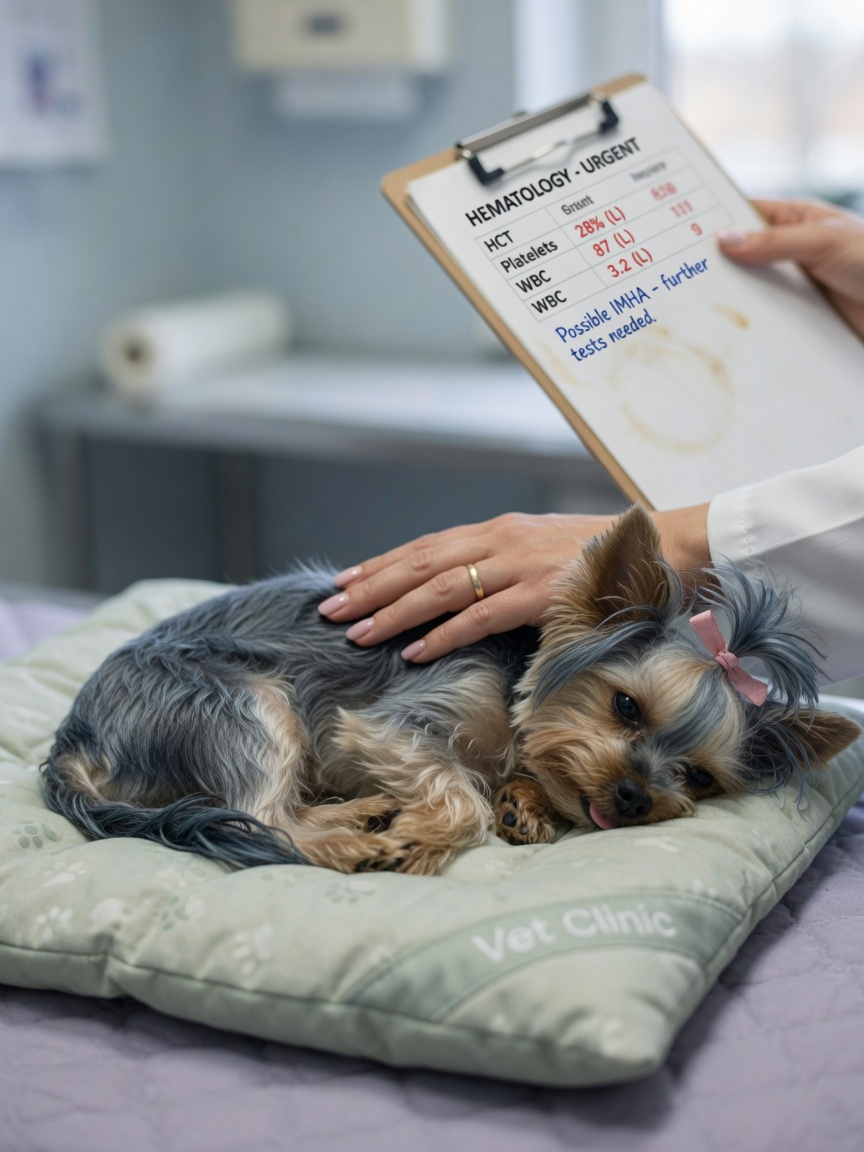
The Yorkshire Terrier has one of the highest incidences of portosystemic shunt (liver shunt) of any breed. In this condition, abnormal blood vessels allow blood draining from the intestines to bypass the liver entirely, entering the general circulation without being detoxified. The liver is responsible for filtering waste products, metabolising proteins, and producing essential blood components including albumin. When the liver is bypassed, ammonia and other toxins accumulate in the bloodstream and affect the brain.
Signs of portosystemic shunt in a Yorkie include stunted growth, disorientation or bizarre behaviour particularly after meals, head pressing, circling, seizures, excessive thirst and urination, vomiting, and persistently low body weight despite adequate feeding. Blood tests typically reveal low albumin, elevated bile acids, and in some cases abnormal liver enzymes. Bile acid stimulation testing before and after a meal is a key diagnostic tool. Abdominal imaging, often including scintigraphy or CT scanning, is used to identify and characterise the abnormal vessel.
Surgical ligation of the shunt vessel, using an ameroid constrictor or similar device, is the treatment of choice and can provide long-term resolution when performed by an experienced surgical specialist. Medical management with a protein-restricted diet, lactulose, and antibiotics to reduce ammonia production is used when surgery is not possible or as a bridge to surgery. Early referral to a veterinary specialist when shunt is suspected is strongly advised.
Patellar Luxation
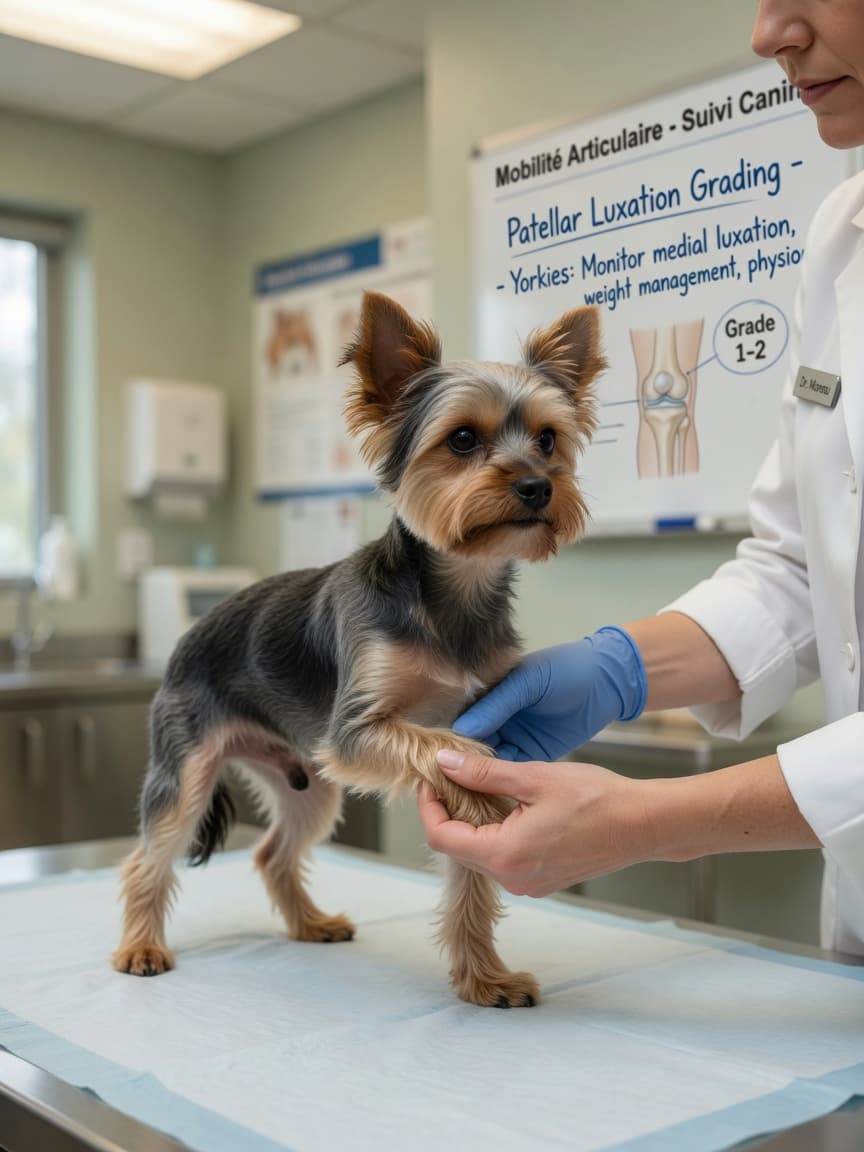
Patellar luxation — the displacement of the kneecap from its normal groove in the femur — is extremely common in Yorkshire Terriers. The condition is graded from 1 to 4 according to severity. Grade 1 represents a kneecap that is occasionally displaced but returns to position spontaneously; grade 4 describes permanent dislocation that cannot be manually repositioned. Affected dogs may show a characteristic skipping gait, intermittent lameness, or reluctance to bear weight on the affected leg. Mild cases may be managed conservatively through weight control and physiotherapy, while grade 3 and 4 cases typically require surgical correction, with excellent outcomes when performed by a veterinary orthopaedic surgeon. Breeders in the UK may use the BVA/KC patellar luxation scheme; across Europe, orthopaedic specialist assessment is widely available.
Tracheal Collapse
Tracheal collapse is a condition in which the cartilage rings supporting the trachea (windpipe) weaken and flatten, causing the airway to narrow dynamically during breathing. It is particularly prevalent in small and toy breeds, and Yorkshire Terriers are among the breeds most commonly affected. The hallmark sign is a distinctive harsh, honking cough that is often triggered by excitement, exertion, drinking, or pressure on the throat from a collar. Many owners describe it as sounding like a goose honking.
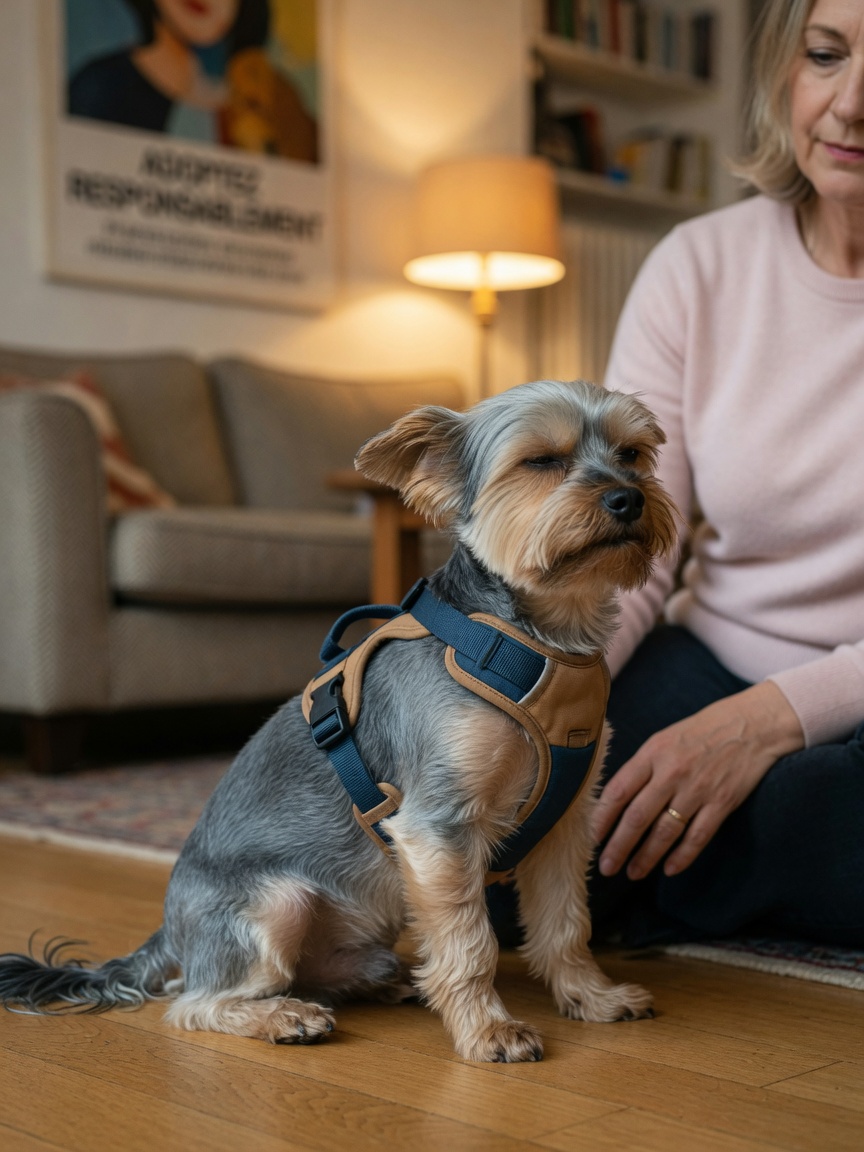
Using a harness rather than a collar is strongly recommended for all Yorkshire Terriers, as collar pressure on the trachea can worsen symptoms and potentially accelerate the progression of the condition. Weight management is critically important, as obesity places additional pressure on the airways. Medical management includes cough suppressants, bronchodilators, and sedatives in anxious dogs, prescribed by a veterinarian. In severe cases that do not respond to medical therapy, surgical placement of intraluminal stents can restore a more normal airway diameter. Any Yorkie showing respiratory distress should receive emergency veterinary assessment.
Legg-Calvé-Perthes Disease
Legg-Calvé-Perthes Disease (LCP) is a condition in which the blood supply to the head of the femur (the ball of the hip joint) is disrupted, causing avascular necrosis — the bone dies due to lack of blood flow. It affects small and toy breeds in young adulthood, typically presenting between four and twelve months of age. Affected dogs show progressive hindlimb lameness, muscle wasting in the affected leg, and pain on manipulation of the hip joint. Diagnosis is confirmed by radiography. The primary treatment is surgical removal of the necrotic femoral head (femoral head and neck excision, or FHNE), which allows a fibrous pseudojoint to form and reliably returns affected dogs to comfortable, functional use of the limb. A DNA test for LCP-associated variants is available for some Yorkie lines through laboratories including Laboklin.
Dental Disease
Dental disease is one of the most significant health challenges facing Yorkshire Terriers. The small jaw creates crowding and misalignment of the teeth, promoting rapid accumulation of plaque and tartar. Without intervention, this leads to periodontal disease, pain, tooth loss, and the potential for systemic spread of oral bacteria. Daily tooth brushing using a dog-specific toothpaste should begin from puppyhood. Dental chews and water additives can provide supplementary support. Professional dental cleaning under general anaesthesia will be required periodically throughout the dog's life. Retained deciduous (puppy) teeth are also common in Yorkies and should be surgically removed by the veterinarian at the time of spaying or neutering to prevent overcrowding and periodontal problems.
Hypoglycaemia
Yorkshire Terrier puppies and very small adults can develop hypoglycaemia (low blood sugar), particularly when stressed, cold, or following a missed meal. The limited fat and muscle reserves of tiny dogs mean that blood glucose can drop rapidly. Signs include weakness, trembling, a glassy stare, incoordination, and in severe cases seizures or loss of consciousness. This is a veterinary emergency. Small, frequent meals throughout the day reduce the risk. Owners should keep glucose gel or honey available to apply to the gums as an emergency measure while transporting the dog to the veterinarian.
Why a Harness is Essential
Given the high risk of tracheal collapse, it is strongly recommended that all Yorkshire Terriers wear a well-fitted harness rather than a neck collar for all walks and any occasion when a lead is attached. Even a standard flat collar used only for identification tags is preferable to a lead attachment at the neck. Harnesses distribute pressure across the chest and shoulders, avoiding the trachea entirely. This simple change in equipment can meaningfully reduce coughing episodes and the risk of airway trauma in predisposed individuals.
Coat Care and Grooming
The Yorkshire Terrier's coat is long, silky, and prone to tangling. Daily brushing is required to maintain a full-length show coat. Many pet owners prefer a shorter puppy trim or teddy trim, which reduces the grooming burden to a brush two to three times per week and a professional groom every six to eight weeks. The coat does not shed heavily but does require regular bathing, approximately every two to three weeks. The topknot hair should be kept away from the eyes to prevent irritation.
Eye and Ear Care
Yorkshire Terriers can suffer from eye irritation due to facial hair, and regular trimming around the eyes is important. Any discharge, redness, or squinting should prompt veterinary assessment. The ear canals should be checked weekly for signs of infection, particularly in dogs with profuse ear hair that may trap debris and moisture.
Weight Management and Lifespan
Obesity significantly worsens both tracheal collapse and patellar luxation in Yorkshire Terriers, making weight management a genuine health priority rather than merely an aesthetic concern. A healthy adult Yorkie should have a visible waist and palpable ribs without excess fat covering. The Yorkshire Terrier has a typical lifespan of twelve to sixteen years and, with attentive health management, can enjoy a long and active life.
Parasite Control, DNA Testing, and Supplies
European Yorkshire Terrier owners should follow ESCCAP guidelines for parasite prevention, with the programme tailored to the region and any travel. DNA testing for LCP variants and other heritable conditions is available through Laboklin and Antagene. Responsible breeders screen before mating to reduce the frequency of hereditary disease in their lines. For harnesses suited to small breeds, grooming tools, and nutritional products, Zooplus provides a comprehensive range with delivery across Europe.