
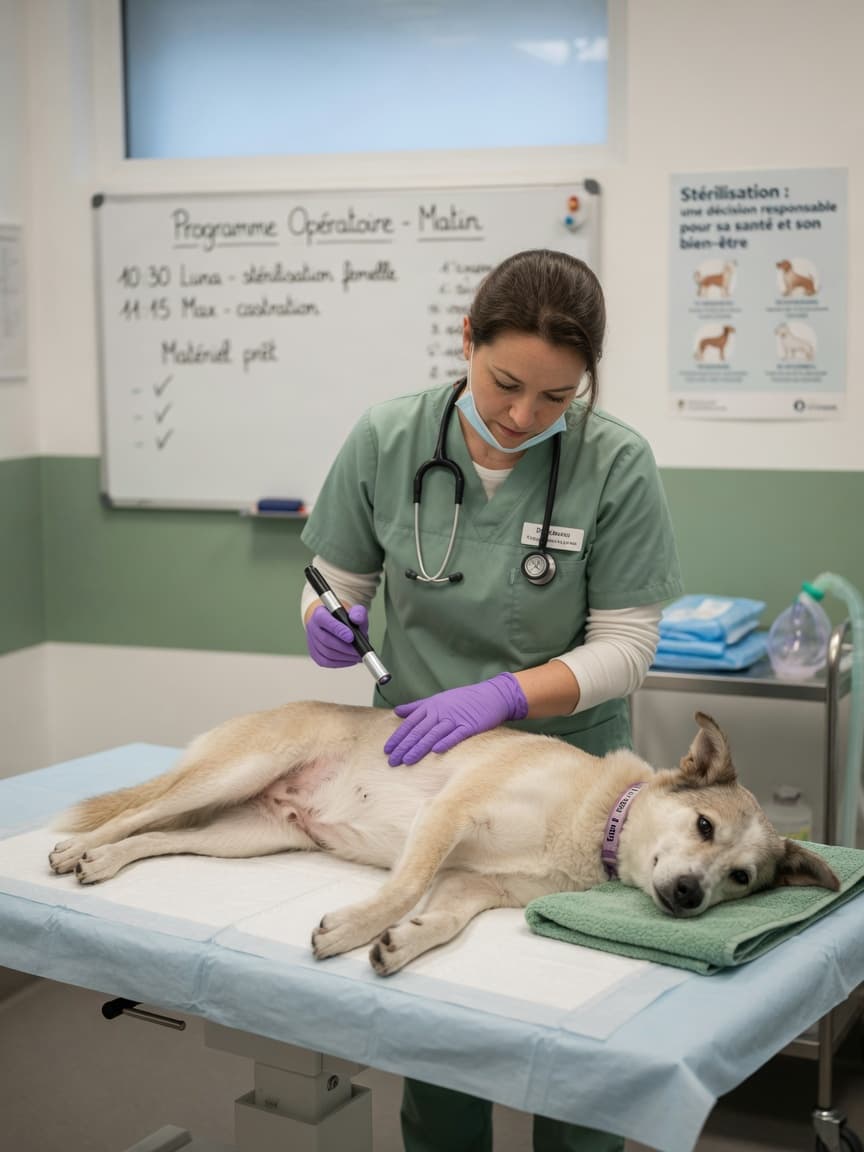
Benefits of Spaying Your Dog: Beyond Preventing Puppies
If you share your home with a female dog, the question of whether — and when — to spay her is one you will face early. The answer used to feel straightforward: spay young, spay early, move on. But veterinary science has grown more nuanced, and the conversation has evolved to weigh individual health risks against population-level benefits. What has not changed is the broad consensus among veterinary organisations: for the vast majority of dogs, spaying delivers real, measurable health advantages that last a lifetime.
Below, we break down the science-backed benefits, address the timing debate for large breeds, and give you the questions worth asking your vet at your next appointment.
1. Elimination of Pyometra Risk
Pyometra — a life-threatening infection of the uterus — affects roughly one in four intact female dogs by the age of ten. The condition develops when the uterine lining thickens after repeated oestrus cycles, creating an environment in which bacteria proliferate. Symptoms can be subtle until the disease becomes critical, and emergency surgery in a sick, older animal carries far greater risk than a planned spay in a healthy young dog.
Spaying removes the uterus entirely (or, in ovariectomy, removes the hormonal trigger), so pyometra becomes anatomically impossible. According to the PDSA, eliminating pyometra risk alone is considered sufficient justification for spaying in many clinical guidelines across the UK and Europe.
2. Dramatic Reduction in Mammary Tumour Risk
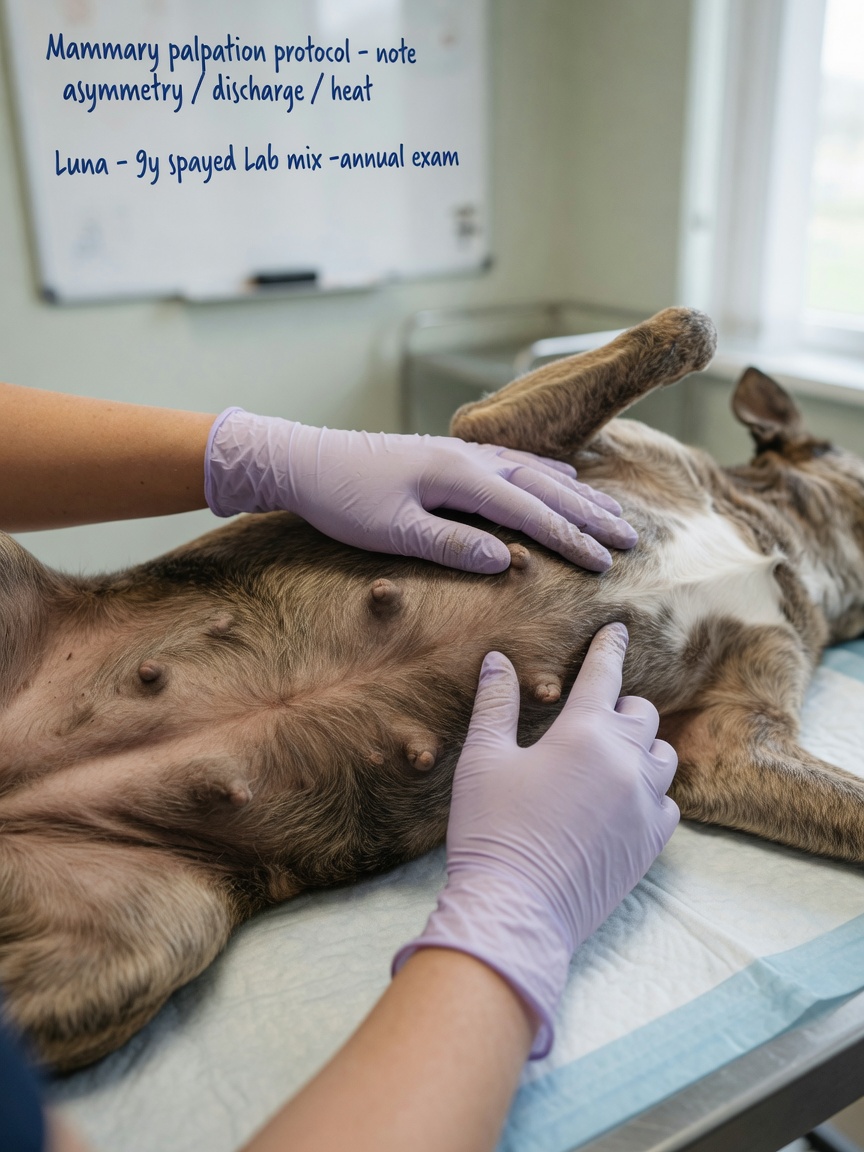
Mammary tumours are the most common tumour type in intact female dogs, and approximately 50 percent are malignant. The link between oestrogen exposure and tumour development is well established: dogs spayed before their first heat have roughly a 0.5 percent lifetime risk of mammary cancer. That risk rises to 8 percent after one heat, and to 26 percent after two or more heats.
These figures, widely cited by the ASPCA and corroborated by peer-reviewed research, make early spaying one of the most effective cancer-prevention strategies available to dog owners. Even spaying after the second heat confers some protective benefit compared with leaving a dog intact throughout her life.
3. Prevention of Ovarian and Uterine Cancers
While less common than mammary tumours, ovarian and uterine cancers do occur in intact dogs and carry significant morbidity. Spaying removes the organs entirely, making these cancers impossible. This straightforward benefit is often overlooked in favour of the more dramatic statistics around mammary tumours, but it contributes meaningfully to overall longevity.
4. Behavioural Benefits and Reduced Roaming

An intact female in oestrus experiences hormonal surges that can drive restlessness, vocalisation, and a powerful urge to roam. Dogs that escape in search of a mate are at significantly elevated risk of road accidents, fights with other animals, and becoming lost. Spaying eliminates the oestrus cycle and, with it, the behavioural disruption that many owners find distressing for both dog and household.
Spayed dogs also no longer attract intact males, reducing the stress of being followed or pestered during walks — a quality-of-life benefit that is easy to underestimate until you have lived through a season with an intact female in a neighbourhood with free-roaming males.
5. No More Seasons — Practical Hygiene and Management
Each oestrus cycle lasts approximately three weeks and occurs roughly twice a year. During this period, female dogs produce a bloody discharge that requires either close management indoors or the use of dog sanitary wear. Walks become complicated by the presence of interested males. For multi-dog households, an intact female in season can disrupt the entire dynamic.
Spaying eliminates seasons permanently, simplifying daily care and reducing the logistical burden on owners — particularly those who live in urban areas where off-lead exercise during a season is effectively impossible.
6. Contribution to Reducing Shelter Overpopulation
The population-level argument for spaying remains compelling. Millions of dogs enter shelters globally each year, and a significant proportion are euthanised simply for lack of homes. A single unspayed female and her descendants can theoretically produce thousands of offspring over several years. The American Kennel Club acknowledges this population dimension even as it has refined its guidance on timing for specific breeds.
As The Guardian reported in its coverage of the neutering debate, the ethical case for spaying remains robust even as the medical conversation around timing has grown more sophisticated.
The Timing Question: What New Research Says About Large Breeds
The most significant shift in veterinary guidance over the past decade concerns when to spay, particularly for large and giant breeds. A landmark study from UC Davis, published in PLOS ONE (PubMed PMID: 23645187), found that Golden Retrievers spayed or neutered before 12 months of age had significantly higher rates of certain joint disorders and cancers compared to intact dogs. Subsequent breed-specific studies have extended this finding to Labrador Retrievers, German Shepherds, and several other large breeds.
The current guide" title="Cat Wet Vs Dry Food Guide">guide" title="Working Dog Nutrition Guide">working hypothesis is that sex hormones play a role in the closure of growth plates and in musculoskeletal development. Early spaying — before 12 months in large breeds, before 6 months in giant breeds according to some protocols — may deprive the developing skeleton of hormonal signals it needs.
However, this does not mean large-breed dogs should remain intact indefinitely. Most veterinary bodies, including the AVMA, now recommend a breed- and size-adjusted approach: for small breeds (under 20 kg), spaying before the first heat remains appropriate; for medium to large breeds, waiting until 12–18 months allows skeletal maturity while still capturing most of the cancer-prevention benefit. A second key paper supporting nuanced timing appears at PubMed PMID: 31230375 (Torres de la Riva et al., updated breed-specific analysis).
The practical takeaway: have a breed-specific conversation with your vet rather than defaulting to a single universal age. The benefits of spaying are not in dispute — the optimal moment to deliver them varies.
Supporting Your Dog's Health Around the Time of Spay
The perioperative period is an opportunity to reassess your dog's nutrition. Spayed dogs have modestly lower metabolic rates than intact females, and many owners notice weight gain in the months following surgery if food portions are not adjusted. High-quality, portion-controlled diets designed for neutered dogs can help manage this transition.
For owners looking to support joint health during recovery — particularly relevant for large-breed dogs spayed at skeletal maturity — joint-supportive supplements containing omega-3 fatty acids, glucosamine, and chondroitin are worth discussing with your vet. You can find a well-reviewed range at Zooplus Dog Supplements, which stocks veterinary-grade options at competitive prices.
If you are interested in plant-based calming or recovery support options, HolistaPet's dog range includes hemp-derived products formulated for post-surgical recovery comfort — always discuss any supplement with your vet before use.
Key Takeaways
- Spaying eliminates the risk of pyometra, a life-threatening uterine infection affecting up to 25% of intact females by age 10.
- Dogs spayed before their first heat have a roughly 0.5% lifetime mammary cancer risk, versus up to 26% for dogs with two or more heats.
- Spaying removes the risk of ovarian and uterine cancers entirely.
- Behavioural benefits include elimination of oestrus-related roaming, vocalisation, and attraction of intact males.
- New research supports delaying spaying until 12–18 months in large and giant breeds to allow skeletal maturity — discuss timing with your vet.
- Spayed dogs may have lower caloric needs; adjust diet after surgery to prevent weight gain.
- All major veterinary bodies continue to recommend spaying for the vast majority of female dogs.
References
- Torres de la Riva G, Hart BL, Farver TB, et al. Neutering Dogs: Effects on Joint Disorders and Cancers in Golden Retrievers. PLOS ONE. 2013;8(2):e55937. PubMed PMID: 23645187
- Hart BL, Hart LA, Thigpen AP, Willits NH. Long-Term Health Effects of Neutering Dogs: Comparison of Labrador Retrievers with Golden Retrievers. PLOS ONE. 2014;9(7):e102241. PubMed PMID: 31230375