
Cat Midnight Crazies: Why Cats Go Wild at Night & How to Stop It
It's 2am. You're deeply asleep. Then: thundering paws, a crash from the kitchen, something being knocked off a shelf, and the sound of a cat sprinting the full length of the hallway at maximum speed for absolutely no apparent reason. Welcome to the midnight crazies — and despite how it feels at that moment, your cat is not malfunctioning. They are doing exactly what millions of years of evolution programmed them to do. The bad news is that evolution doesn't care about your sleep schedule. The good news is that there are very effective ways to fix it.
Why Cats Are Wired for Night Activity
The domestic cat's wild ancestor, Felis lybica, evolved in an environment where their primary prey — small rodents and birds — was most active at dawn and dusk. These transitional light periods offer enough visibility for a predator with excellent low-light vision while also providing cover. Cats evolved with pupils that can dilate to extraordinary size and a reflective layer behind the retina (the tapetum lucidum) that amplifies available light, making them genuinely superior hunters in dim conditions. The surge of hunting energy in the early morning and late evening hours is not random — it's the precise window when catching prey was historically most productive.
The Role of Pent-Up Energy
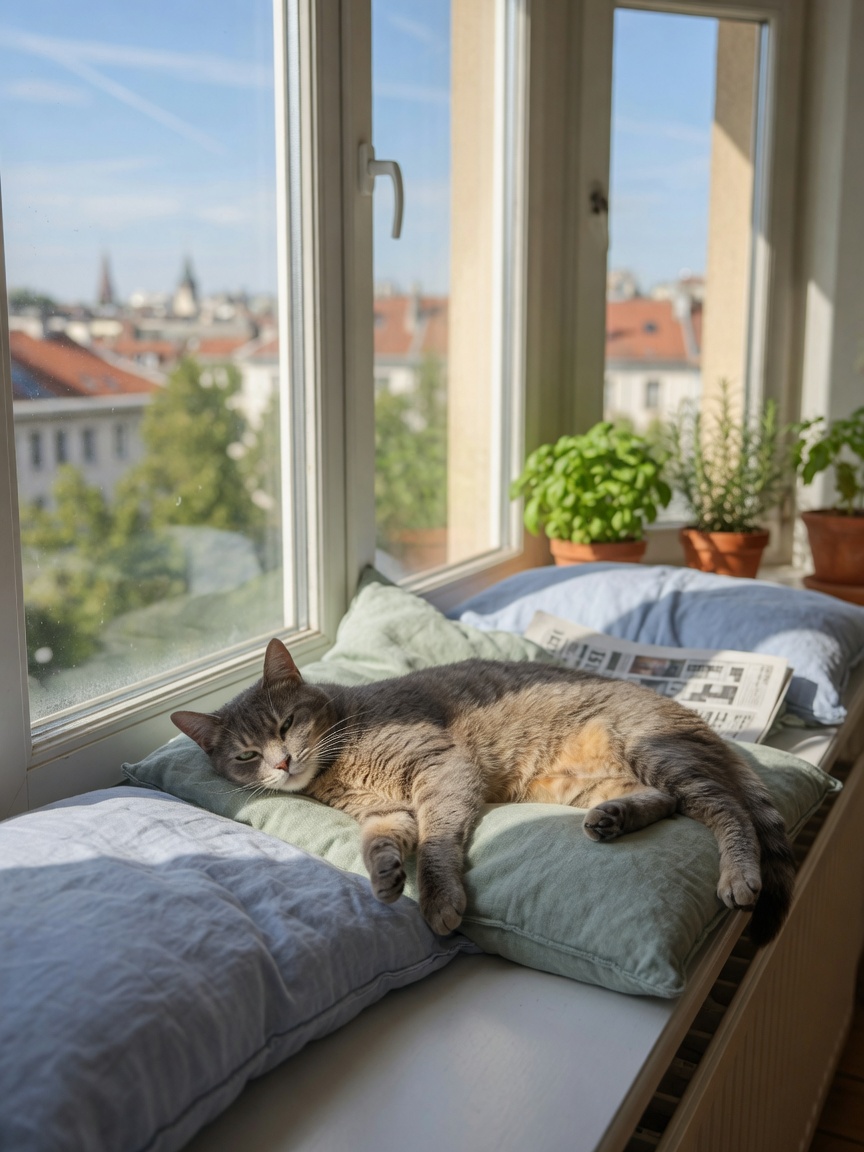
Indoor cats that spend the day largely inactive — sleeping, sitting at windows, waiting for something to happen — accumulate enormous reserves of physical and mental energy. When the household quiets down at night and stimulation drops, that energy doesn't disappear. It waits until the brain's activity clock says "now" — typically around the 2–5am window — and then it releases. The midnight crazies are essentially the cat's compressed daily exercise and hunting activity, condensed into one explosive nocturnal burst because nothing adequate was offered during the day. Your cat isn't being difficult. They're desperately overdue for stimulation.
The Hunting Brain Needs a Target
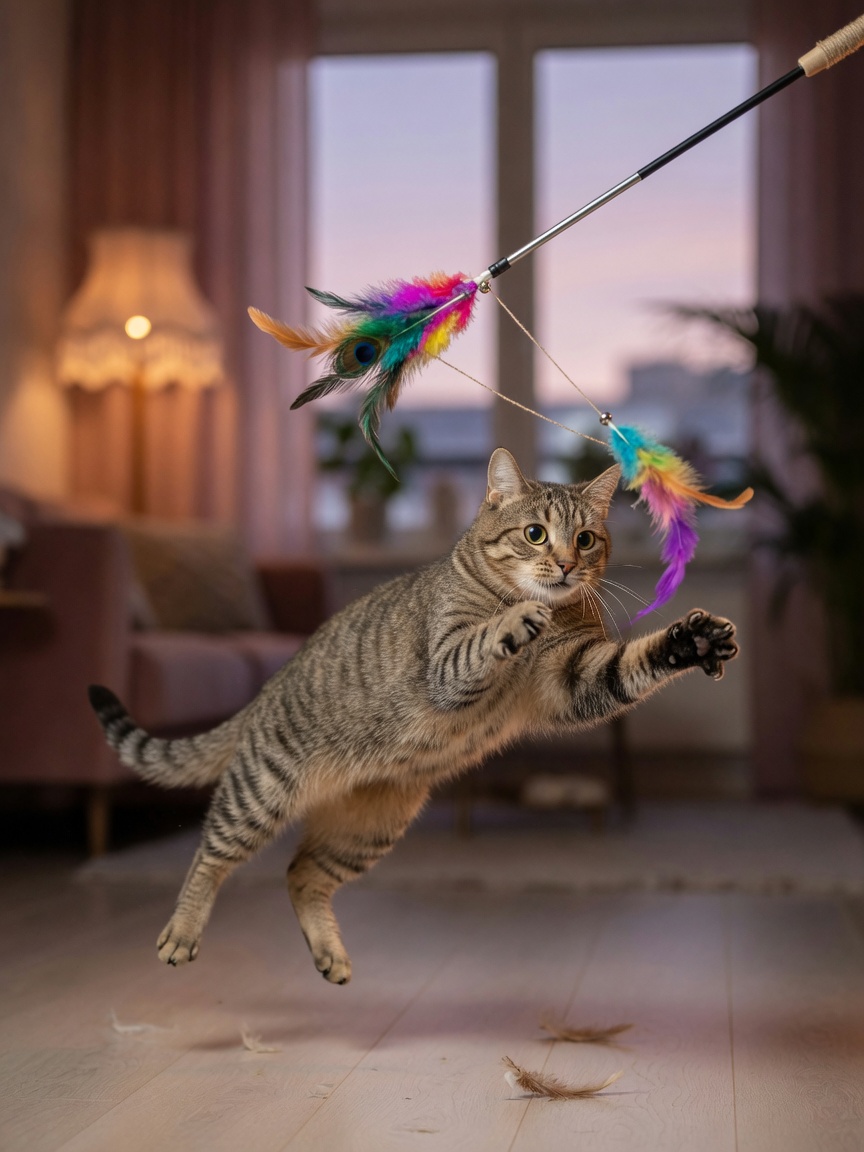
A cat that isn't getting regular structured hunting activity through play will seek it independently — and the night is when that drive peaks. The midnight sprint isn't random: the cat is likely pursuing imaginary prey, responding to sounds in the walls, chasing shadows, or re-enacting hunts from their ancestral memory. The hallway becomes a savannah. Your feet under the duvet become prey. The roll of toilet paper becomes a small rodent that absolutely deserved what it got. The hunting circuitry is running a programme, and without a better outlet, it finds its own targets.
Age and the Midnight Crazies
Kittens and young cats (under 2 years) have the most intense midnight crazy episodes — they have the highest energy levels, the least impulse control, and the strongest drive to practice their developing hunting skills. The behaviour typically reduces significantly after 2 years as the cat matures and their energy requirements stabilise. However, senior cats can develop a different version: nighttime restlessness and vocalisation in older cats (particularly from age 10+) may be linked to feline How to Help">How to Help">How to Help Your Dog Lose Weight: Vet-Approved Plan">How to Help">cognitive dysfunction (cat dementia), hyperthyroidism, high blood pressure, or pain — all of which are more common in ageing cats and can disrupt normal sleep patterns. If an older cat suddenly develops nighttime hyperactivity after years of sleeping through, a vet check is warranted.
How to Actually Fix the Midnight Crazies
The solution is systematic, not complicated. It involves shifting your cat's activity to the right time of day and satisfying the hunting drive before bed. Here's what works:
1. The Pre-Bed Hunt-Feed-Sleep Sequence
In the wild, cats hunt, eat, groom, and sleep — in that order, every cycle. Replicating this sequence in the evening is the single most effective intervention for midnight crazies. About 30–60 minutes before your bedtime, engage your cat in an active, intensive play session using a wand toy or feather teaser. Mimic prey movements: start slow, make it dart, let them catch it occasionally, end the session by letting them "kill" it. Immediately after play, feed their main evening meal. After eating, cats naturally groom and then sleep. If you run this sequence consistently, your cat's biological programme will shift to expect sleep after the evening hunt-feed — lining up much more neatly with yours.
2. Puzzle Feeders for Mental Exhaustion
Physical exercise is only part of the equation. Mental exhaustion — the kind produced by working for food — is often more effective at producing a calm, sleepy cat than running alone. Puzzle feeders, treat balls, and snuffle mats make cats work cognitively for their food, simulating the sustained attention and problem-solving of a real hunt. A cat that has spent 20 minutes extracting kibble from a puzzle feeder is significantly more likely to sleep through the night than one that ate the same food from a bowl in 90 seconds.
3. More Daytime Stimulation
A cat that is genuinely tired from appropriate daytime activity will sleep more deeply and for longer at night. Window perches with bird feeders outside, rotating toy selections to maintain novelty, and timed automatic toys that activate during the day all help prevent the daytime sleep-and-nothing cycle that produces midnight energy surges.
4. Do Not Reward the Behaviour
If your cat wakes you at 2am and you get up, feed them, play with them, or even shout at them — you have rewarded the behaviour. Any attention at all teaches the cat that waking you at 2am produces results. This is hard to stick to when you're half-asleep and a cat is walking on your face, but consistency here is genuinely critical. Close the bedroom door if necessary. The cat will be frustrated for a few nights, then adapt. Giving in once after three nights of ignoring them resets the entire process.
5. A Second Cat (The Nuclear Option)
For young, high-energy cats with intense midnight crazies and no amount of enrichment seems sufficient — a companion cat of similar age and energy level can be transformative. Two cats will play with each other at whatever hour their biology demands, using up each other's energy without involving your sleep. This isn't appropriate for every household or every cat, but for solo young cats with very high activity drives, a compatible feline companion genuinely solves the problem.
When to See the Vet
Most midnight crazies are a simple enrichment and scheduling problem. See a vet if: the behaviour appears suddenly in a previously calm adult or senior-dog-supplements" title="Best Supplements for senior-cat-health-problems" title="Senior Cat Kidney Disease in Dogs: Diet, Supplements & Quality of Life">Kidney Disease">Health Problems: What Changes After Age 10">Senior Dogs: Evidence-Based Guide">senior cat, nighttime vocalisation accompanies the restlessness (especially in older cats), the cat seems disoriented or confused rather than playful during the episodes, or if any other new symptoms have appeared alongside the nighttime behaviour change.
Key Takeaways
- Cats are crepuscular — naturally active at dawn and dusk — not nocturnal. Midnight crazies happen when that energy isn't discharged during the appropriate evening window.
- The most effective fix is the hunt-feed-sleep sequence: intensive play session, then meal, then sleep — timed to just before your bedtime.
- Puzzle feeders provide mental exhaustion that physical play alone doesn't — a cognitively tired cat sleeps better.
- Never reward midnight wake-ups with attention, food, or play — any response reinforces the behaviour.
- Sudden onset in older cats warrants a vet check: hyperthyroidism, cognitive dysfunction, and pain are common culprits.
Sources
- Piccione G, Giannetto C, Fazio F, Refinetti R. "Daily rhythms of activity in 7 breeds of domesticated dogs." Chronobiology International. 2010;27(4):840-852. PubMed PMID: 20560739.
- Landsberg GM, Denenberg S, Araujo JA. "Cognitive dysfunction in cats: A syndrome we used to dismiss as 'old age.'" Journal of Feline Medicine and Surgery. 2010;12(11):837-848. PubMed PMID: 20974401.
Written by Sarah Bennett, Certified Animal Nutritionist | ForPetsHealthcare.com