
Dog Obesity in Europe: A Growing Problem
Excess weight in dogs is no longer an occasional concern — it has become the most prevalent nutritional disorder seen in veterinary practice across Europe. Studies cited by the Pet Food Manufacturers' Association (PFMA) suggest that between 40 and 50 per cent of dogs in the UK and across much of the EU are overweight or obese. Research published in collaboration with veterinary schools in France and Germany has produced comparable figures, indicating that the problem is widespread rather than confined to any single country or breed. For owners, understanding why this matters and what they can do about it is one of the most important aspects of responsible dog care.
Why Obesity Is Dangerous for Dogs
Carrying excess body fat places sustained physiological stress on virtually every system in a dog's body. The consequences are well documented and serious.
- Joint disease and osteoarthritis: Additional load on joints accelerates cartilage breakdown. Overweight dogs develop osteoarthritis earlier and suffer more severe pain, often requiring long-term anti-inflammatory medication.
- Type 2 diabetes mellitus: Adipose tissue reduces insulin sensitivity. Obese dogs have a significantly elevated risk of developing diabetes, a condition that requires daily insulin injections and intensive monitoring.
- Cardiovascular and respiratory disease: Fat deposits around the heart and chest wall impair cardiac function and reduce lung capacity, making exercise intolerant dogs even less inclined to move.
- Reduced lifespan: A landmark long-term study by Purina demonstrated that Labrador Retrievers maintained at an ideal body weight lived a median of 1.8 years longer than their slightly overweight counterparts. Obesity genuinely shortens a dog's life.
- Increased anaesthetic and surgical risk: Fat tissue complicates drug dosing, reduces oxygen reserves, and slows recovery, making routine procedures more hazardous.
The European Food Safety Authority (EFSA) has reviewed evidence on companion animal nutrition and consistently identifies obesity as a leading preventable cause of disease and premature death in dogs.
How to Assess Your Dog's Body Condition
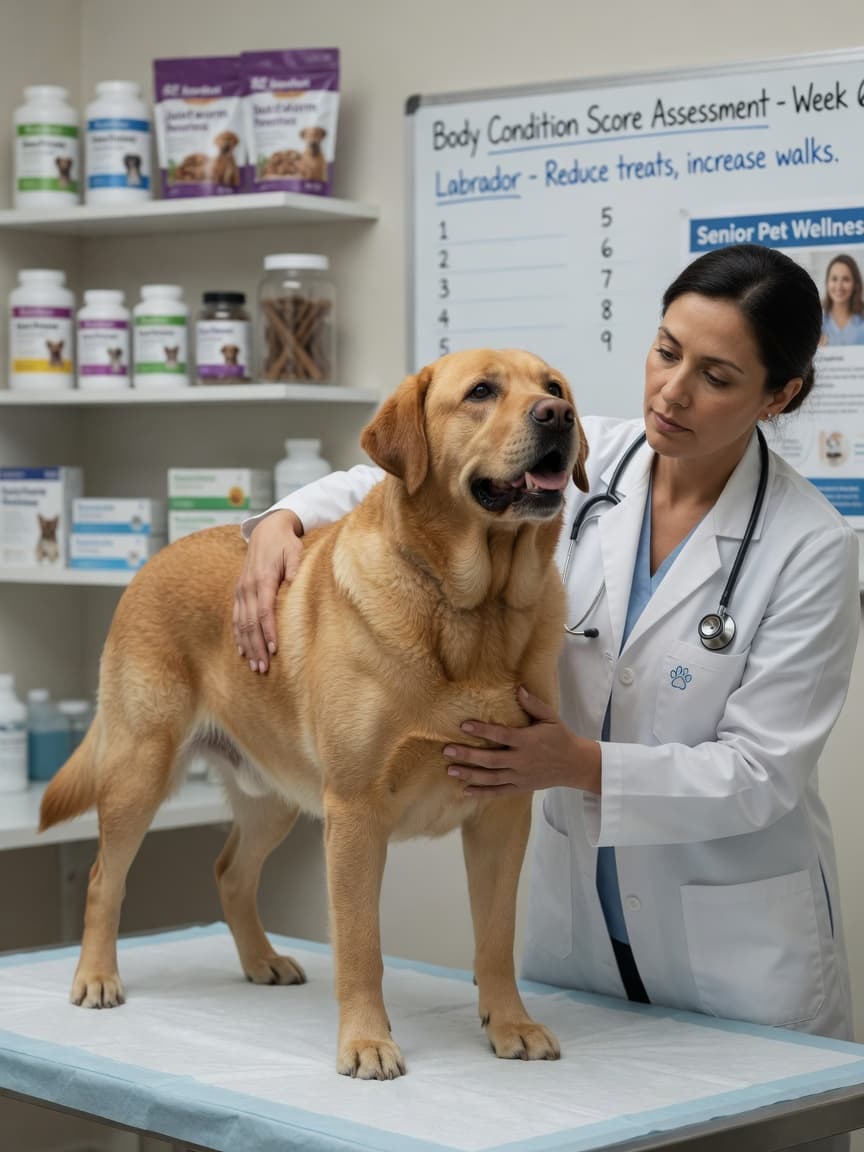
The most practical clinical tool for evaluating a dog's weight status is the Body Condition Score (BCS), a nine-point scale developed and endorsed by the World Small Animal Veterinary Association (WSAVA). Under WSAVA nutritional assessment guidelines, a score of 4 to 5 out of 9 represents ideal condition. Scores of 6 and 7 indicate overweight status, while scores of 8 and 9 define clinical obesity.
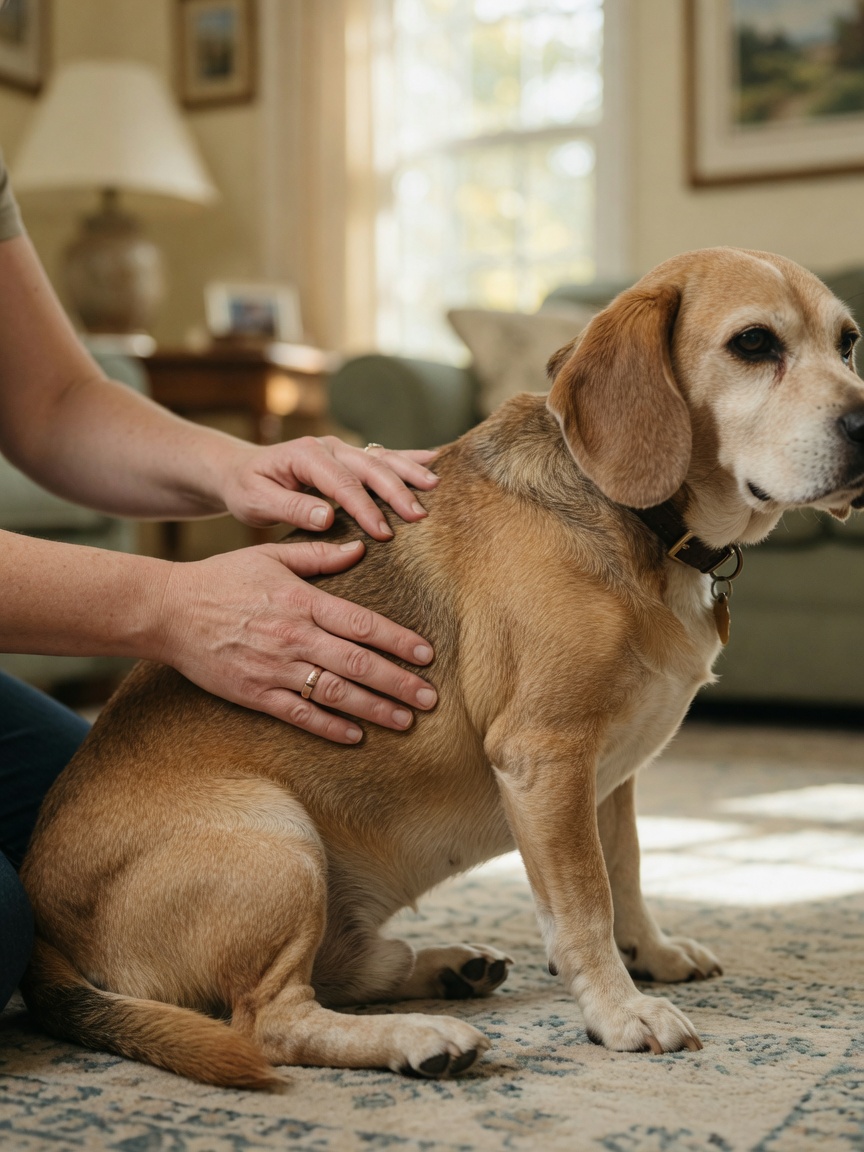
To use the scale at home, apply gentle pressure along your dog's ribcage. In a dog at ideal weight, you should be able to feel individual ribs without pressing hard, much like running your fingers over the back of your hand. The ribs should not be visually prominent, however. Viewed from above, the dog should show a visible waist behind the ribs, and from the side, a slight abdominal tuck should be apparent. If you cannot feel ribs without firm pressure, or if the waist has disappeared, your dog is likely carrying excess weight. The WSAVA recommends that every dog receive a nutritional assessment — including a BCS evaluation — at every veterinary visit.
What Causes Dogs to Become Overweight?

Weight gain occurs when energy intake consistently exceeds energy expenditure. In practice, several factors contribute.
- Overfeeding: Portion sizes are frequently misjudged. Many owners use a cup or bowl without measuring, and feeding guides on packaging are often set at the higher end of the appropriate range.
- Excessive treats: Treats and table scraps can add a substantial number of calories. A single small biscuit treat can represent 10 per cent or more of a small dog's daily calorie allowance.
- Insufficient exercise: Dogs in urban environments, or those belonging to time-poor owners, may not receive enough daily physical activity to balance their intake.
- Neutering: Castration and spaying reduce metabolic rate and alter hormonal signalling related to appetite and fat storage. Studies suggest that calorie requirements may decrease by 20 to 30 per cent following neutering, yet many owners do not adjust feeding accordingly.
- Breed predisposition: Labrador Retrievers, Beagles, Cocker Spaniels, and Basset Hounds are among the breeds with a documented genetic tendency towards weight gain.
FEDIAF, the European pet food industry federation, highlights that owner education about energy requirements and portion control is central to preventing and addressing obesity in companion animals.
Setting a Safe Weight Loss Target
Rapid weight loss in dogs carries risks, including muscle mass loss and nutritional deficiencies. Veterinary consensus recommends a target of 1 to 2 per cent of body weight per week. For a 30 kg Labrador, this means losing between 300 g and 600 g each week — slow enough to preserve lean tissue, but meaningful enough to produce visible progress within a few months.
Begin by establishing your dog's current weight on an accurate scale, then estimate ideal body weight based on breed standards and the WSAVA BCS assessment. Your veterinarian can help confirm the target.
Calculating and Reducing Calories
Resting energy requirement (RER) is calculated as 70 multiplied by body weight in kilograms to the power of 0.75. For a weight loss programme, most veterinary nutritionists recommend feeding at 60 to 80 per cent of the calories required to maintain ideal body weight — not the current obese weight. Using the current weight would significantly overestimate needs. Divide daily calories across two or three measured meals rather than free-feeding, which makes intake very difficult to control.
The Role of Diet Composition
Not all calories behave identically. Diets higher in protein help preserve muscle mass during caloric restriction. Increased dietary fibre — both soluble and insoluble — promotes satiety and slows gastric emptying, helping dogs feel full on fewer calories. Wet food and foods with high moisture content increase volume without adding proportional calories, which can make meals feel more substantial. Many owners find that switching to a purpose-formulated weight management diet simplifies the process considerably. Retailers such as Zooplus stock a wide range of light and diet dog foods from established brands, making it straightforward to find an appropriate formula suited to your dog's size, breed, and palate.
Building an Exercise Plan
Exercise alone is rarely sufficient to drive meaningful weight loss in a significantly obese dog, but it plays an essential supporting role. Start conservatively — an obese dog with compromised joints should not suddenly be taken on long runs. Begin with two or three gentle 15-minute walks per day and increase duration and intensity gradually over several weeks. Swimming is an excellent low-impact option for dogs with arthritic joints. As weight decreases, exercise tolerance will improve, allowing a progressive increase in activity. Mental stimulation, such as scent games and food puzzles, can also increase daily energy expenditure without stressing joints.
Monitoring Progress and Staying on Track
Weigh your dog every two weeks and record the results. Monthly BCS reassessments allow you to confirm that fat is being lost rather than muscle. If weight loss has stalled after four weeks, reduce daily calories by a further 10 per cent and reassess. Keep a log of treats given daily and include their calorie content in your calculations. Enlist the whole household — a weight loss plan fails quickly if one family member continues to offer unrestricted snacks. Many veterinary practices offer nurse-led weight clinics that provide free regular weigh-ins and accountability, which research shows significantly improves outcomes.
With patience, accurate measurement, and a consistent approach, the majority of dogs can reach a healthy weight within three to six months. The improvement in energy, mobility, and quality of life is usually evident well before the target is reached — a reward that motivates both dog and owner to stay the course.
Written by Sarah Bennett, animal health writer at ForPetsHealthcare.