
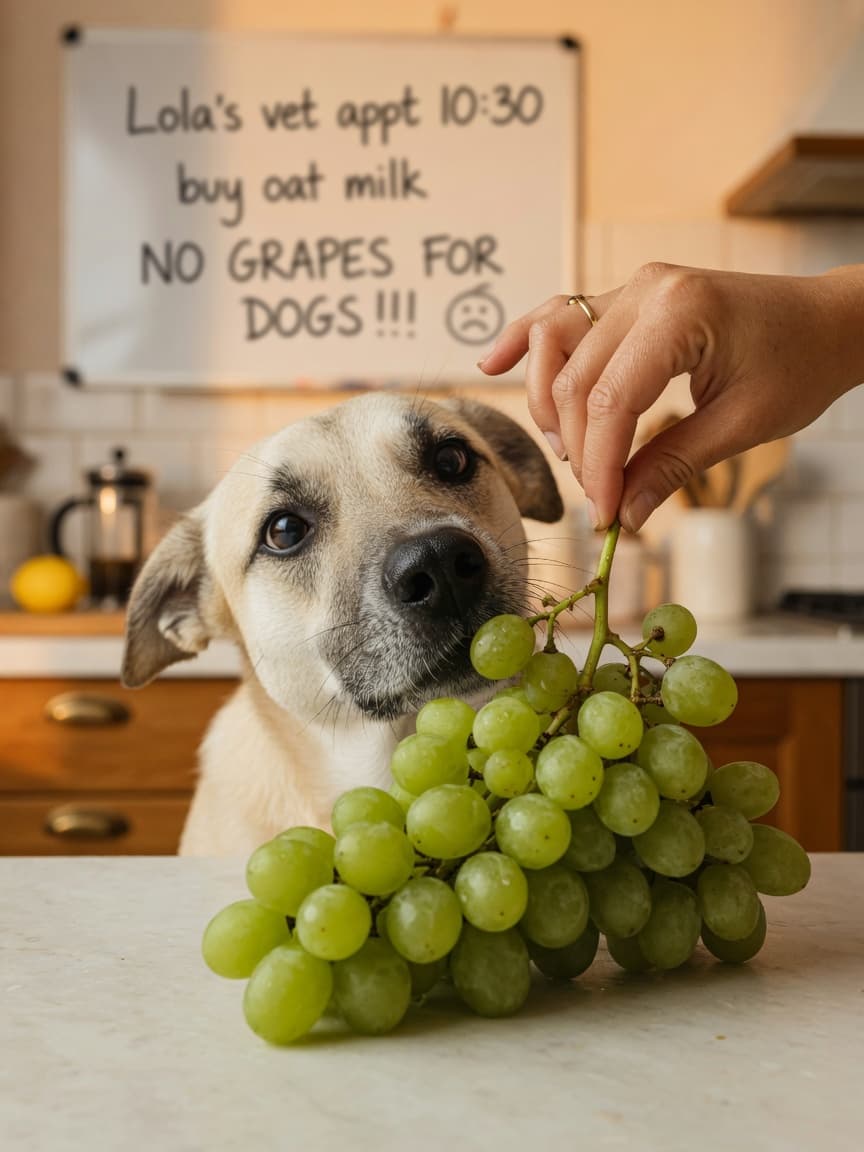
Grape & Raisin Toxicity in Dogs: Unknown Mechanism, 100% Avoidance
ASPCA Poison Control: (888) 426-4435
Pet Poison Helpline: (855) 764-7661
Available 24/7. No safe dose of grapes" title="Can Dogs Eat grapes" title="Can Dogs Eat grapes" title="Can Dogs Eat Grapes? NO — This Is a Veterinary Emergency">Grapes? NO — This Is a Veterinary Emergency">Grapes? NO — This Is a Veterinary Emergency">grapes or raisins for dogs has ever been established. Call immediately if your dog ingested any amount.
Grape and raisin toxicity in dogs is uniquely disturbing among pet toxins because of what we don't know: despite decades of reported cases and active research, scientists have not conclusively identified the toxic compound responsible. What we do know is more than enough to demand absolute avoidance: grapes and raisins can cause sudden, acute kidney failure in dogs, the toxic dose varies wildly and unpredictably between individual dogs, there is no established safe threshold, and some dogs have died after eating just a small handful of grapes while others have eaten more without apparent illness. This unpredictability makes the only rational approach complete and permanent prohibition of all grape products from your dog's diet.
The Mystery of the Toxic Mechanism
The inability to identify the specific toxin in grapes is scientifically remarkable. Researchers have tested the hypothesis that pesticide residues, fungal contamination (mycotoxins), salicylates, tannins, heavy metals, or tartaric acid might be responsible. As of the most recent research, tartaric acid — which grapes contain in unusually high concentrations — has emerged as a leading candidate hypothesis. Tartaric acid is poorly metabolized by dogs and may cause renal tubular toxicity. However, this has not been definitively confirmed in controlled studies.
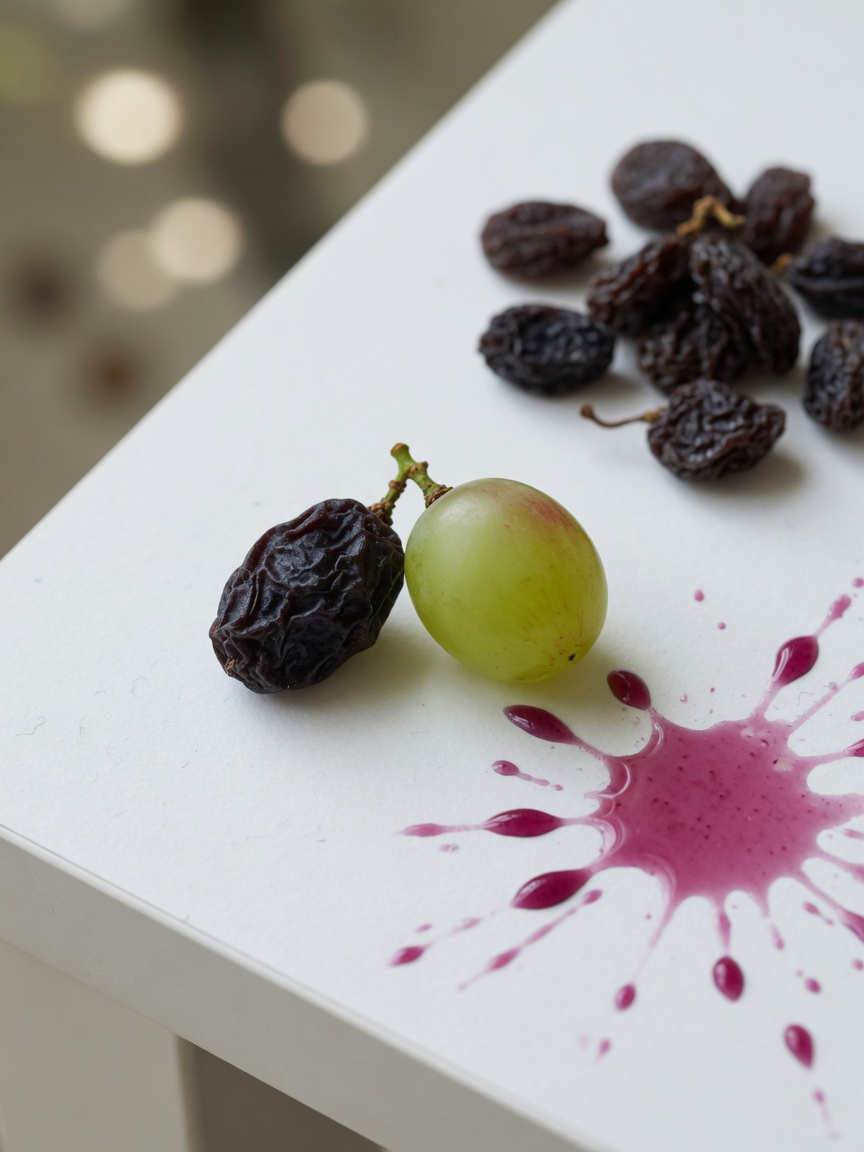
Critically, the toxin appears to be present in the flesh of the grape itself, not just the skin or seeds — meaning peeled, seedless grapes are equally Dangerous">Dangerous">dangerous-dog-toys" title="10 Dog Toys That Are Actually Dangerous">Dangerous">Dangerous (And What to Use Instead)">dangerous. The toxin survives processing: raisins (dried grapes), grape juice, grape jam, grape extract, and wine all carry the same risk. Currants — small dried fruits related to but distinct from grapes — appear to cause the same syndrome and should be treated with equal alarm. Products containing raisins — fruit cake, trail mix, raisin bran cereal, oatmeal raisin cookies — are significant hidden risks.
Why Individual Variability Makes This So Dangerous
One of the most alarming aspects of grape toxicity is the extreme variation in individual dog susceptibility. Documented cases include dogs that developed fatal kidney failure after eating fewer than 10 grapes, and other dogs that seemingly tolerated larger quantities. This is not a reassuring finding — it does not suggest some dogs are "safe." It suggests that some dogs may have a genetic or metabolic susceptibility that makes them extremely vulnerable, while others may be less sensitive, but there is currently no test to determine which category an individual dog falls into. You cannot look at your dog and know whether it is resistant or sensitive. The only safe assumption is that your dog could be in the highly sensitive group.
The unpredictability also means that a dog that ate grapes once without apparent ill effect should not be fed grapes again. Past tolerance is not predictive of future safety. Toxicity may be dose-cumulative, or individual health factors at the time of exposure — such as hydration status, pre-existing kidney function, or concurrent medications — may influence outcome.
Symptoms of Grape and Raisin Toxicity
Symptoms typically begin within 6–24 hours of ingestion and reflect progressive acute kidney injury. Early signs include: vomiting and diarrhea (may contain undigested grape or raisin material), lethargy and depression that progresses rapidly, loss of appetite, abdominal pain or tenderness when the belly is palpated, and weakness. As kidney failure develops over the next 24–72 hours: the dog produces little or no urine (oliguria or anuria) — this is a grave prognostic sign, excessive thirst initially that paradoxically decreases as kidney function collapses, tremors and loss of coordination, oral ulcers from uremia (toxin accumulation in the blood), bad breath with a characteristic uremic or ammonia-like odor, and coma. Dogs who develop anuria (no urine production) within 24–48 hours have a significantly worse prognosis.
Diagnosis and Emergency Treatment
Diagnosis is based on history of exposure combined with bloodwork showing elevated blood urea nitrogen (BUN), creatinine, and phosphorus — markers of kidney dysfunction. Urinalysis may show protein, glucose, and casts indicating tubular damage. Early intervention is critical. If ingestion is detected within 1–2 hours, a veterinarian will induce vomiting and may administer activated charcoal. The cornerstone of treatment is aggressive IV fluid diuresis — large volumes of intravenous fluids given to support kidney perfusion and promote excretion of the toxin. This typically continues for 48–72 hours with close monitoring of kidney function every 6–12 hours.
Dogs that develop significant kidney failure may require peritoneal dialysis or hemodialysis, which is available at specialist referral centers. The overall mortality rate for grape/raisin toxicity in dogs is difficult to quantify due to underreporting, but dogs that develop oliguria or anuria have a guarded to poor prognosis even with dialysis. Early treatment — ideally before symptoms develop — gives the best outcomes.
Hidden Sources of Grapes and Raisins
Beyond fresh grapes, raisin-containing foods are a significant and often overlooked risk. Common products include: raisin bread, cinnamon raisin bagels, trail mix, granola bars, fruit and nut mixes, oatmeal raisin cookies, fruit cake, mince pies (traditional UK/Australian holiday pastries contain currants and raisins), grape juice given in sippy cups that a dog might access, and wine. Teach all family members — especially children who may share snacks — that grapes and raisins are never safe for dogs.
Key Takeaways
- No safe dose of grapes, raisins, or currants has ever been established for dogs — zero consumption is the only safe policy.
- The toxic mechanism is unknown, making dose-response prediction impossible.
- Some dogs develop fatal kidney failure from just a few grapes; individual susceptibility is unpredictable.
- Raisins are more concentrated and potentially more dangerous per gram than fresh grapes.
- Symptoms begin within 6–24 hours; anuria (no urine) within 48 hours is a grave sign.
- Call ASPCA Poison Control (888-426-4435) or Pet Poison Helpline (855-764-7661) immediately for any ingestion.
References
- Eubig PA, Brady MS, Gwaltney-Brant SM, Khan SA, Mazzaferro EM, Morrow CM. "Acute renal failure in dogs after the ingestion of grapes or raisins: a retrospective evaluation of 43 dogs (1992–2002)." Journal of Veterinary Internal Medicine. 2005;19(5):663–674. PMID: 16231710.
- Sutton NM, Bates N, Campbell A. "Factors influencing outcome of Vitis vinifera (grapes, raisins, currants and sultanas) intoxication in dogs." Veterinary Record. 2009;164(14):430–431. PMID: 19346438.
About the Author: Sarah Bennett is a Certified Animal Nutritionist with over 12 years of experience in companion animal health. She writes for ForPetsHealthcare.com to help pet owners make informed, evidence-based decisions for their animals.