
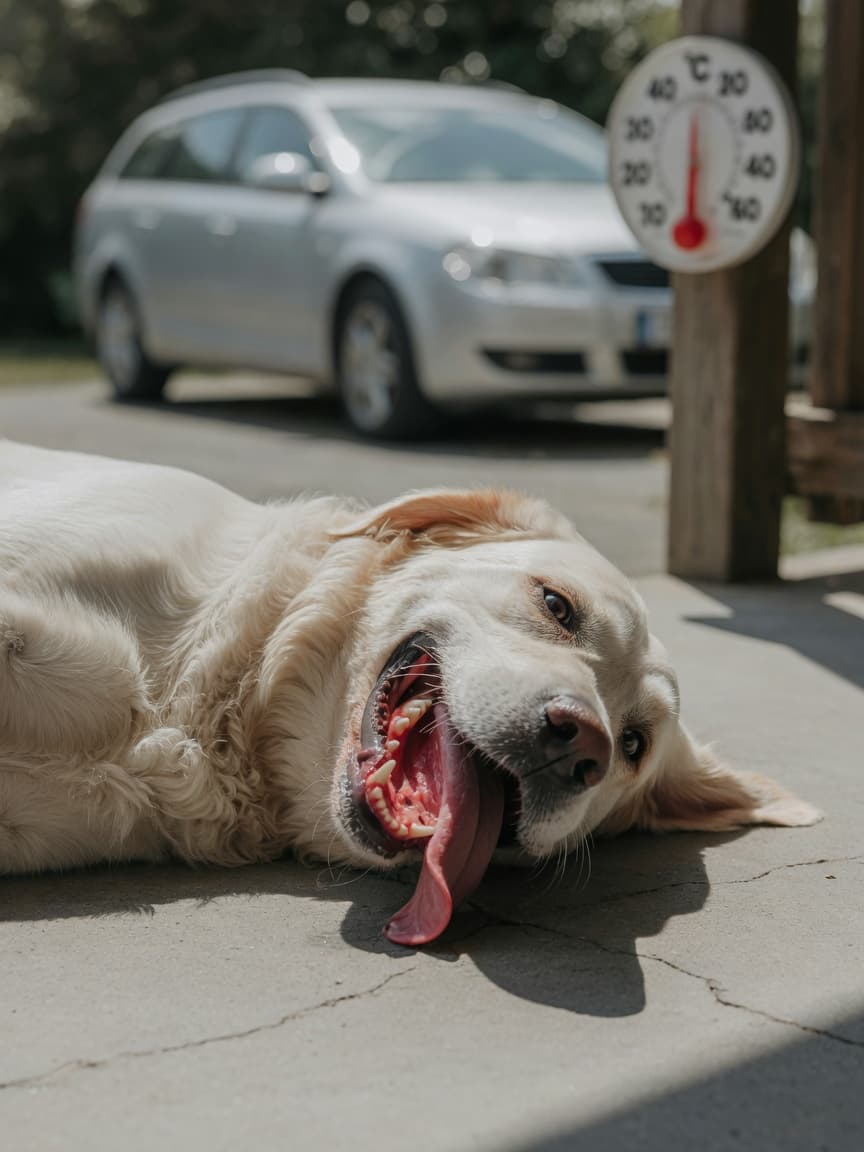
Heat Kills Dogs Faster Than Most Owners Realise
A dog left in a car on a 22°C day can face an internal car temperature of 47°C within an hour. Heatstroke — the clinical term for dangerous overheating — can cause brain damage, organ failure, and death within minutes of reaching critical body temperature. It is one of the most time-critical emergencies in veterinary medicine, and it is almost entirely preventable. Understanding the numbers and the warning signs is the first step in keeping your dog safe during warm weather.
Normal Temperature and the Danger Thresholds
A healthy dog's core body temperature sits between 38°C and 39.2°C. Heatstroke is generally defined as a core temperature above 41°C, though tissue damage can begin even slightly below this threshold if the temperature is sustained. At 41°C to 42°C, cellular proteins begin to denature. Above 43°C, the situation becomes rapidly life-threatening, with multi-organ failure, coagulopathy (disrupted blood clotting), and brain damage all possible outcomes within minutes.
Dogs cool themselves almost exclusively through panting — unlike humans, they have very few sweat glands, located mainly in their paw pads. In hot, humid conditions, panting becomes ineffective because the air itself is too warm and moisture-laden to allow heat exchange. This is why humidity is as important as temperature: a dog may overheat faster on a 28°C humid day than on a 32°C day with a dry breeze.
Which Dogs Are at Highest Risk
Brachycephalic Breeds
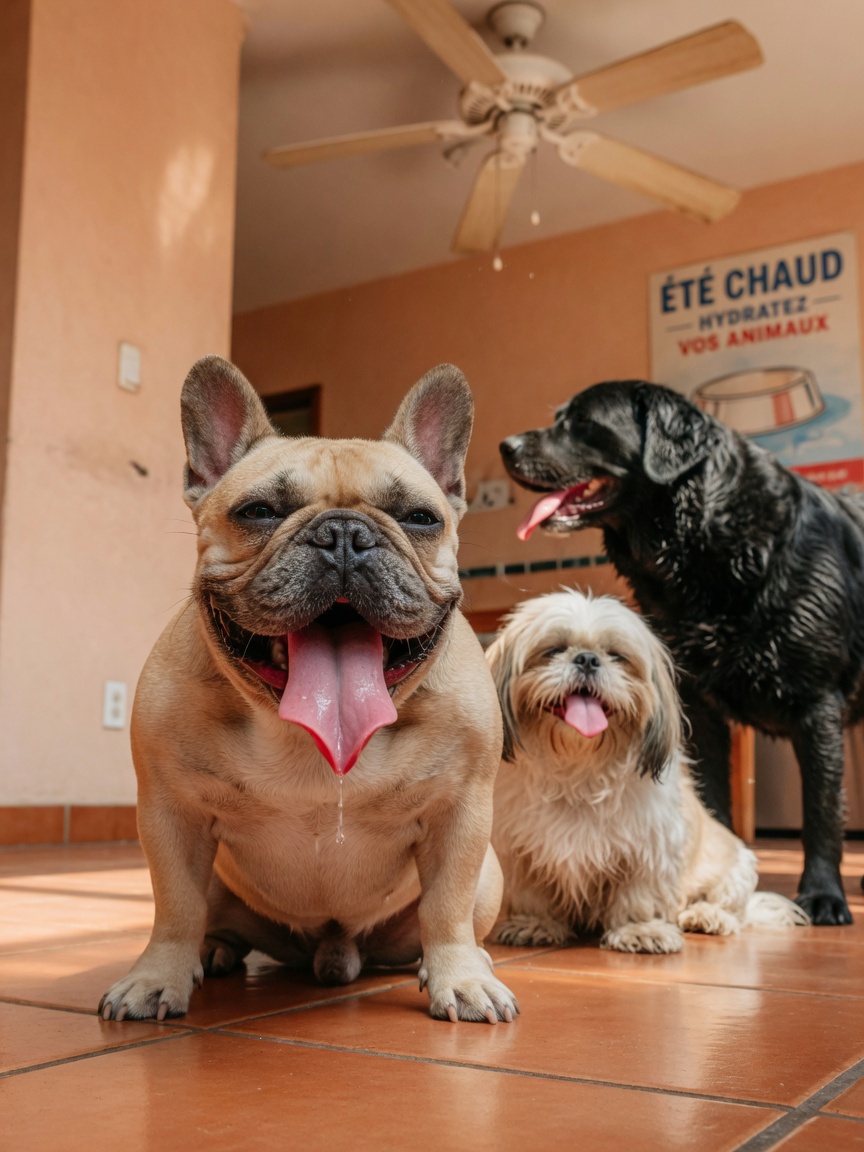
Dogs with flat faces — including Bulldogs, French Bulldogs, Pugs, Boxers, Boston Terriers, and Shih Tzus — are at significantly elevated risk of heatstroke. Their compressed airways mean airflow resistance is high even at rest; panting under heat stress becomes quickly inadequate. These breeds can develop heatstroke at ambient temperatures that other dogs tolerate comfortably.
Other High-Risk Groups
- Older dogs and puppies, whose thermoregulatory systems are less efficient
- Obese dogs, for whom heat dissipation through the body surface is proportionally lower
- Dogs with cardiovascular or respiratory disease
- Dogs with thick, dark coats
- Dogs that have previously suffered heatstroke, as they are more susceptible to repeat episodes
Recognising Heatstroke: What to Look For
Early Warning Signs
- Heavy, rapid panting that seems excessive for the level of exertion
- Drooling more than usual
- Restlessness or agitation
- Bright red gums
- Seeking shade or water urgently
Progressing Crisis Signs
- Gums turning pale, white, blue, or grey
- Vomiting and diarrhoea, sometimes with blood
- Staggering, stumbling, or loss of coordination
- Glazed or unfocused eyes
- Muscle tremors
- Collapse or inability to rise
- Loss of consciousness
Once a dog is collapsed or unconscious, every second without cooling and veterinary intervention increases the risk of irreversible damage. Do not wait to see if they improve on their own.
Emergency First Aid: The Correct Cooling Protocol
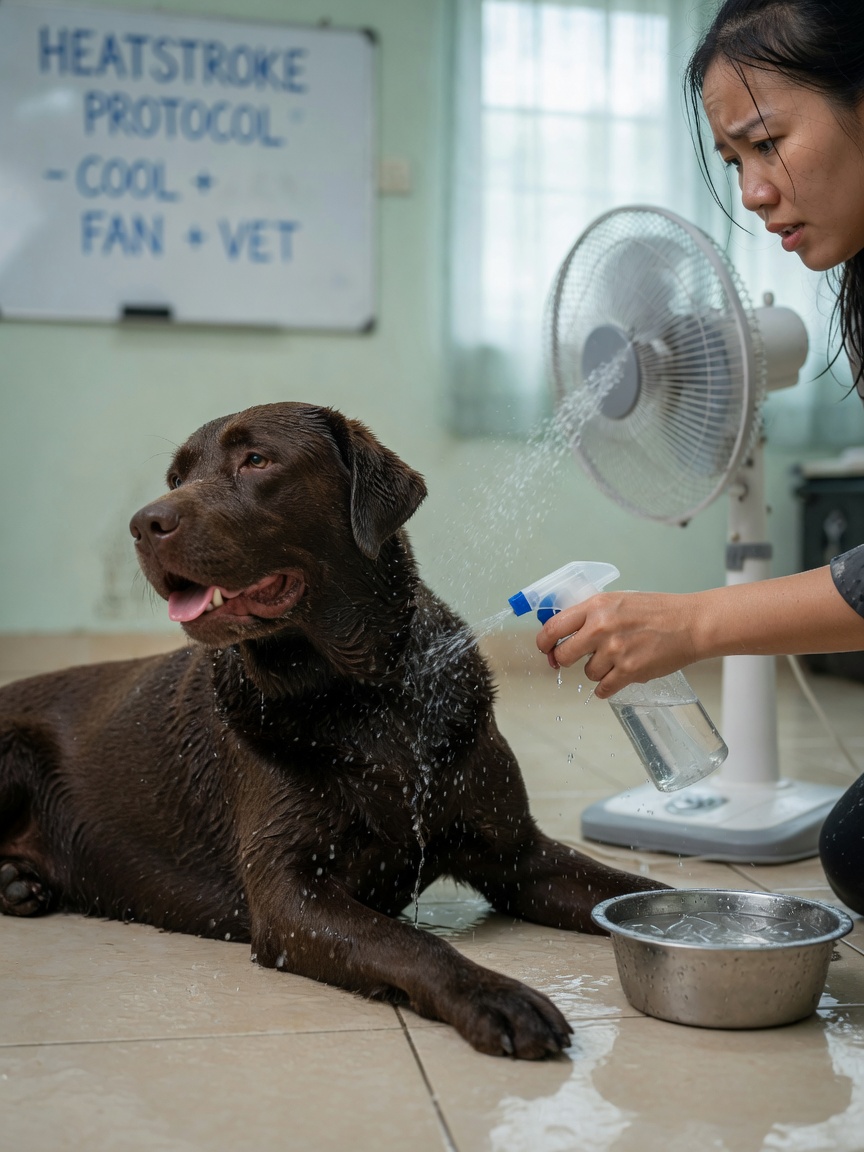
Speed matters, but the method of cooling is equally important. Cooling too aggressively — using ice-cold water or ice packs directly on the body — causes peripheral blood vessels to constrict, trapping heat in the body's core and potentially worsening outcomes. The goal is rapid but controlled cooling.
- Move the dog to a cool, shaded, or air-conditioned area immediately.
- Apply cool (not cold) tap water over the body, focusing on the neck, armpits, and groin where large blood vessels are close to the surface.
- Use a fan to enhance evaporative cooling while applying water.
- Allow the dog to drink small amounts of cool water if they are conscious and able to swallow — do not force fluids.
- Do not wrap the dog in wet towels, which trap heat rather than dissipating it.
- Do not use ice or ice-cold water.
- Call your vet or an emergency veterinary practice immediately while beginning first aid — do not delay professional contact.
- Transport the dog to a vet as soon as possible, continuing passive cooling during the journey by keeping car air conditioning on.
Even if the dog appears to recover, veterinary assessment is essential. Heatstroke causes internal damage that is not visible externally — kidney injury, blood clotting disorders, and gut wall damage can all develop in the hours following an episode and require monitoring and treatment.
Prevention: Practical Rules for Warm Weather
- Never leave a dog in a parked car, even with windows cracked and even on mild days.
- Walk dogs in the early morning or evening, avoiding peak heat between 11am and 3pm.
- Always carry water on walks and offer it frequently.
- Provide constant access to shade and fresh water in the garden.
- Avoid strenuous exercise in warm weather, particularly for high-risk breeds.
- Use cooling mats, paddling pools, or damp towels proactively during hot spells.
If you are ever unsure whether your dog is overheating, err on the side of caution and begin cooling. Consulting a vet promptly when heat illness is suspected is always the right decision — heatstroke leaves no margin for a wait-and-see approach.