
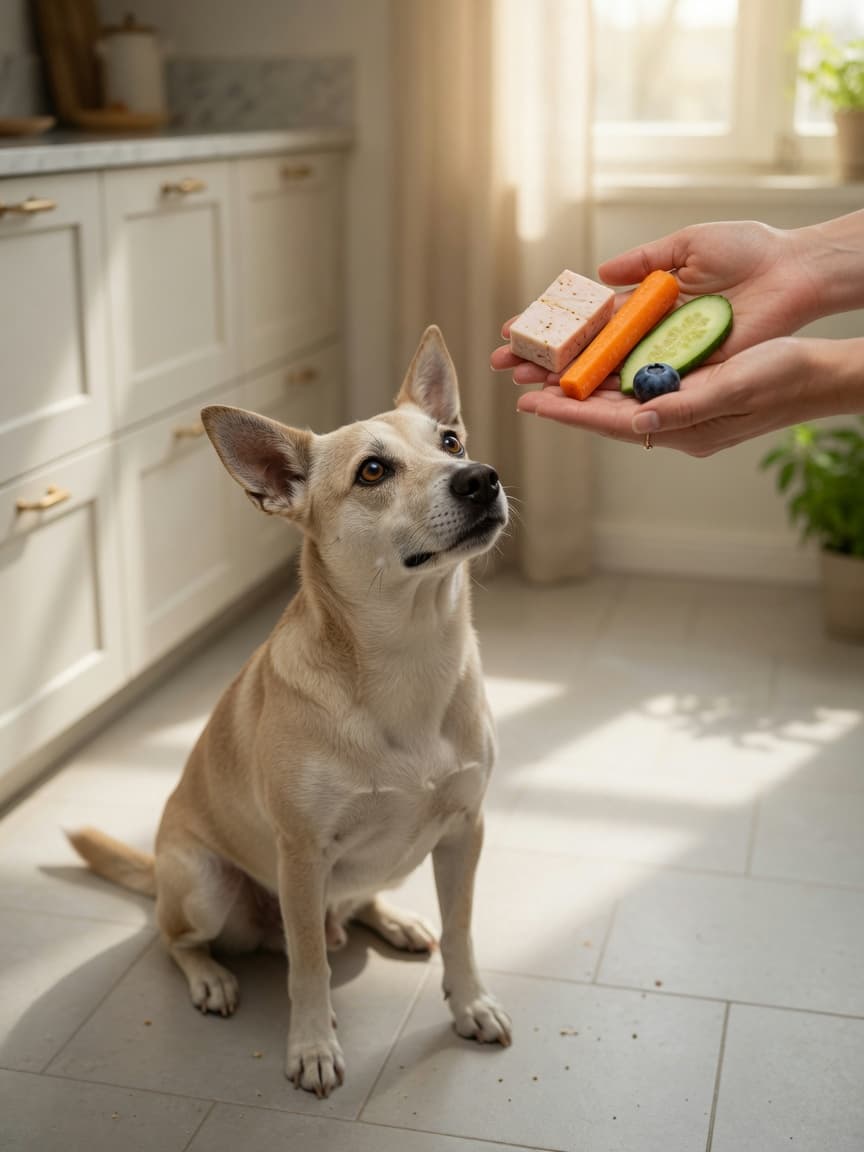
Why Treats Undermine So Many Dog Weight Loss Plans
A dog can be eating exactly the right amount of food at mealtimes and still fail to lose weight. The culprit is almost always treats. A single commercially made training treat might contain 20 to 35 kcal. For a small dog on a 400 kcal daily budget, ten treats represents over 50 per cent of their entire calorie intake before a single bite of regular food. Even for a larger dog, the figures add up faster than most owners realise.
The solution is not to eliminate treats — treats serve important functions in training, bonding, enrichment, and motivation — but to choose them more thoughtfully and account for them within the daily calorie budget. Fortunately, there are excellent low-calorie options that dogs genuinely enjoy.
Vegetables That Are Safe and Satisfying for Dogs
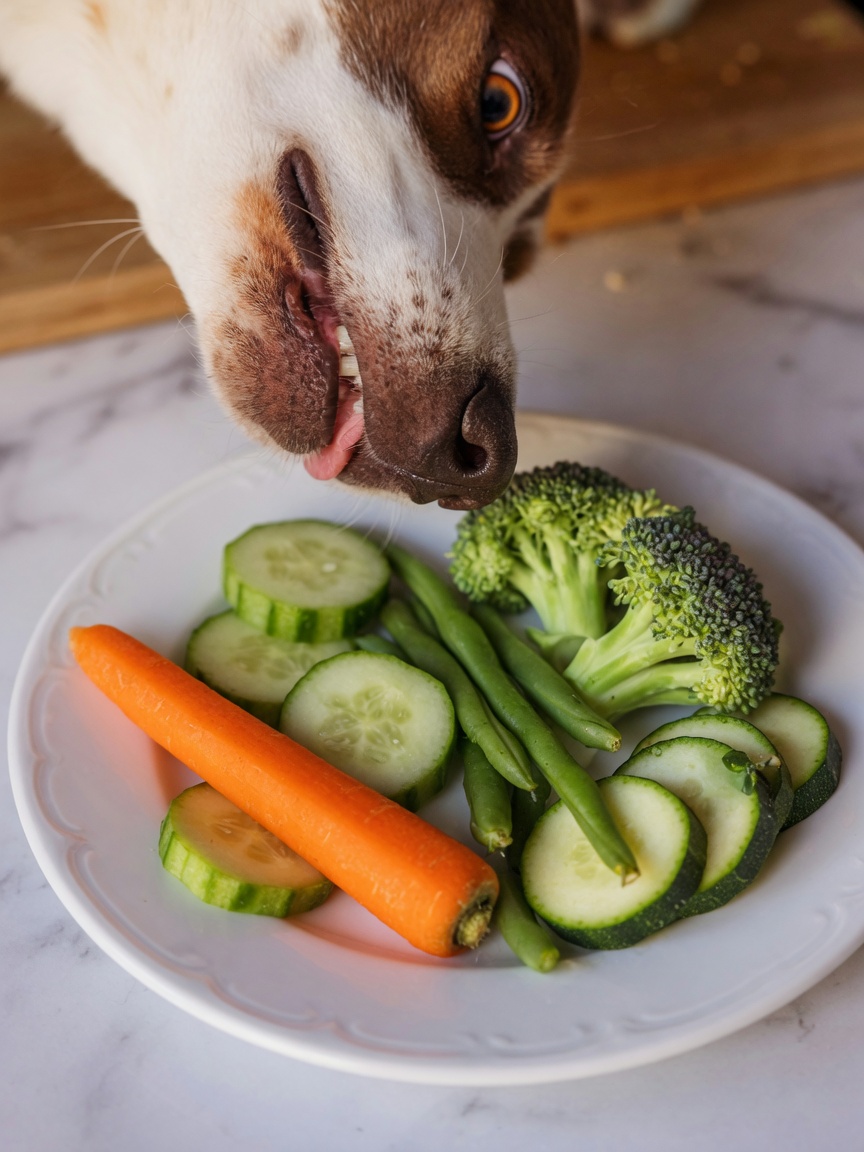
Many vegetables are extremely low in calories and perfectly safe for dogs. They provide volume and something to chew without meaningfully impacting the calorie count. Several of them also contain useful nutrients and fibre, which can help dogs feel fuller between meals.
- Carrot: One of the most popular and practical dog treats. A medium carrot contains roughly 25 kcal and provides a satisfying crunch that many dogs love. Raw or lightly steamed, carrots are acceptable daily. They also contain beta-carotene and support dental hygiene through the chewing action.
- Cucumber: Exceptional for weight management. Cucumber is approximately 96 per cent water and contains fewer than 5 kcal per 50 g. Most dogs accept it readily when offered in slices. It is also cooling and hydrating, useful after exercise in warm weather.
- Green beans: Plain, unsalted green beans — raw, steamed, or frozen — are extremely low in calories. Some veterinary weight loss plans advocate replacing a portion of the regular diet with green beans to add volume while reducing calorie density. They contain fibre, vitamins C and K, and are safe in regular amounts.
- Broccoli florets: Suitable in small amounts as an occasional treat. Broccoli contains isothiocyanates that can cause gastric irritation in large quantities, so keep portions small — no more than ten per cent of the daily diet. A few small florets as a treat is perfectly reasonable.
- Courgette (zucchini): Very low in calories and high in water content. Slice into rounds and offer raw. Most dogs accept them without hesitation.
Fruits That Work as Occasional Low-Calorie Treats
Several fruits are low enough in calories to serve as occasional treats, though the natural sugar content means they should be offered in smaller quantities than most vegetables.
- Blueberries: Often called a superfood, blueberries are rich in antioxidants and contain roughly 1 kcal per berry. They can be offered fresh or frozen. Frozen blueberries are particularly popular as a summer treat and give dogs something interesting to work with.
- Watermelon: Flesh only — never the seeds or rind. Watermelon is about 92 per cent water and extremely low in calories per volume. It is one of the best summer treat options for overweight dogs who also need hydration support.
- Apple slices: Remove the core and seeds entirely, as apple seeds contain compounds that break down into cyanide. The flesh is fine and contains a modest amount of fibre. A few thin slices are a useful treat with around 10 to 15 kcal depending on size.
Always avoid grapes, raisins, and currants — these are toxic to dogs and must never be given regardless of calorie content. Similarly, avoid any fruit sweetened with xylitol, which is extremely dangerous to dogs.
Lean Protein Options
If you prefer to use meat-based treats, choosing lean protein sources keeps the calorie count reasonable while providing something highly motivating for most dogs. Boiled or baked chicken breast with no seasoning is approximately 31 kcal per 30 g and is an excellent training reward. Very small pieces — pea-sized — are sufficient for marking and rewarding behaviour without delivering substantial calories.
Plain cooked turkey breast, white fish such as cod or coley, and small amounts of boiled egg white are similarly lean options. Avoid processed meats, anything with added salt or seasoning, and high-fat cuts such as belly pork or skin-on poultry.
Reducing Commercial Treats Without Reducing Reward Value
If your dog has a strong preference for commercial treats that are higher in calories, you have several options for reducing the caloric impact without eliminating them entirely.
First, break treats into smaller pieces. Most dogs respond to the act of receiving a reward rather than its size. A single commercial treat broken into six tiny pieces delivers six rewards for the caloric cost of one. This is particularly useful during training sessions where treat frequency is high.
Second, consider using part of your dog's daily kibble allowance as training rewards. Many dogs are perfectly willing to work for their regular food, especially if it is a quality kibble they enjoy. Carry a small portion of their daily meal allowance in a treat pouch and use it for reward-based interaction throughout the day — this adds no extra calories at all.
Frozen Treats for Enrichment and Satiety
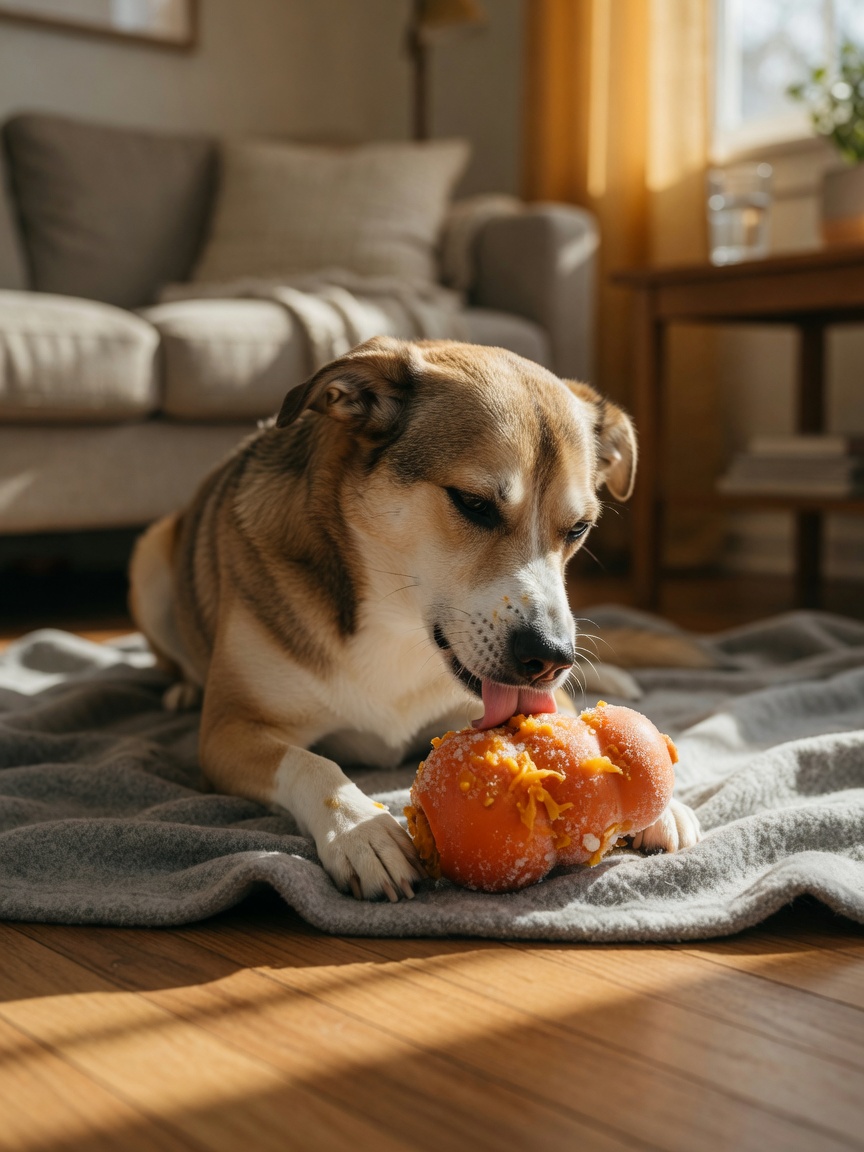
Enrichment treats that take time to consume are particularly valuable for dogs on calorie-restricted diets, because they provide extended engagement that occupies time and reduces boredom-driven food-seeking behaviour. Freezing low-calorie options can significantly extend the time your dog spends with a treat.
Fill a Kong or similar enrichment toy with plain mashed pumpkin (not sweetened pie filling — pure pureed pumpkin), add a few blueberries, and freeze overnight. Pumpkin is high in fibre and relatively low in calories, and the frozen texture keeps dogs occupied considerably longer than a dropped treat. Plain low-fat yoghurt without sweeteners or additives can also be used in small amounts in frozen enrichment toys, though confirm it contains no xylitol before use.
Building a Treat Habit That Supports Weight Loss
The most sustainable approach is to establish a daily treat allowance — typically no more than ten per cent of your dog's total daily calorie intake — and plan how that will be used before the day starts. If you know your dog will have a training session in the evening, set aside some low-calorie options in the morning. If a visitor is coming who is likely to offer titbits, reduce the regular meal portion slightly to compensate.
Dogs on weight loss plans do not need to go without treats. They need treats that are thoughtfully chosen, carefully portioned, and counted as part of the whole picture. With the right options in place, a diet does not have to feel like deprivation — for your dog or for you.