
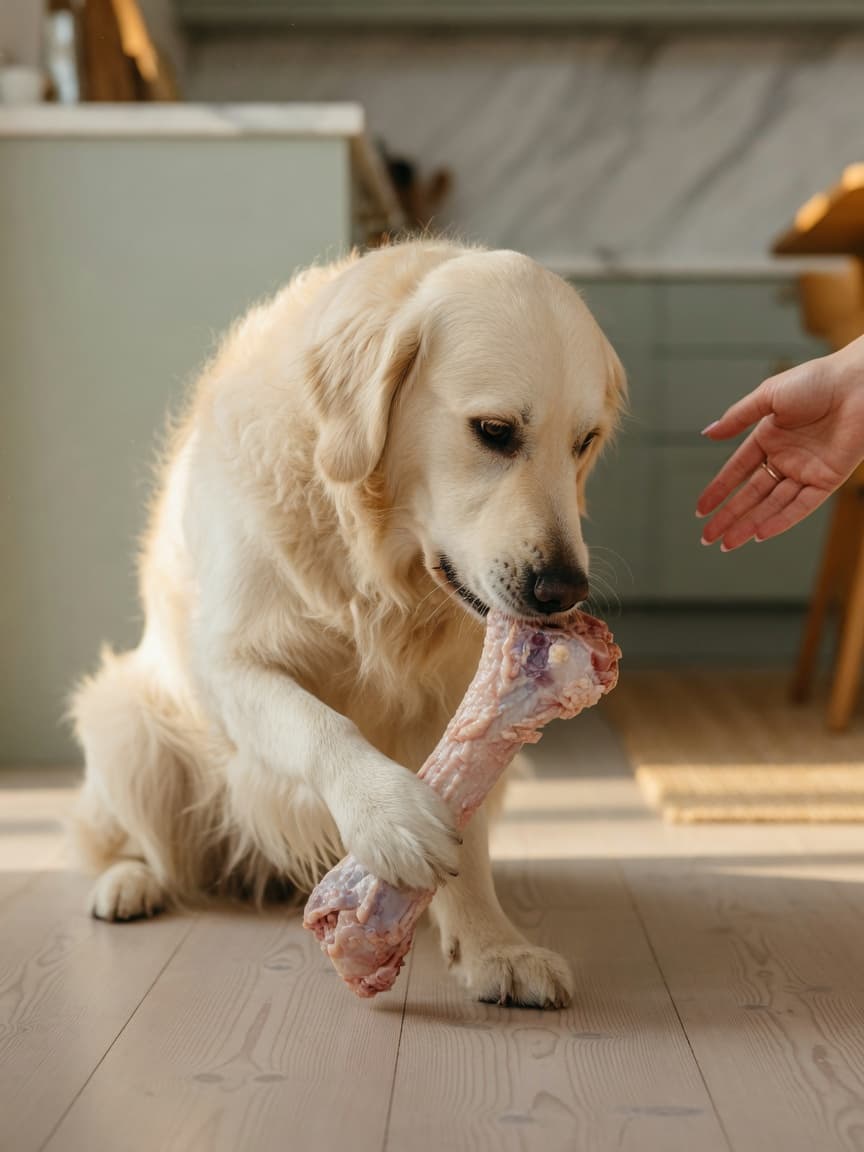
The Question Every Raw Feeder Faces Eventually
Raw bones occupy a peculiar place in dog ownership — championed enthusiastically by raw feeding advocates, cautioned against firmly by many veterinary surgeons, and somewhere in between by the evidence itself. The reality is neither a blanket endorsement nor a blanket prohibition. Bone type, size, preparation method, and the individual dog all determine whether a raw bone is a useful dietary addition or an emergency waiting to happen.
Why Bones Are Offered at All
Before assessing risk, it is worth understanding what raw bones actually provide. Recreational bones offer mental stimulation and jaw exercise that few other options match. Edible raw bones — those soft enough to be fully consumed — contribute calcium and phosphorus in a highly bioavailable form, making them a meaningful nutritional component in raw diets rather than purely a treat. Chewing also produces mechanical abrasion on tooth surfaces, which can reduce tartar accumulation, though this benefit is often overstated relative to other dental interventions.
Safe Options: What the Evidence Supports
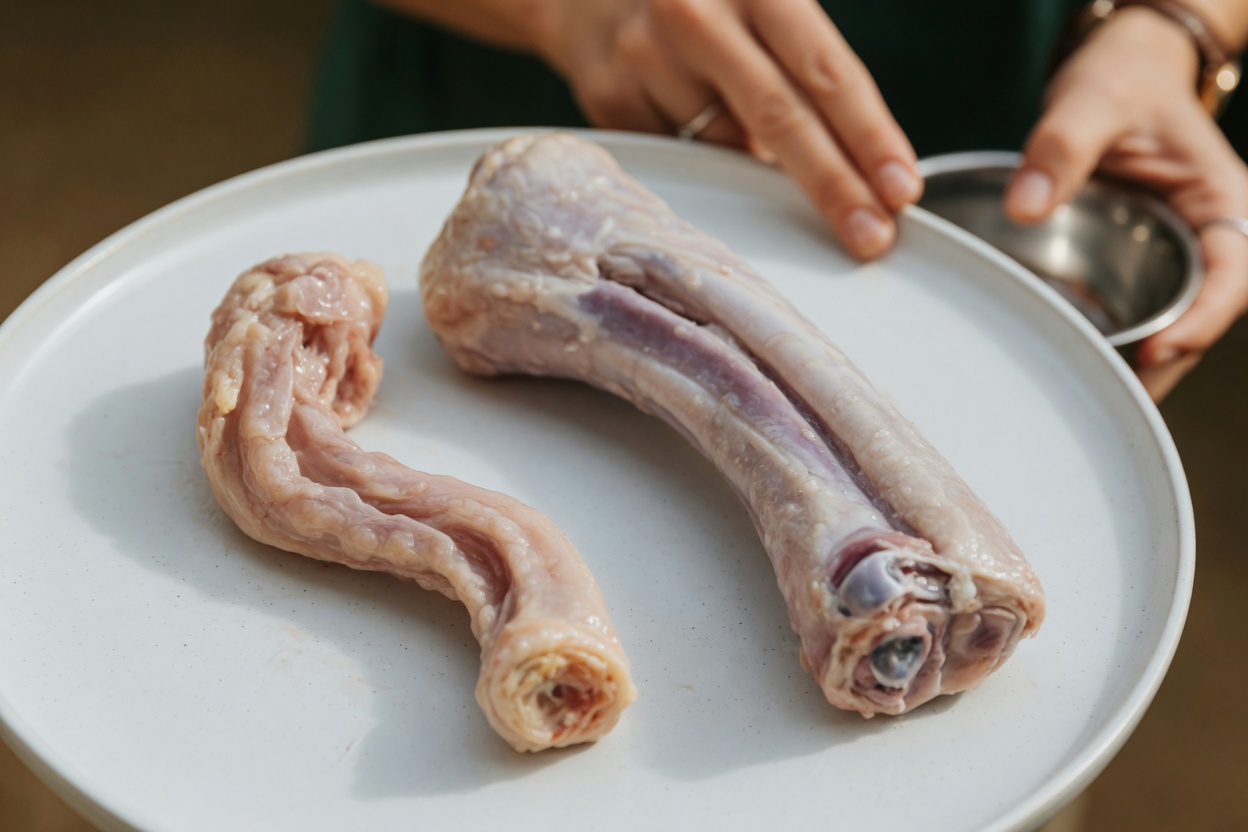
The bones most consistently associated with safe use share a set of characteristics: they are raw rather than cooked, appropriately sized relative to the dog, and soft enough to flex or splinter into blunt rather than sharp fragments.
Poultry Bones
Raw chicken necks, wings, and carcasses are among the most widely used edible bones in raw feeding. Their relatively soft structure means they compress and fragment in ways that do not typically produce the sharp shards associated with injury. Chicken necks in particular have reasonable evidence supporting their benefit for dental health in small to medium dogs. Turkey necks serve the same function for larger breeds. These should always be fed raw — cooking fundamentally alters bone structure (see below).
Lamb and Goat Flaps
Lamb ribs and breast (flap) bones are softer than beef equivalents and are frequently used as recreational chews for medium to large dogs. They carry lower fracture risk than weight-bearing bones and are generally consumed rather than gnawed indefinitely.
Size Matching Is Non-Negotiable
A bone must always be larger than the dog's mouth when assessed as a whole piece. Small bones given to large dogs become swallowing hazards. The dog should be able to chew around the bone, not swallow it whole or crack it in one motion.
Dangerous Types: Where the Risk Is Documented
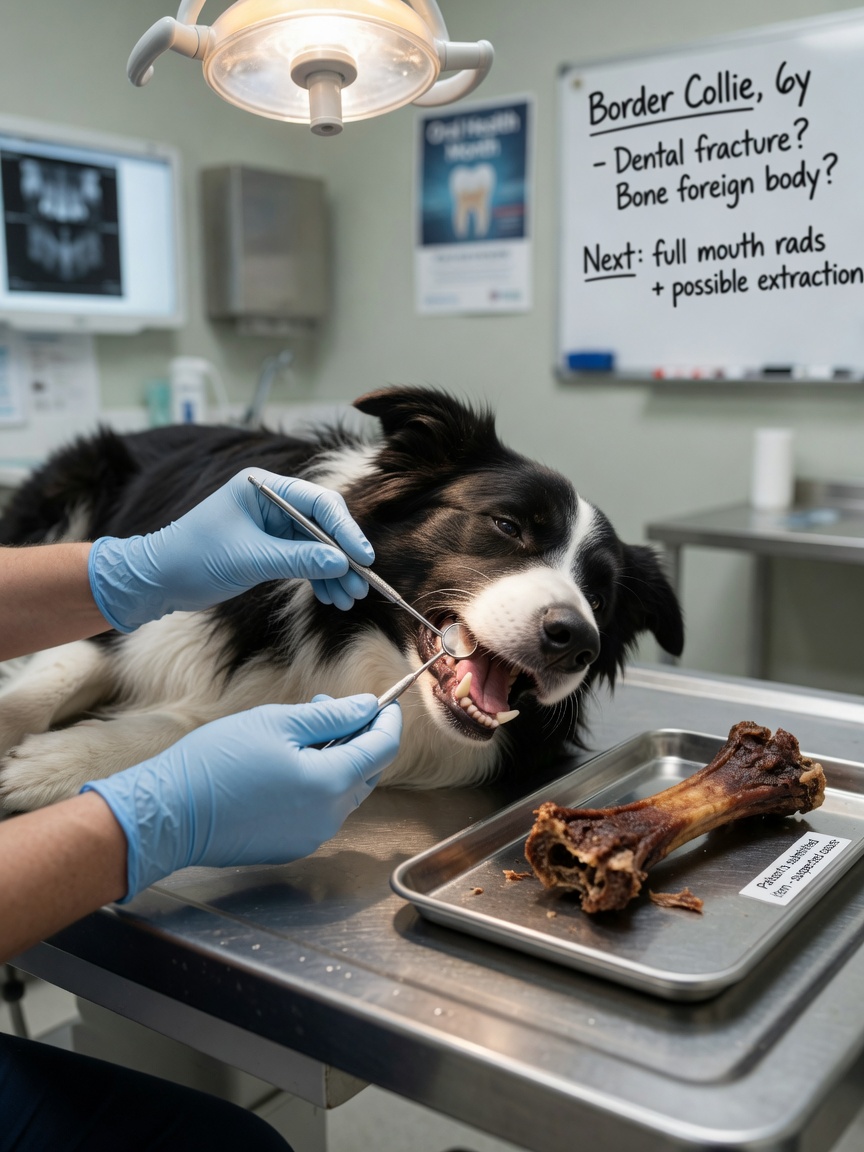
Certain bone categories carry consistent injury risk across the literature and should be avoided regardless of the dog's chewing history.
Cooked Bones of Any Type
Cooking denatures the collagen matrix in bone, removing the flexibility that makes raw bones relatively safe. Cooked bones — whether roasted, boiled, or smoked — are far more likely to splinter into sharp, rigid shards capable of lacerating the oesophagus, stomach lining, or intestinal wall. This applies to bones cooked at home and to commercially smoked or roasted products. The packaging descriptor "natural" does not indicate safety.
Weight-Bearing Bones From Large Animals
Beef femurs, knuckle bones, and marrow bones from large bovine animals are dense enough to fracture teeth, particularly the carnassial premolars — a repair that typically requires extraction or root canal under general anaesthetic. These bones are also associated with jaw entrapment in some dogs, where the lower jaw becomes lodged inside a ring-shaped bone. Emergency veterinary intervention is then required.
Rib Bones From Pork or Beef
Pork rib bones, even raw, tend to produce long sharp splinters rather than the blunt compression fracture pattern seen in poultry. Beef rib bones are too dense for most dogs to chew safely. Neither type offers sufficient benefit to justify the risk profile.
The Fracture Risk: Slab Fractures and What Causes Them
Slab fractures — where a large segment of tooth enamel and dentine shears away, exposing the pulp — are among the most common traumatic dental injuries seen in dogs and are disproportionately associated with hard chewing objects. The "10% rule" is a practical clinical heuristic: if you cannot make an indent in the object with your thumbnail, it is too hard for a dog to chew safely. Most weight-bearing large animal bones, antlers, and hard nylon chews fail this test comprehensively.
Supervision and Practical Protocol
No bone, regardless of type, should be given unsupervised to a dog — particularly one that tends to gulp food, has a history of gastrointestinal obstruction, or is a particularly powerful chewer. Remove bones that have been chewed to a size the dog could swallow whole. Introduce raw bones gradually in dogs new to them, as sudden introduction of large quantities of bone can cause constipation from excess calcium intake.
- Always feed raw, never cooked or smoked.
- Match bone size to the dog — it should be larger than the dog's muzzle width when whole.
- Supervise all bone-chewing sessions without exception.
- Avoid weight-bearing bones from large animals regardless of the dog's size.
- Discard bones that have been chewed to a swallowable size.
- Consult your vet before offering bones to dogs with dental disease, gastrointestinal history, or immune compromise.
- Seek emergency veterinary attention immediately if your dog shows signs of choking, distress, or pain after chewing a bone.