
Why Dental Health Matters for Senior Cats
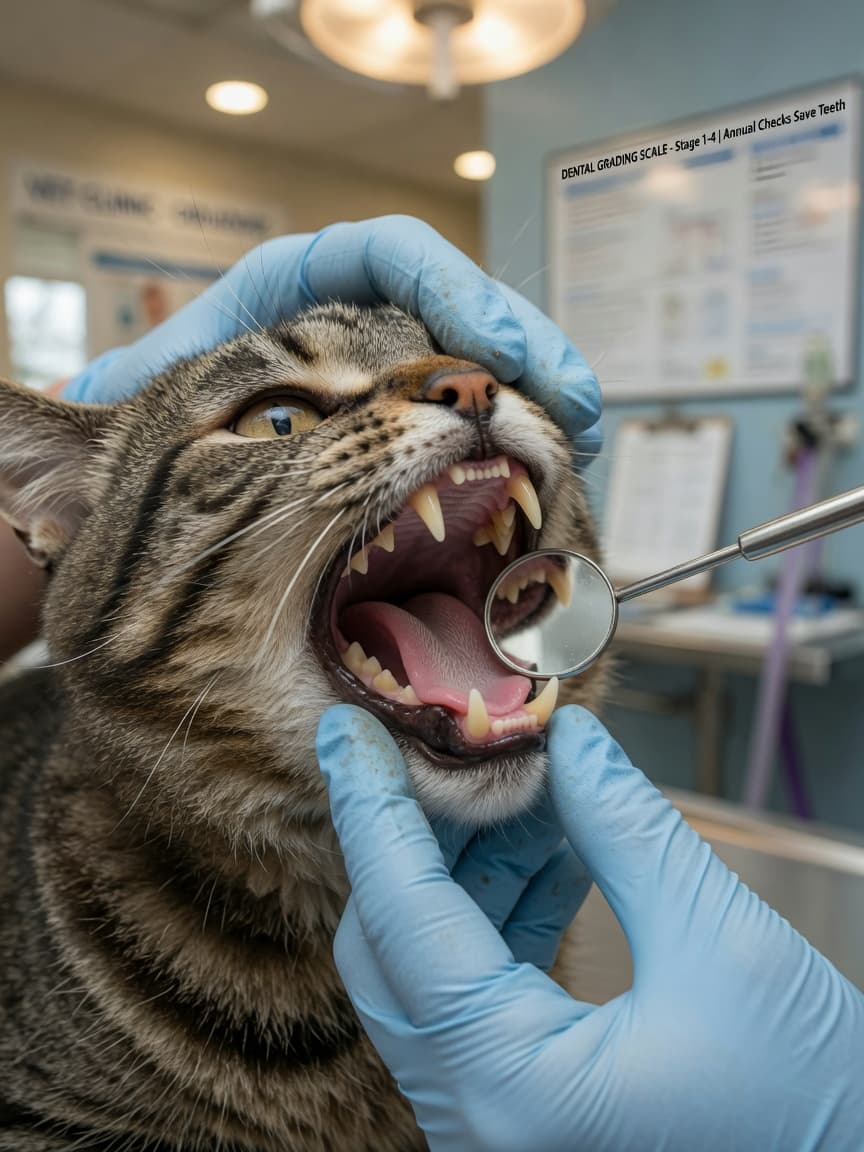
Dental disease is the most common health condition diagnosed in cats at routine veterinary examinations. Studies estimate that over 70% of cats over three years of age have some degree of periodontal disease, and by the time a cat reaches senior years — typically classified as ten years and above — the figure is close to universal. Despite this, dental pain in cats is frequently underrecognised. Cats are stoic animals who instinctively conceal signs of illness and discomfort, meaning significant dental pathology can be present long before an owner notices any obvious problem.
The WSAVA dental guidelines recommend that oral health be assessed at every routine veterinary visit, with senior cats examined at least every six months. Regular professional dental assessment, combined with appropriate home care, can significantly reduce pain, prevent tooth loss, and improve overall quality of life.
Common Dental Conditions in Senior Cats
Feline Odontoclastic Resorptive Lesions (FORL)
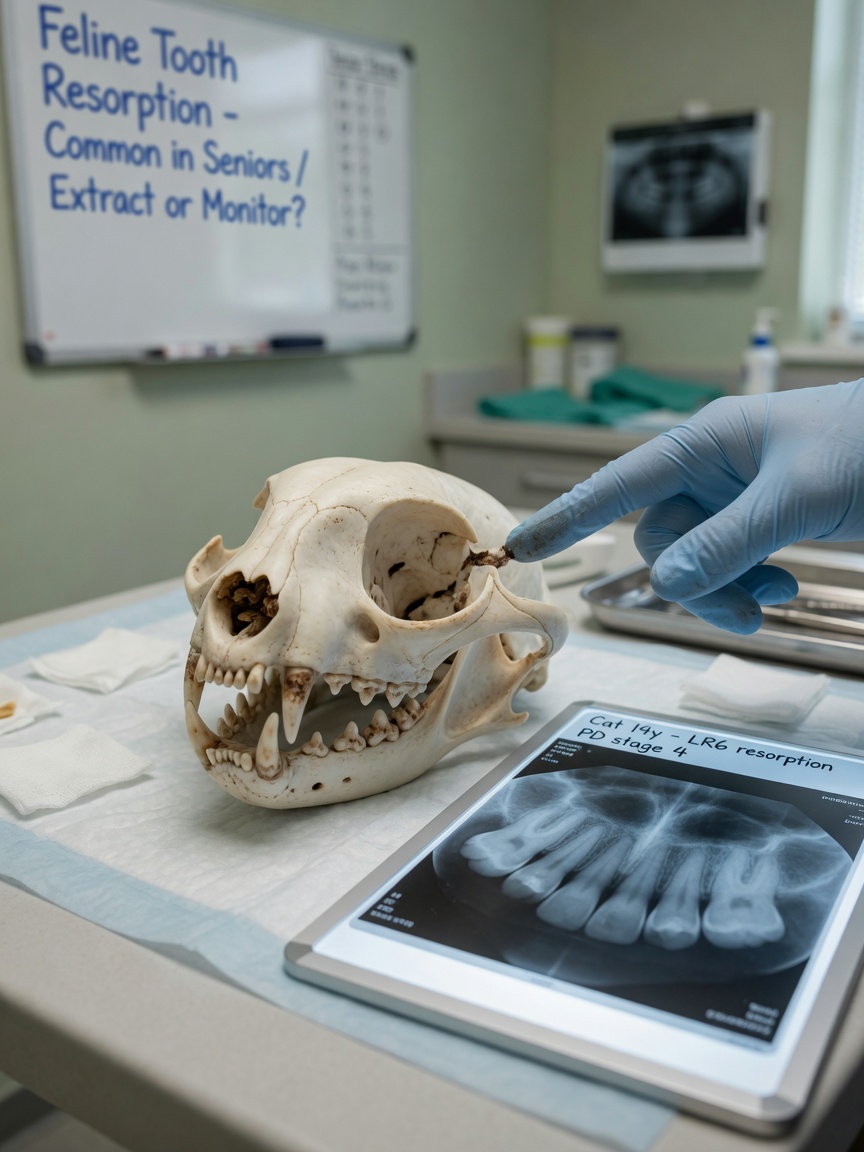
FORL, sometimes referred to as feline tooth resorption, is one of the most painful dental conditions affecting cats. Affecting an estimated 20–75% of adult cats — with prevalence increasing markedly with age — FORL occurs when specialised cells called odontoclasts attack and gradually destroy the tooth structure from the inside out, or at the junction between the tooth and gum. Lesions are often invisible to the naked eye without dental radiography, which is why the WSAVA dental guidelines recommend full-mouth dental X-rays as standard during any dental procedure under anaesthesia.
FORL is classified into three types based on radiographic appearance. Type 1 lesions show tooth structure loss alongside periapical disease; Type 2 lesions show replacement of the tooth root with bone-like tissue; Type 3 lesions have characteristics of both. Treatment depends on the type and stage but commonly involves tooth extraction. Unfortunately, there is currently no preventive treatment — once FORL is diagnosed, management focuses on pain relief and removal of the affected tooth.
Periodontal Disease
Periodontal disease begins with the accumulation of plaque — a sticky biofilm of bacteria — on the tooth surface. If not removed, plaque mineralises into tartar (calculus) within days. The bacteria in plaque trigger an inflammatory response in the gum tissue (gingivitis), which, if untreated, progresses to periodontitis — destruction of the deeper supporting structures of the tooth, including the periodontal ligament and alveolar bone. Advanced periodontitis leads to tooth loosening and loss and, critically, allows bacteria to enter the bloodstream, potentially damaging the kidneys, heart and liver over time.
Stomatitis
Feline chronic gingivostomatitis (FCGS) is a severe and often debilitating inflammatory condition affecting the gum tissue and the mucosa at the back of the mouth (caudal mucositis). It causes intense, diffuse oral pain, making eating extremely difficult. The cause is not fully understood but is thought to involve an abnormal immune response to oral bacteria, with some cases associated with feline calicivirus or feline immunodeficiency virus. Treatment typically requires extraction of most or all teeth in the mouth — a procedure that produces complete resolution in around 60% of cases and significant improvement in a further 20%.
Signs of Dental Pain in Cats
Because cats rarely cry out in pain, owners must learn to recognise subtler signs that may indicate dental discomfort.
- Dropping food or chewing only on one side of the mouth
- Reduced appetite or reluctance to eat dry food
- Pawing at the face or mouth
- Excessive drooling or saliva staining on the chin and chest
- Chattering of the jaw when yawning or opening the mouth wide
- Facial swelling, particularly below the eye (often indicating a tooth root abscess)
- Bad breath (halitosis) that is noticeably worsening
- Withdrawal from social interaction or reduced grooming
- Behavioural changes such as increased irritability or hiding
If you notice any of these signs, book a veterinary appointment promptly. Dental pain significantly impacts quality of life and should never be left untreated.
Dental Diets
Dental diets work through a combination of mechanisms: the kibble texture provides a mild abrasive action that reduces plaque accumulation as the cat chews, and some formulations contain chelating agents such as sodium hexametaphosphate that bind calcium in saliva, reducing tartar mineralisation. Hills Prescription Diet Dental Care (t/d) is one of the most extensively researched dental diets and has been shown in clinical studies to reduce plaque by up to 55% and tartar by up to 45% compared with a standard diet. Royal Canin Dental is another well-regarded option. Both are available through Zooplus, which provides convenient subscription delivery — an important consideration when managing a long-term dietary strategy for a senior cat.
It is important to note that dental diets are a supplement to professional dental care, not a replacement for it. They are most effective as part of a comprehensive oral health programme.
Home Dental Care
Tooth Brushing
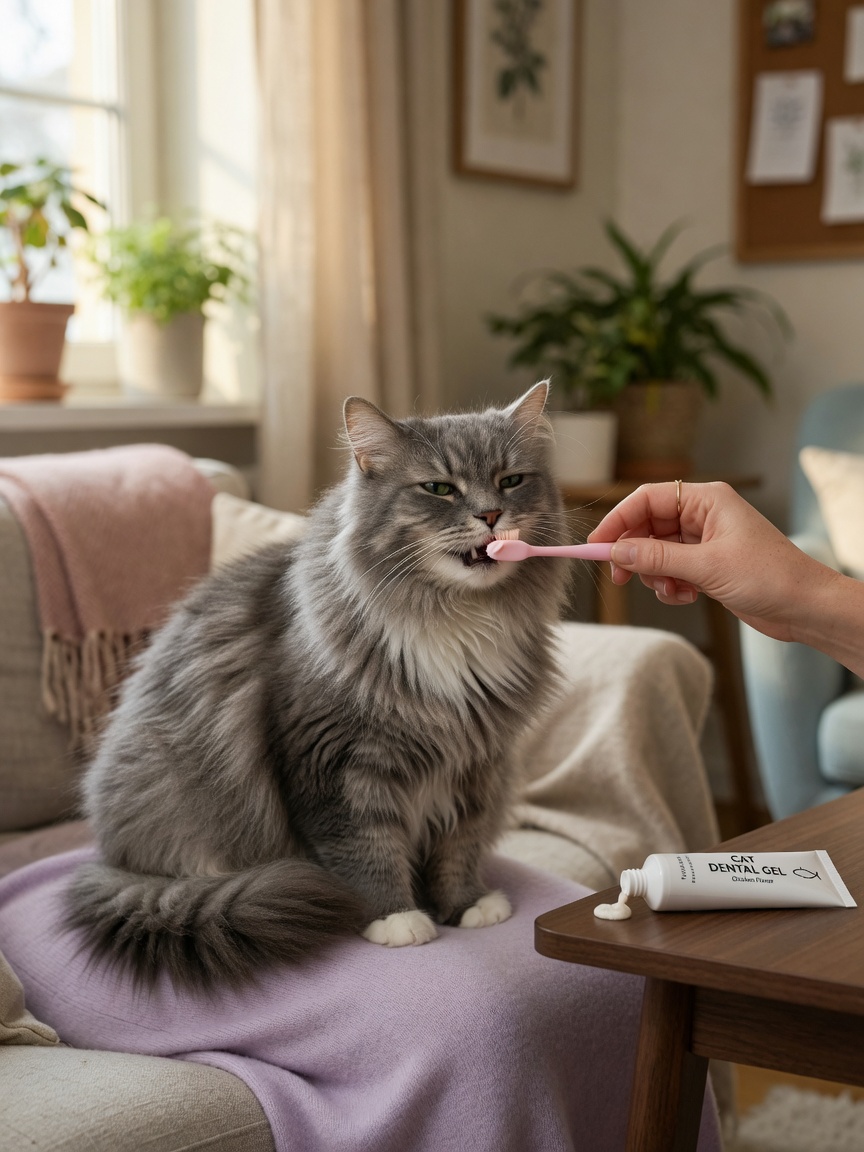
Daily tooth brushing is the gold standard for home dental care and the most effective method for controlling plaque. Use only a toothbrush and paste designed for cats — human toothpaste contains fluoride and xylitol, both of which are toxic to cats. Introduce brushing gradually: begin by letting your cat lick the paste from your finger, then gently rub the gums, before progressing to using a finger brush and eventually a proper cat toothbrush. Compliance is variable, particularly with older cats, so patience and positive reinforcement are essential. Even brushing three to four times per week provides meaningful benefit.
Dental Gels and Water Additives
For cats who do not tolerate brushing, dental gels and water additives offer a practical alternative. Vet Aquadent FR3SH is a water additive that reduces bacterial growth in the mouth and has been shown to reduce plaque accumulation. Logic Oral Hygiene Gel (now reformulated as Logic Orozyme) is an enzymatic dental gel that can be applied to the gums with a finger — many cats accept this without resistance. These products do not replace brushing but can provide meaningful benefit when used consistently.
The Controversy Around Anaesthesia-Free Dental Cleaning
Anaesthesia-free dental cleaning (AFDC), sometimes marketed as "non-anaesthetic dentistry," involves scaling visible tooth surfaces without general anaesthesia. The WSAVA dental guidelines firmly advise against this practice. The procedure is stressful and potentially painful for the cat, provides only cosmetic improvement to visible surfaces while leaving subgingival plaque and calculus — the primary cause of periodontal disease — completely untreated, and does not allow for the dental radiography needed to identify FORL and other pathology. AFDC can create the misleading impression that a cat's dental health has been addressed when in reality underlying disease has been left to progress.
Professional Dental Treatment Under Anaesthesia
A proper veterinary dental procedure involves examination under general anaesthesia, full-mouth dental radiography, professional scaling and polishing (both above and below the gum line), periodontal probing, and extraction of non-viable teeth. While the prospect of anaesthesia in a senior cat understandably concerns many owners, modern anaesthetic protocols with appropriate pre-anaesthetic blood screening, careful monitoring and tailored drug selection make the procedure safe for the vast majority of healthy senior cats. The risks of untreated dental disease — chronic pain, systemic bacterial spread, and deteriorating quality of life — far outweigh the risks of a well-managed anaesthetic in most cases. Speak openly with your vet about any concerns; they will help you make an informed decision that prioritises your cat's welfare.